Moremi Game Reserve: Botswana's wilderness in the heart of the Okavango Delta
 by Juan Proll· October 5, 2026· 16 min read
Moremi Game Reserve is regarded as one of Botswana's best safari destinations – above all for its exceptional wildlife viewing and very good chances of encountering predators. Anyone exploring the reserve also gets Africa in all its diversity served up as a bonus:
Here the glittering waterways of the Okavango Delta meet open savannahs, shady mopane woodlands and dry landscapes full of life. Besides classic game drives in a 4x4, unforgettable experiences on the water also await. Although Moremi is part of the Okavango Delta, the reserve has long since developed a character all of its own.
Discover Botswana with us.
Get in touch with us!
Where is Moremi Game Reserve?
Moremi Game Reserve is located in north-western Botswana and forms a protected part of the famous Okavango Delta. The reserve extends across the eastern part of the delta and is home to a fascinating mix of lagoons, islands, floodplains and dry savannah landscapes. The nearest larger town is Maun, often referred to as the "gateway to the Okavango Delta".
From Maun, you reach Moremi either by light aircraft as part of a fly-in safari or in an off-road vehicle. The remote location is no disadvantage here – it is part of the magic. Fewer roads, fewer visitors and more of a wilderness feel: here nature takes command.
Moremi Game Reserve and the Okavango Delta – what is the difference?
The difference between Moremi Game Reserve and the Okavango Delta often causes confusion. In short: Moremi Game Reserve is a protected area within the Okavango Delta. The delta itself is a huge wetland extending over thousands of square kilometres and consisting of countless waterways, islands and lagoons.
Moremi is therefore part of this unique ecosystem, but not the whole delta. While the Okavango Delta comprises various regions and protected areas, Moremi stands in particular for classic safari experiences with outstanding wildlife viewing.
The big advantage: in Moremi, water and land meet directly. This creates varied habitats that support an exceptional diversity of species. In the morning you can drive through dry woodland, and in the afternoon stand at a lagoon and watch elephants come to drink – safari variety guaranteed.
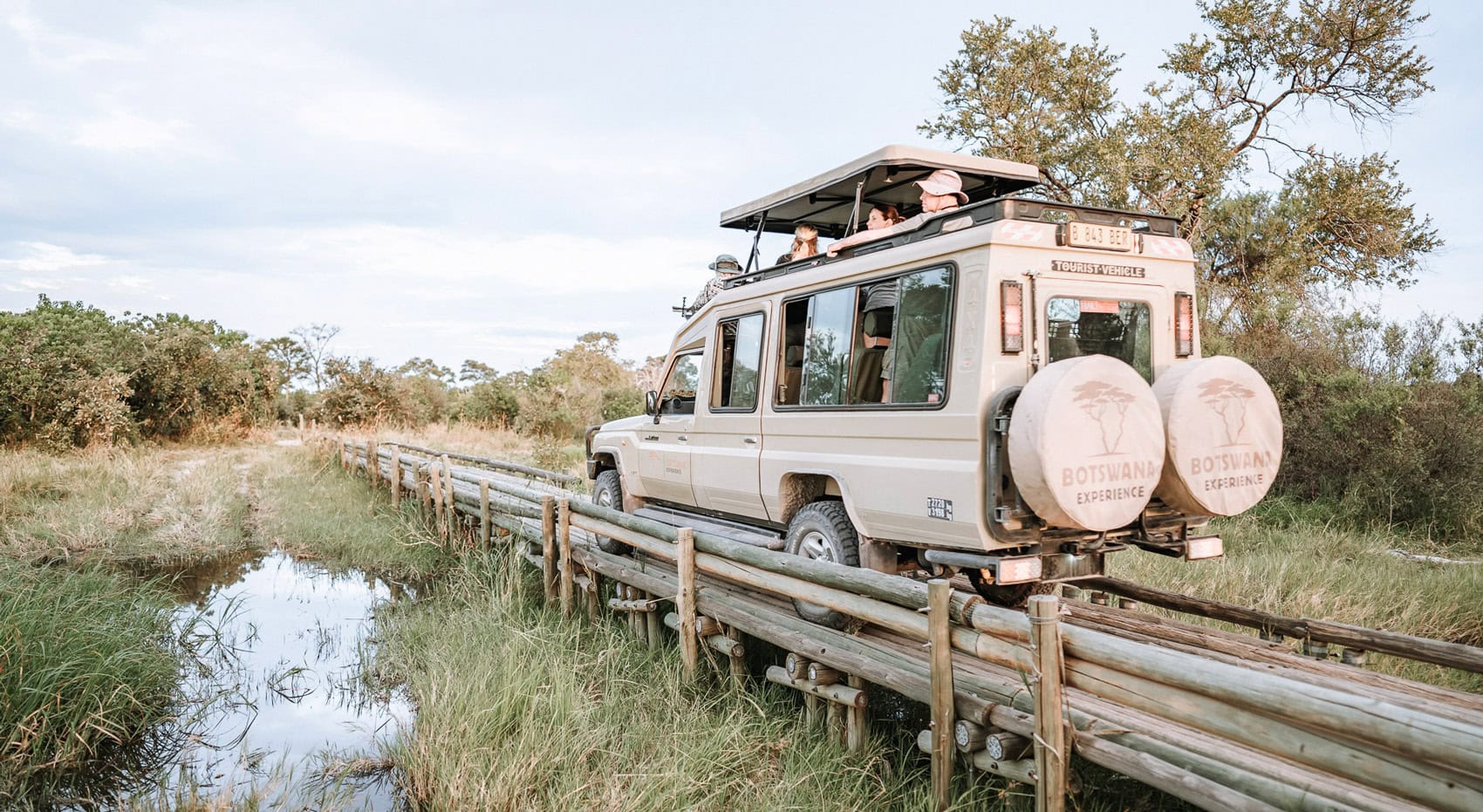
What makes Moremi Game Reserve special?
Moremi Game Reserve is one of the most versatile safari areas in Africa. It lies within the UNESCO World Heritage Site of the Okavango Delta. Its distinctiveness lies above all in the unusual combination of different landscapes: watercourses, savannahs, woodlands, floodplains and small islands lie close together here.
It is precisely this mix that allows you to watch many different animal species in a relatively compact area. Moremi is particularly well known for its predators – lions, leopards and African wild dogs are among the highlights of many safaris.
At the same time, the reserve offers intense nature experiences away from the crowds. Instead of dense convoys of vehicles, you can expect the classic safari adventure: a 4x4 on the riverbank, a lion in the shade of a tree and otherwise, above all, one thing – the sounds of the wilderness.
From lagoons and floodplains to mopane woodland
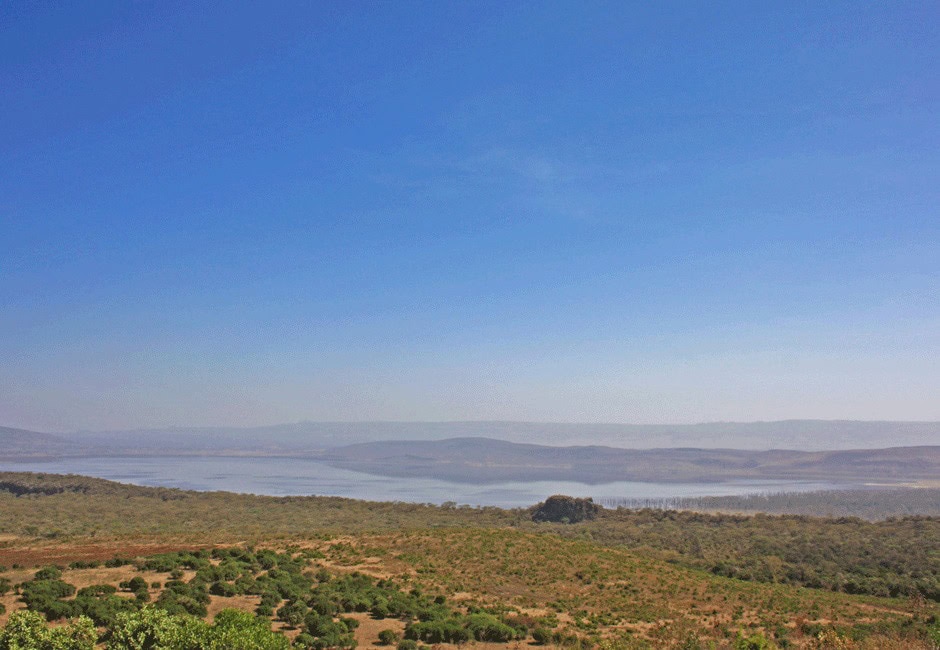
The landscape of Moremi Game Reserve is anything but monotonous. The area resembles a natural mosaic of different habitats. The lagoons and channels of the Okavango Delta create impressive watery landscapes, while the seasonal floodplains provide especially fertile areas with plenty of food for wildlife.
Add to that dry savannahs and dense mopane woodlands, which offer shelter to elephants, antelopes and numerous bird species. It is precisely this variety that makes every game drive exciting: behind the next bush waits not simply the same landscape – perhaps a herd of buffalo, a hidden leopard or a pack of wild dogs on the hunt.
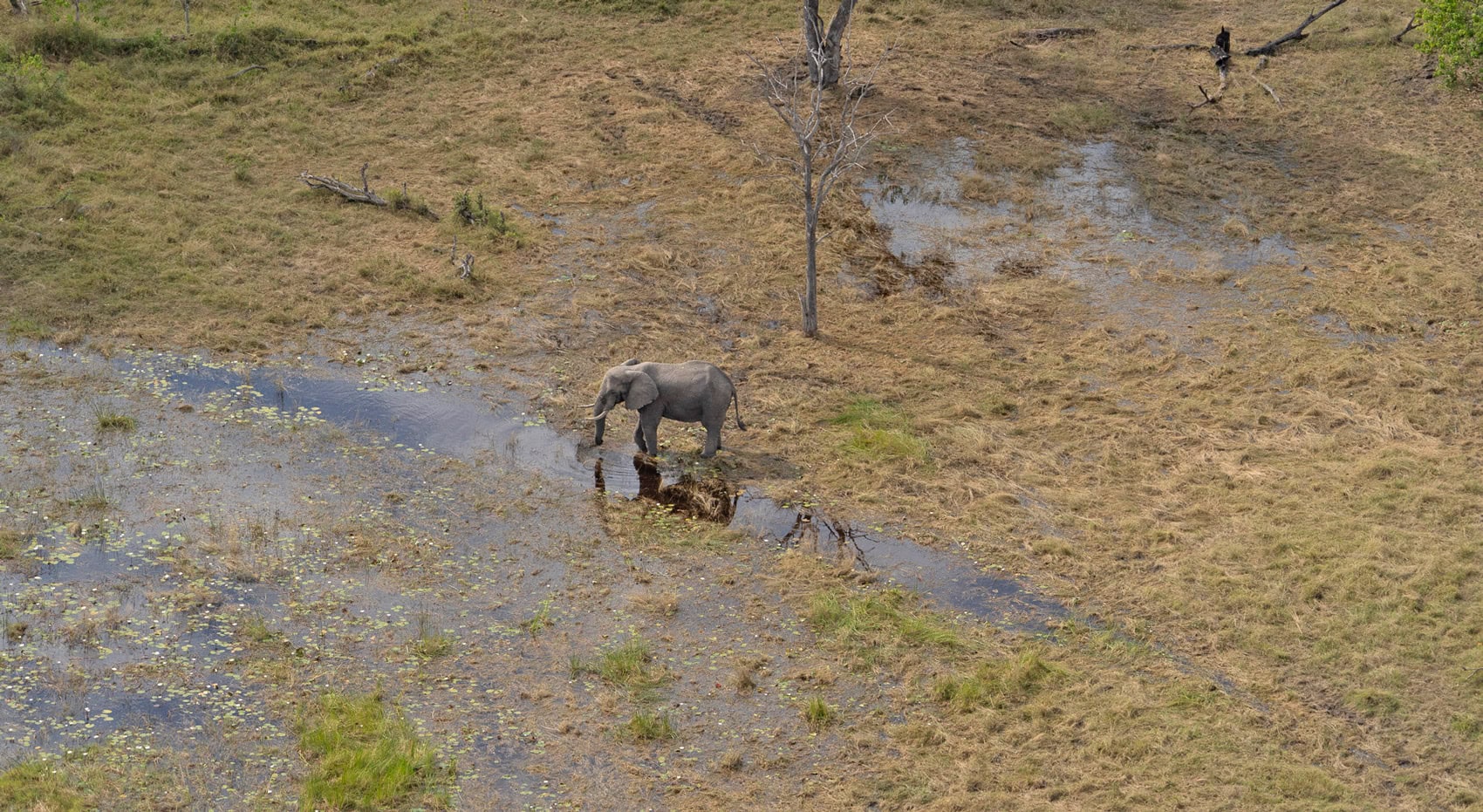
Which animals live in Moremi Game Reserve?
Moremi Game Reserve is a paradise for wildlife viewing and one of Botswana's most exciting safari areas. The reason lies in the special mix of water and land: crocodiles and hippos live in the water, numerous herbivores gather along the lagoons and floodplains, while savannahs and woodlands offer perfect hunting conditions for predators. The Big Five live here too.
On a safari through Moremi you can see herds of elephants plodding through shallow water, find lions resting under a shady tree, meet a leopard that seems to appear out of nowhere, watch buffalo grazing leisurely on shrub leaves and, with a lot of luck, even enjoy rhinos taking a mud bath.
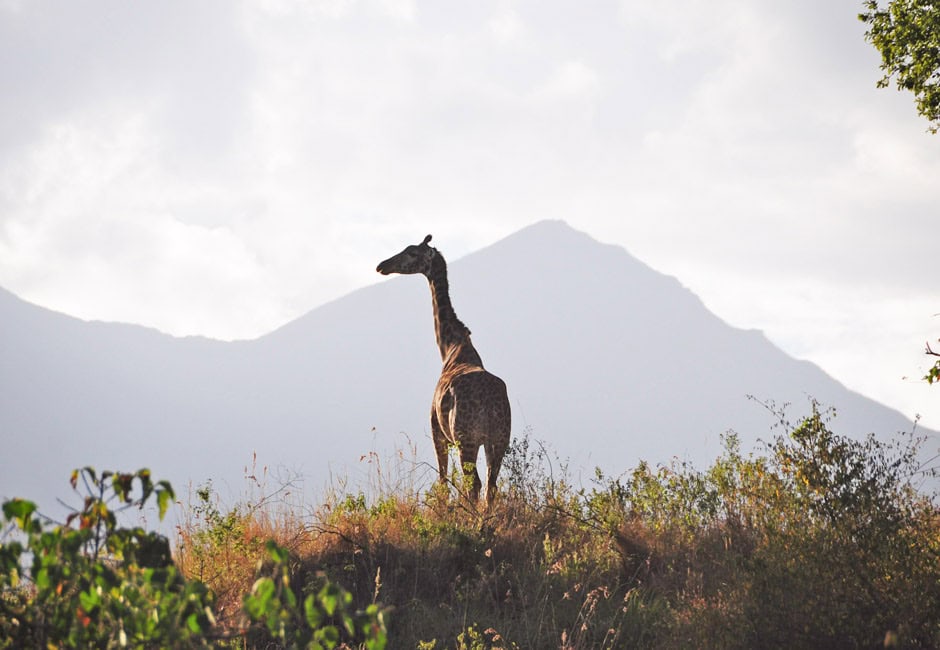
Moremi Game Reserve is especially famous for its predators. Besides lions, leopards, cheetahs and hyenas, African wild dogs also live here, among the rarest and most fascinating hunters in Africa. On the other side, it is above all the numerous antelope species that form an important foundation for this impressive predator-prey system in the delta. Giraffes and zebras round off the spectrum.
Bird lovers will also get their money's worth in the reserve. Around 540 bird species populate the watery landscapes and woodlands – from the majestic African fish eagle to colourful kingfishers. If you travel with binoculars, you should not only look out for big animals. Sometimes the highlight of the safari sits on a branch and weighs just a few grams – perhaps a malachite kingfisher or a lilac-breasted roller.
It is precisely this diversity that provides constant moments of surprise, which make up the special appeal – nothing in Moremi comes on demand; rather, nature writes its own personal script.
Lions, leopards and African wild dogs
If Moremi were to carry the title of "predator hotspot", it would be well deserved. The combination of water, open grasslands and dense woodland in particular creates ideal conditions for the hunters of the wild.
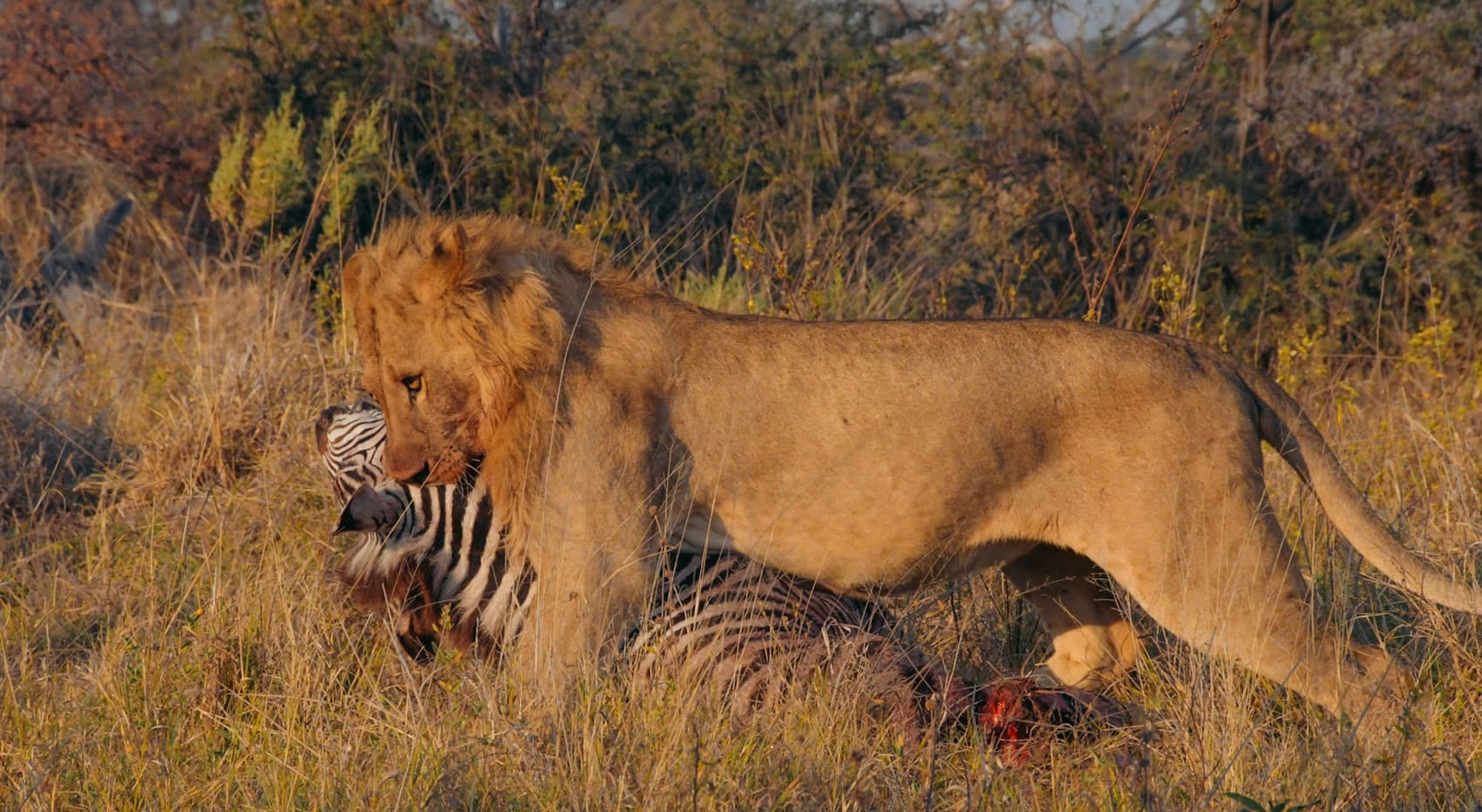
Lions are among the most impressive encounters in Moremi Game Reserve. You often see them lying relaxed in the shade – where else in the African midday heat? Not that they would turn down a good meal if it turned up in front of their mighty muzzle. But they prefer the time between late afternoon and early morning. Once a hunt begins, their full strength shows.
Leopards are the secret stars of many safaris. They move silently through the landscape, vanish in the tall grass and sometimes appear just when nobody expects it. Encounters with these elegant cats are especially exciting when they lie in the trees with their prey hung over a branch to keep it safe from curious competitors.
A very special highlight are African wild dogs. These highly social animals live in packs and are among the rarest larger carnivores worldwide. Moremi is considered one of the best places in Africa to watch these extraordinary hunters. Their coordinated hunting behaviour, their communication and their playful nature make every sighting a safari moment you won't forget in a hurry.
Elephants, buffalo and antelopes in the water
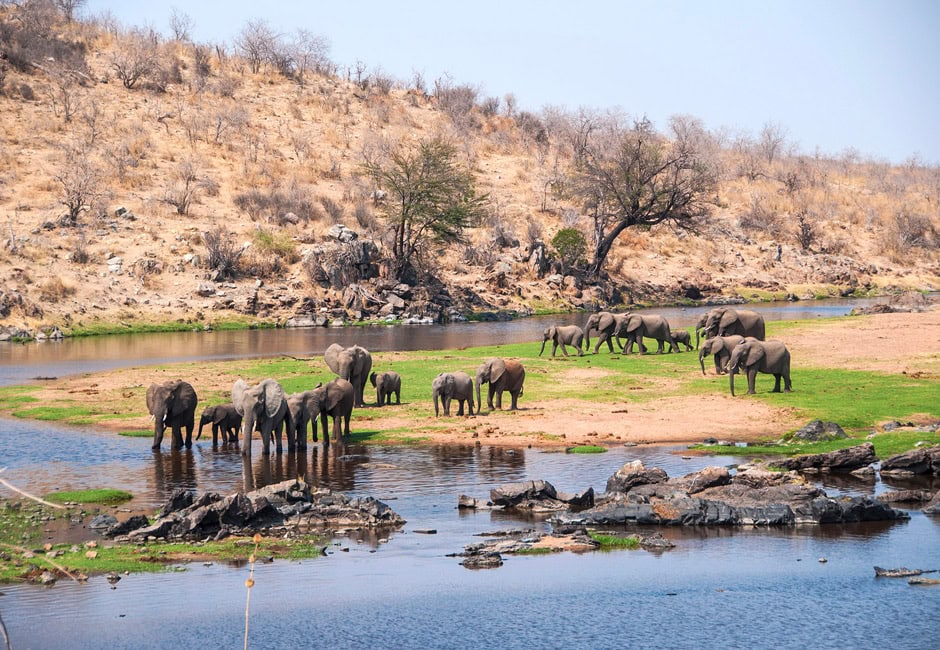
Moremi Game Reserve shows a side of Africa that you do not experience everywhere: water-loving wildlife. Elephants in particular regularly provide spectacular scenes. The large animals wade through lagoons, drink at waterholes or march through shallow floodplains with astonishing calm.
Buffalo are also among the impressive residents of the reserve. Large herds move through the fertile areas and at the same time provide a food source for various predators. Anyone who sees a buffalo up close, who looks a "dagga boy" in his grim face, quickly understands why these animals count among Africa's most impressive big game.
Particularly typical of the Okavango Delta, and therefore of Moremi too, are water-loving antelopes such as the rare red lechwe or sitatunga. These elegant animals move skilfully through shallow water and seem made for life among islands and waterways. Add to that impalas, wildebeest, kudus, tsessebe and roan antelope, as well as a number of other antelope species.
The great distinction of a safari in Moremi Game Reserve is that the landscape constantly delivers new scenes. One moment you are watching antelopes on a dry plain, a few minutes later you are standing at a lagoon watching elephants splash in the water. Safari TV in 4D – just without a pause button.
How do you experience a safari in Moremi Game Reserve?
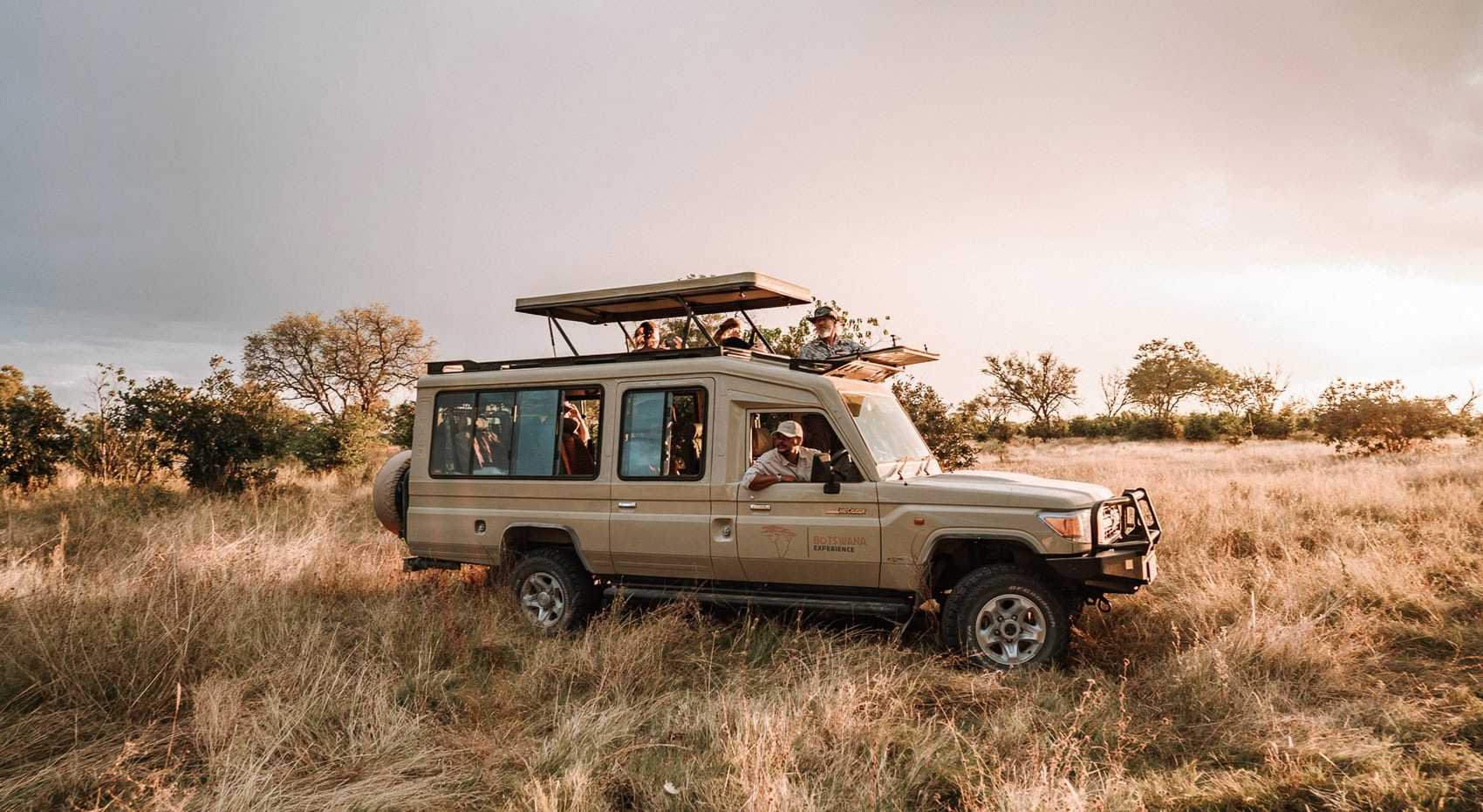
A safari in Moremi Game Reserve thrives on the variety of experiences. Classic game drives in an open 4x4 are among the most important activities, and exciting bush walks through the wilderness extend the offering. But the proximity to water makes the reserve especially varied: boat safaris or excursions by mokoro, the traditional dugout canoe, enrich the range of experiences.
Game drives through Moremi
The classic game drive is the heart of a safari in Moremi Game Reserve. It is not simply about covering as many kilometres as possible – rather, every drive becomes a small voyage of discovery through different habitats.
The morning may lead through dry mopane woodland, where elephants forage among the trees and leopards slink through the undergrowth. A little later the route leads along a lagoon or across open floodplains, where antelopes, buffalo and waterbirds bring movement into the panorama.
It is precisely the changing landscapes that make game drives in Moremi so exciting. Around every bend a new scene may await you – a pride of lions on the road, a pack of wild dogs on the hunt or simply the perfect moment when the sun rises over the delta.
On the water by boat or mokoro
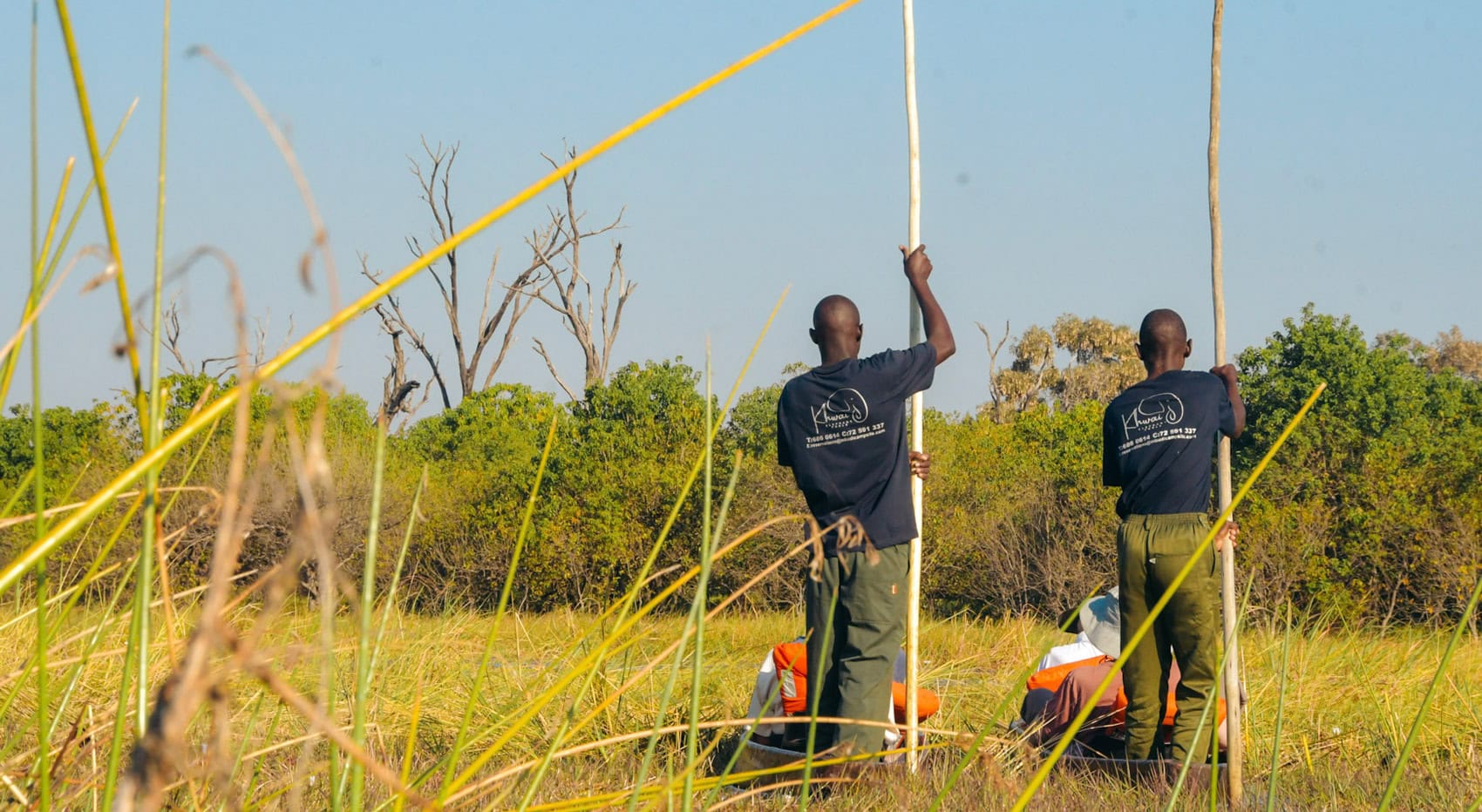
Moremi Game Reserve shows its special magic not only on four wheels, but also from the water. On a boat trip or a trip by mokoro – the traditional dugout – you experience the Okavango Delta from a completely different perspective. No other safari destination in southern and eastern Africa offers anything comparable.
You glide silently through narrow waterways, past water lilies, papyrus and small islands, while dragonflies, birds and sometimes even hippos appear as animal companions. On the water it is all about the gentle moments: the shadow of an elephant on the bank, the call of a fish eagle or the soft lapping of the mokoro in the water.
Particularly during the flood season of the Okavango Delta, new waterways form that make these experiences possible. A safari in Moremi Game Reserve thrives on exactly this interplay: in the morning tracking in a 4x4, in the afternoon drifting leisurely through the delta's water world. Hardly more African variety fits into one day.
When is the best time to travel to Moremi Game Reserve?
The best time to travel to Moremi Game Reserve depends on which safari experience you are looking for. In principle, Moremi can be visited all year round, as the area benefits from the permanent availability of water in the Okavango Delta. Particularly popular, however, are the drier months from May to October, when many animals concentrate at waterholes and conditions for wildlife viewing are especially good.
A special feature of Moremi Game Reserve: the reserve only fills up fully during Botswana's dry season, when rainwater from the Angolan highlands, about 1,600 km away, floods the delta. While elsewhere the landscape dries out, lagoons and channels fill here – a small natural wonder with opposite signs.
The months of July to October are considered the classic high season for safaris. Temperatures are then usually pleasant, the vegetation is less dense and wildlife is often easier to spot. If, on the other hand, you want to experience green landscapes, spectacular thunderstorm moods and especially many birds, you should consider the rainy season.
May to October – dry season and high water
The months from May to October are among the most popular times for a safari in Moremi Game Reserve. The landscape becomes drier, animals gather increasingly at the remaining water sources and the chances of impressive encounters rise.
The period between June and August is especially exciting: while Botswana is actually in the middle of the dry season, the water of the Okavango Delta reaches its highest level. Channels and lagoons fill up, so that besides classic game drives the range of water activities increases.
September and October bring spectacular wildlife viewing once again, as the waterholes become popular meeting places for elephants, buffalo and other wildlife. However, the temperature also rises considerably – as early as October the heat can creep mercilessly under your safari hat in the midday sun. But if you start early, plan a siesta and bring enough water, you will be rewarded with intense wilderness moments.
November to April – green landscapes and lots of birds
With the first rains, Moremi Game Reserve turns into a green oasis full of life. The landscape takes on fresh colours, the dust disappears and numerous migratory birds return. For bird lovers this time is especially exciting, as species diversity reaches its peak.
Young animals also make the green season a special time to travel. Small antelopes totter through the landscape, making predators' tongues drool all the more. At the same time fewer visitors are around, making safaris feel even quieter and more exclusive.
However, heavy rainfall between January and March can make individual tracks more difficult to drive, or even impassable. Nature then shows its wild side – including occasional surprises such as a muddy track that suddenly wants to be more adventure park than road. Without a 4x4 vehicle, nothing works here.
How do you get to Moremi Game Reserve?
For many travellers, Maun is the most important starting point for safaris into the Okavango Delta. From here, two routes lead into the wilderness: by light aircraft or in a sturdy off-road vehicle. Which option suits you better depends mainly on time, budget and sense of adventure.
Those who want to travel comfortably and quickly usually choose a fly-in safari. Self-drivers, on the other hand, experience the journey itself as part of the adventure – including sand tracks, water crossings and the feeling of driving right into the heart of Botswana's wilderness.
Fly-in safari from Maun
The fly-in safari is the classic option for travellers who want to spend as much time as possible in Moremi Game Reserve. From Maun, small charter planes take you to the airstrips of the lodges and camps. The flight itself becomes an experience: beneath you the Okavango Delta spreads out with its waterways, floodplains and islands like a creatively designed green-blue carpet.
Another advantage: many remote camps in Moremi Game Reserve are hard to reach by road but lie in the heart of the most beautiful wilderness areas. By plane, the journey shrinks to a short hop – and the safari can begin practically straight after landing.
The downside? Well … some may find it too quick to get in and not slow enough to get out again.
To Moremi by off-road vehicle
For the adventurous, arriving by off-road vehicle is a safari experience all of its own. This applies not only to travellers who join a guided tour and want to concentrate fully on the landscapes and wildlife. It also applies to self-drivers who want to expose themselves to the unknown and face the driving challenges.
Moremi Game Reserve is one of Botswana's most popular self-drive destinations, but it also demands quite a bit of preparation. A four-wheel-drive vehicle with sufficient ground clearance is a must, as the tracks can be sandy, bumpy and, depending on the season, muddy or flooded.
If you choose the road, the game reserve can be reached via two main entrances: the North Gate near the Khwai River, which is accessible from Chobe National Park. And the South Gate, which is only 30 kilometres from the North Gate and 90 kilometres from Maun.
Self-drivers should allow plenty of time and not calculate along the lines of "Google Maps says three hours". In Moremi, it is sometimes not the distance but the condition of the track, an elephant on the road or a leopard by the wayside that determines your pace.
How many days should you spend in Moremi Game Reserve?
For Moremi Game Reserve you should ideally allow at least three to four days . That leaves enough time to get to know different landscapes and combine different safari experiences.
A short stay can already offer fantastic wildlife viewing, but Moremi is not a destination for a quick visit. The wildlife follows its own rhythm here – and sometimes it is a leopard in a tree, a herd of elephants at the water or playing lion cubs that decides when the big safari moment happens.
Five to seven days are ideal if you want to experience Moremi intensively. That way you can combine game drives, bush walks, water activities and relaxed hours in camp. Several days also increase the chance of special encounters with predators such as leopards or African wild dogs.
Moremi Game Reserve or Chobe National Park?
The question "Moremi Game Reserve or Chobe National Park?" sounds at first like a classic safari duel. But in fact both areas play in different categories. Both are among Botswana's most impressive natural experiences – just each with its own character.
Moremi stands above all for the extraordinary combination of Okavango Delta landscapes, channels, lagoons, islands, woodlands and savannahs. Game drives through mopane woodland alternate here with boat and mokoro safaris across the waterways. Moremi is especially exciting for travellers who want to watch predators: lions, leopards and African wild dogs are among the reserve's big highlights.
Chobe National Park, by contrast, is known above all for the Chobe River and its impressive herds of elephants. The combination of river landscape and classic game drives makes the park especially varied. A boat trip on the Chobe River offers a perspective you don't get from a 4x4: elephants bathing, crocodiles on the bank and countless birds right in front of your camera.
Accessibility also sets the two destinations apart. Chobe is easier to fit into classic itineraries, for example in combination with Kasane or Victoria Falls. Moremi, by contrast, feels more remote and is like diving deep into the wilderness.
The better question is therefore often not: Moremi or Chobe? But rather: How can you combine both?
On many of our Botswana trips we combine both regions: Moremi for the varied delta landscapes and the intense safari atmosphere, Chobe for the river, the large herds of elephants and the relaxed boat safari. Together they give a particularly rich picture of northern Botswana. Examples are our "Fascination Botswana" tour with the Land Cruiser and the fly-in safari "Stylish Botswana".
Popular tours:
FAQ about Moremi Game Reserve
Is Moremi Game Reserve worth visiting?
Yes, Moremi Game Reserve is particularly worthwhile for travellers who want to experience a varied safari in Botswana. The combination of watery landscapes, lagoons and savannah creates ideal conditions for diverse wildlife viewing. Elephants, lions, leopards and African wild dogs are among the highlights. There are of course no guaranteed sightings – but it is precisely this unpredictability that makes up the appeal of safari.
Is Moremi Game Reserve part of the Okavango Delta?
Yes, Moremi Game Reserve is a protected area within the Okavango Delta. While the delta covers a vast region of waterways, lagoons and islands, Moremi refers to a specific protected area in the eastern part. The combination of wetlands and dry savannah creates especially diverse habitats and makes Moremi a popular safari destination.
Can you visit Moremi Game Reserve as a self-driver?
Yes, you can explore Moremi on your own in an off-road vehicle. A four-wheel-drive vehicle is absolutely essential because of the sandy tracks, and during the rainy season conditions can be even more demanding. Self-drivers enjoy maximum freedom but should bring experience, enough water and fuel. For beginners, a guided safari is a good choice.
Can you see the Big Five in Moremi Game Reserve?
In principle, there are chances of seeing all the Big Five in Moremi Game Reserve: elephant, buffalo, lion, leopard and rhino. Elephants, buffalo and lions are seen most often, while leopards and above all rhinos are rarer. A safari remains unpredictable, however: animals move freely and hoped-for sightings can fail to happen at any time despite high wildlife density.
Are there African wild dogs in Moremi Game Reserve?
Yes, Moremi is among the known habitats of African wild dogs. The rare packs impress with their pronounced social structure and coordinated hunting behaviour. As they use large home ranges, sightings are not guaranteed. Experienced guides often know the packs' movement patterns and can increase the chances of an encounter.
Conclusion: is a safari in Moremi Game Reserve worth it?
Moremi Game Reserve is one of those destinations where nature writes its own script. The mix of Okavango Delta watery landscapes, islands, savannah, mopane woodlands and extraordinary wildlife makes the reserve one of Botswana's most exciting safari areas.
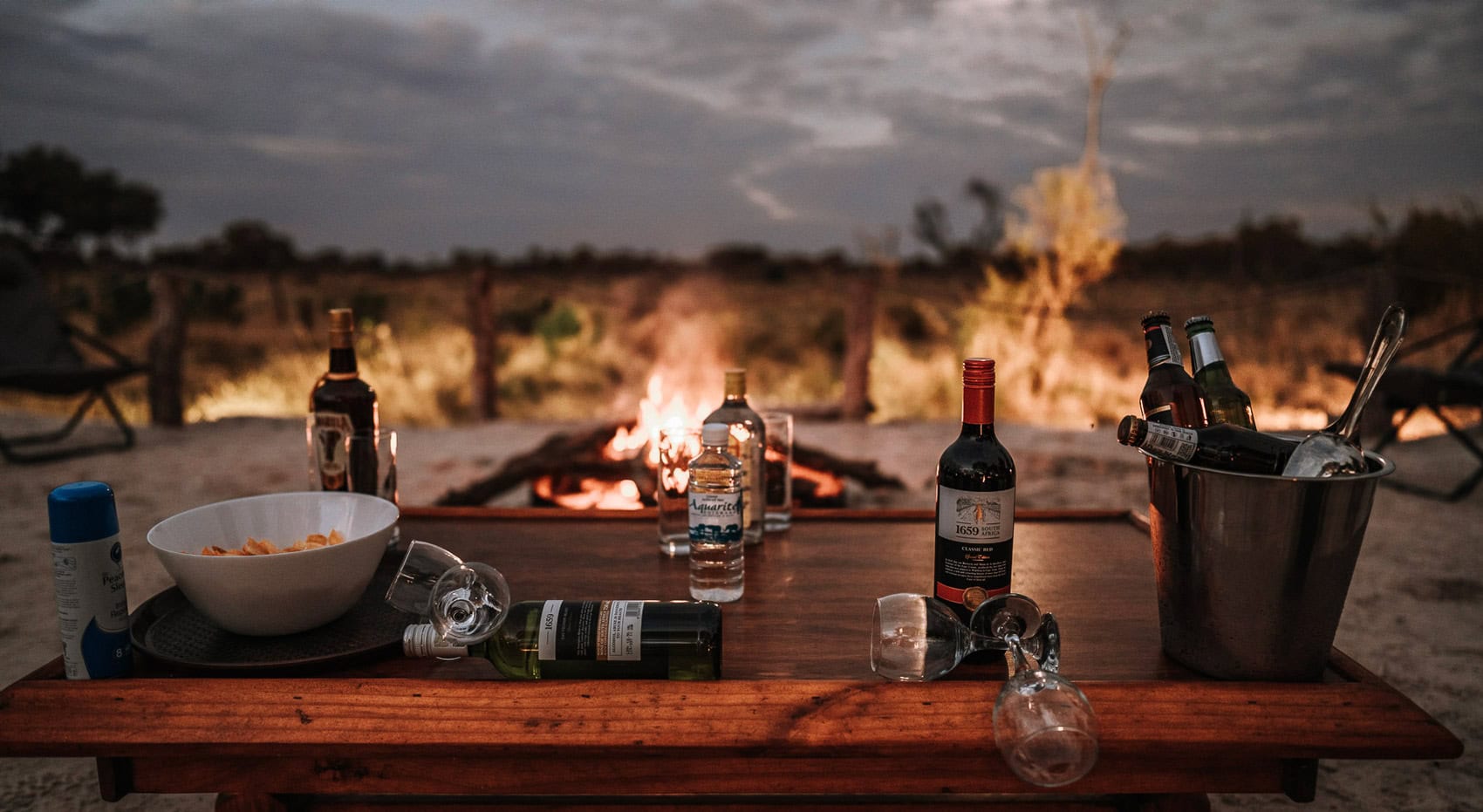
What is especially impressive is the diversity: searching for lions and leopards on a game drive in the morning, watching elephants at the water later, and finally letting the day fade out with a drink in your hand and a view over a still lagoon – Moremi combines different safari experiences in a unique way.
Anyone who wants to experience Botswana intensively will find a wilderness here that doesn't have to shout for attention. It simply waits to be discovered. And sometimes that is the greatest luxury of all: a moment when only the engine falls silent, the sunset begins and an elephant decides when the safari continues.
We are happy to answer questions and help with planning your Botswana trip, whether you are travelling on a guided tour or a self-drive tour. Thanks to our close contact with our subsidiary in Botswana, we are always well informed about the current situation. So get in touch with us! Your dream, our expertise – your very own Botswana experience.
Juan Proll has lived in southern Africa since 2011 and works as a certified nature and cultural guide in South Africa, Botswana and Namibia for Elefant-Tours and its subsidiaries. After an earlier career as an adult education teacher in Germany, he swapped the classroom for the wilderness. Alongside his work as a guide, he writes for the Elefant-Tours blogs about nature, culture and sustainable travel. Juan is a member of the Field Guides Association of Southern Africa (FGASA) and the author of the books "Ich werd' dann mal Ranger" and "Das Safari-Lesebuch". The magazine DER SPIEGEL reported on his training.