Destination Mozambique
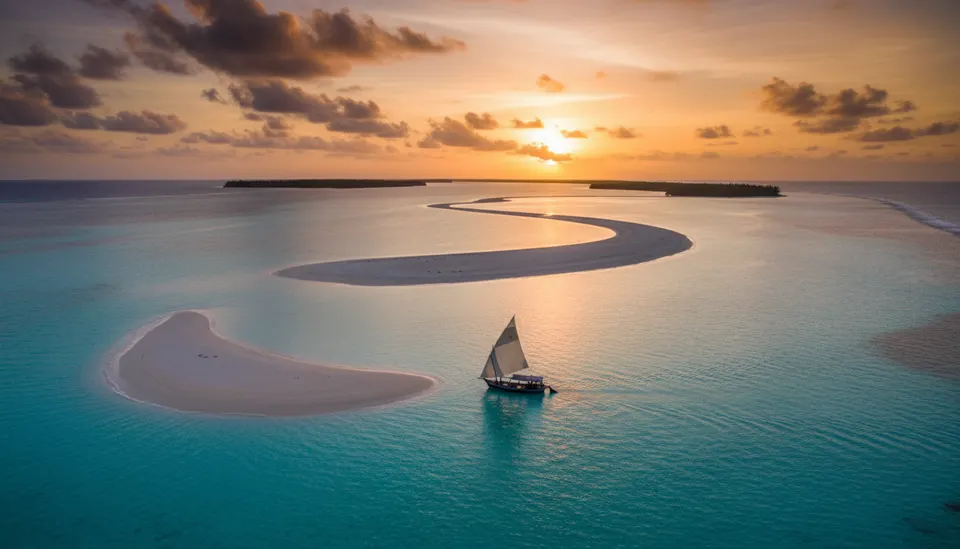
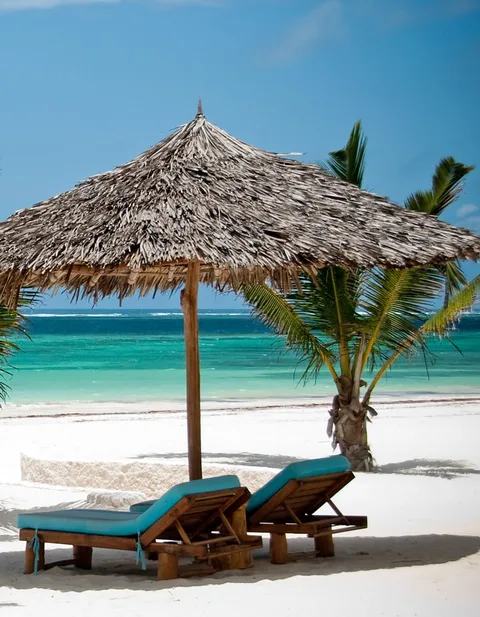
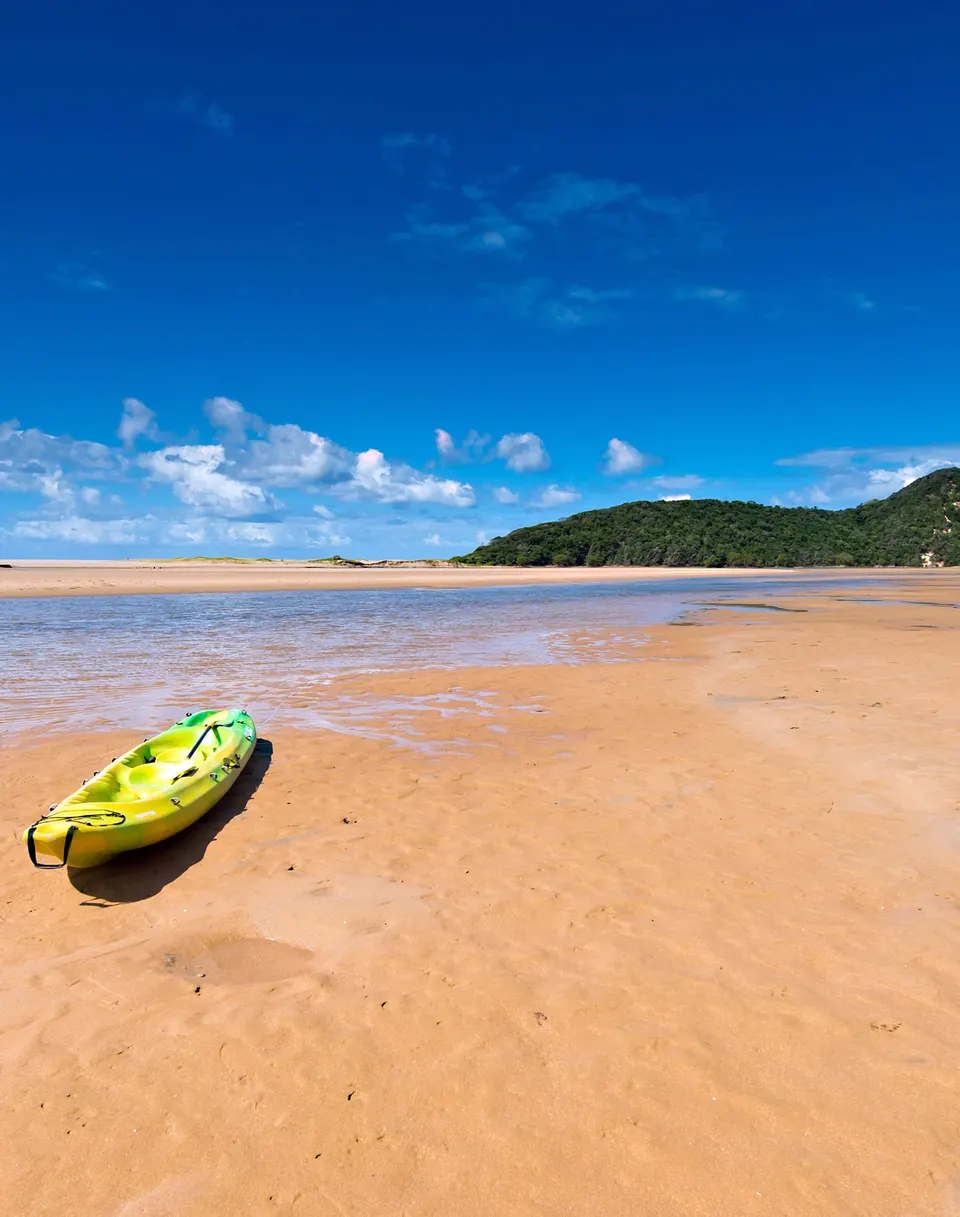
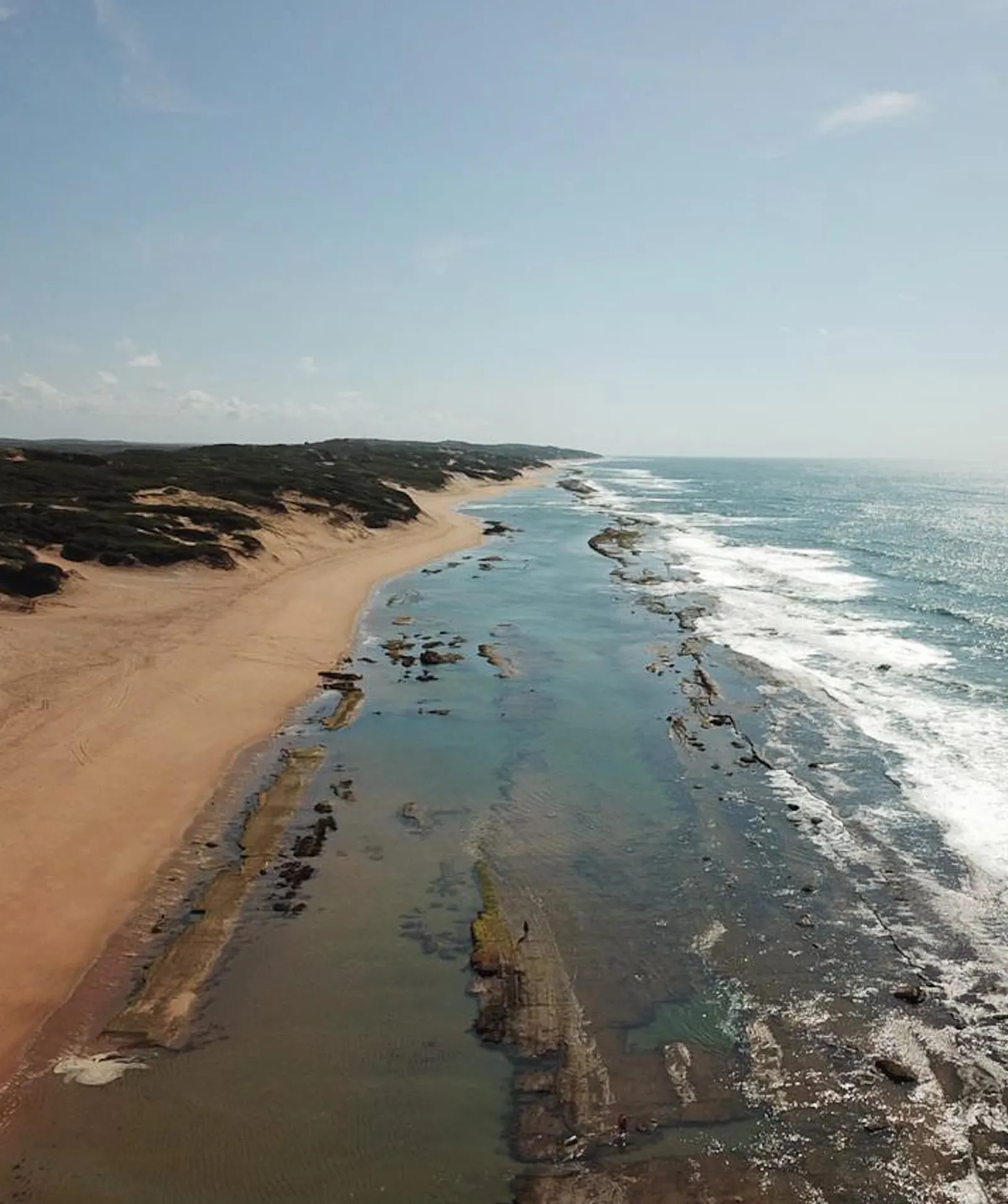
Mozambique has developed into a first-class tourist magnet above all thanks to its endless, fine-sand beaches and beautiful underwater areas. On trips to Mozambique you experience unspoilt nature, secluded beaches and impressive coral reefs that invite you to snorkel and dive. You can also combine a trip to Mozambique with a safari in South Africa.
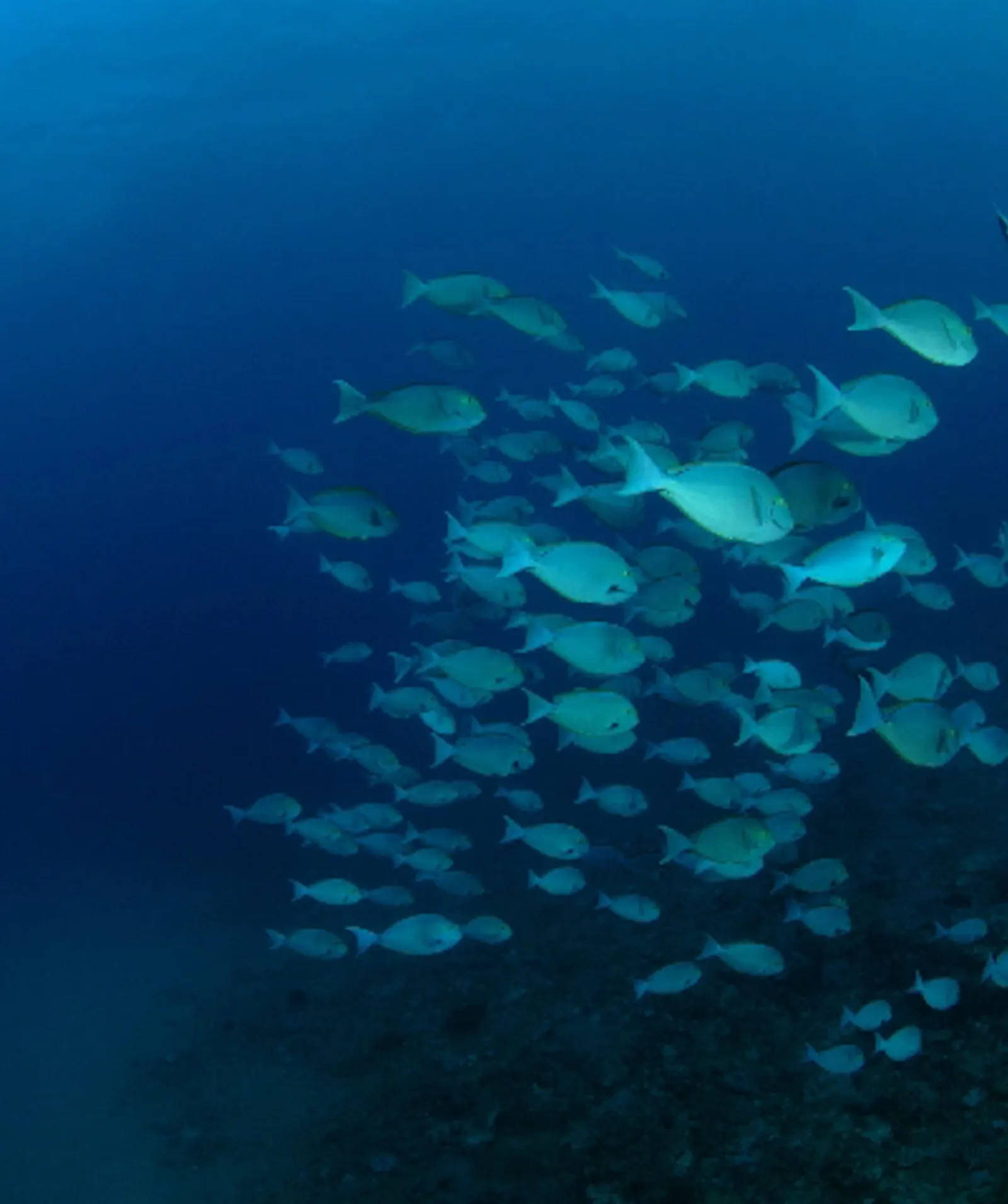
Here you have the chance to swim with dolphins, spot manta rays and giant turtles and explore a breathtaking underwater world. It is no coincidence that Mozambique is a popular destination for keen water sports enthusiasts, and those seeking peace and quiet are also just right on Mozambique's beaches, which have been spared mass tourism.
Travel styles in Mozambique
Tours in Mozambique
 Zambia, Malawi, Mozambique, South Africa
22 days
Wanderlust Africa – Camping between the Zambezi and Kruger
from 3.150 € per person
 Mozambique, South Africa
14 days
Zululand & Mozambique
from 2.550 € per person
All prices exclude international flights.
Highlights of Mozambique trips
Travel information
Geographical location
Mozambique borders Tanzania to the north and Zambia and Malawi to the north-west, with the border here partly formed by Lake Malawi. To the west the country borders Zimbabwe, and to the south also South Africa and Eswatini (Swaziland). In terms of landscape, Mozambique naturally stands out for its 2,700-kilometre east coast, which lies directly on the Indian Ocean. For this reason the water has a pleasant temperature all year round. Mozambique can be divided into four different geographical regions: the coastal plain and the low plateaus (200–500 metres) that follow the coastal land inland, the higher plateaus (from 500 metres to about 1,000 metres) and the mountainous region in the west of Mozambique. The highest elevation is Monte Binga (2,436 metres), on the border with Zimbabwe.
Transport
Important airports for arrival / departure
Mozambique's largest airport is Maputo International Airport, approx. 3 km north-west of the city of Maputo. Another important airport is in Beira, called Aeroporto Internacional da Beira.
The airports are served by TAP Air Portugal (with a stopover in Lisbon), among others. Alternative flight connections are possible via Johannesburg, from where there are connections with, for example, South African Airways and LAM Linhas Aéreas. The average flight time from Europe is between 12 and 14 hours.
Getting around in Mozambique
In Mozambique, traffic generally drives on the left. There is one major road along the coast from south to north. It is tarmacked and easy to drive on over long stretches. But as soon as you leave the main road, road conditions deteriorate. The last kilometres to the beach are sand tracks in many places, so a 4x4 is definitely recommended. Road signage in Mozambique is rather sparse, so you should stick to the road map and our route descriptions. Please note that there are several police checkpoints in Mozambique. Always watch your speed and follow the rules of the road very precisely.
You can collect rental cars at the airport, in large hotels and in larger towns such as Maputo and Beira, among other places. To collect a rental car you need an international driving licence, which you can easily apply for in advance in Germany.
Mozambique can also be visited as part of a guided overland tour. On an overland tour you travel in safari trucks that have been specially converted to meet the requirements.
Money
Currency
Mozambique's currency is the metical (plural: meticais). 1 metical is divided into 100 centavos.
You can find an exchange rate calculator with current exchange rates for all currencies here.
Cash can be exchanged at bureaux de change or at almost all banks. Only at a few banks (e.g. Barclays Bank) can you withdraw cash with a credit card or debit card. Be sure to find out from your bank before the trip about the options and fees that apply when withdrawing money abroad. In many restaurants, shops and accommodation in larger towns you can pay by credit card. As this cannot be guaranteed, however, you should always carry some cash with you.
In Mozambique, US dollars and, especially in southern Mozambique, South African rand are often accepted too, but the exchange rate is not always good. In the countryside and in smaller places you should have meticais ready.
Traveller's cheques are not recommended, as, owing to their high forgery rate in southern Africa, they are now only rarely accepted, for a high fee and with long waiting times.
Costs of everyday items as a guide
To give you an overview of how much extra money you need to budget on site, we list the approximate food and drink costs for you: for drinks such as water, cola, beer and wine you should expect approx. 1.50–2.50 euros per glass; spirits (depending on the bar and selection) are generally cheaper than in Europe. For lunch you should allow approx. 7–12 euros, for dinner approx. 12–20 euros (depending on the restaurant and selection).
Tipping
If no service charge is added in restaurants, 10 per cent is appropriate. Higher tips are at the guest's discretion. So if you were more than averagely satisfied with the service, you are welcome to give more. Taxi drivers generally expect a tip of 10 per cent. The guides always make an effort to make your trip unforgettable and to fulfil your wishes. They, too, appreciate a small tip at the end of the trip. Tips are still voluntary, and this also applies to your stay in the lodges. There you will often find a tip box at reception. The staff are always pleased when you were happy with the service and show your appreciation.
Health & safety
Safety
Safety matters on every trip. Just as in other large cities worldwide, you should be careful and alert within Mozambique's towns and cities. Especially in the larger cities such as Maputo or Beira, as well as in the tourist regions, you should not go out alone on foot after dark. If you travel the country on a self-drive tour, you should always travel by rental car or taxi in the dark. On guided tours, try to listen to the safety advice of the guides. They are often locals and have completed professional training, so they know the local conditions extremely well.
In general you should carry enough cash with you, but not too much. Wearing conspicuous jewellery or expensive watches is best avoided, so as not to attract unwanted attention.
You should always carry your cameras, mobile phones and similar items in a rucksack or bag and not openly. Do not leave any items out in the open in the vehicle.
You can find current travel and safety information on the website of the German Federal Foreign Office.
Health
Medical care in the country cannot, of course, be compared with Europe. With a few exceptions, a trip to Africa carries no particular health risks compared with travel to other long-haul destinations.
A travel first-aid kit should definitely not be missing from your luggage. We recommend medication for diarrhoea, fever and pain, travel sickness, vomiting and nausea, as well as nose drops, disinfectant for skin injuries among other things, ointments for burns and insect repellent. It is best to get detailed advice from your trusted pharmacy.
Please also note the medical information from the German Federal Foreign Office.
Malaria
In Mozambique there is a risk of malaria infection all year round, so malaria prophylaxis is recommended here. We therefore advise you to contact your doctor or a tropical medicine institute shortly before the start of your trip to get medical advice on health in general and malaria prophylaxis in particular. Note that some medications can have worrying side effects (e.g. Lariam) and can therefore seriously affect a holiday. As a general rule: good prevention is better than good treatment. The best prevention is to avoid bites by wearing long trousers, socks, closed shoes and long-sleeved tops in the morning and evening hours, and by applying mosquito spray or cream.
Vaccination recommendations
Routine vaccinations such as tetanus, hepatitis A & B and polio should be checked and definitely boosted if necessary. You can get more detailed information from your GP or a tropical medicine institute.
Climate & best time to travel
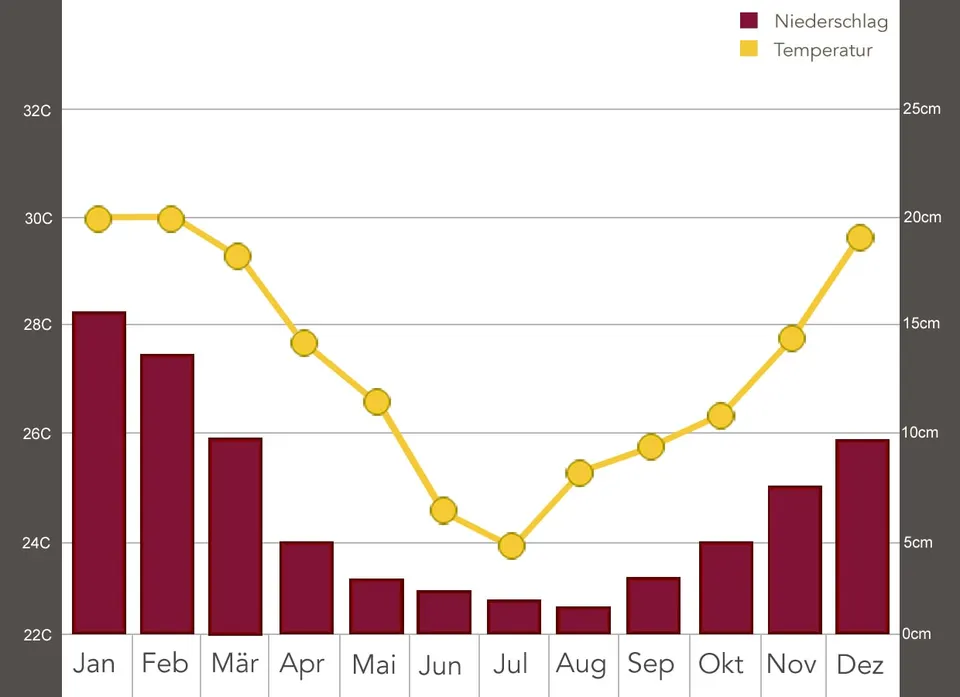
The best time to travel to Mozambique is mainly the months from March to November. These months are the dry season, so little rain can generally be expected. Temperatures are relatively even all year round, roughly between 25 and 30°C. Outside the rainy season it can get a little cooler at night, so you should pack warmer clothing at that time too.
From November it can get very hot and humid. Temperatures are around 30 °C, but humidity is often at 80 per cent. Thanks to its dreamy beaches and its proximity to South Africa, Mozambique is often very busy during the South African school holidays, and the beaches are then relatively crowded compared with the rest of the year.
Travel tips
Language
The country is shaped by a long, multicultural history, so that in total almost 40 languages are spoken. The official language is Portuguese, although only around 15 per cent of the population speak it as their mother tongue. Nevertheless, around 50 per cent speak Portuguese as a second language. Primarily, various Bantu languages such as Swahili, Makua and Nyanja are spoken. As a tourist you will get along quite well with English in the country.
Time difference
Mozambique is on CET +1 hour. The time difference from Germany is +1 hour in winter and +0 hours in summer. There is no switch between summer and winter time in Mozambique.
Customs & etiquette
As a greeting, people shake hands as in Europe. Portuguese customs and traditions are widespread. Casual clothing is generally accepted everywhere. Photographing soldiers, airports, bridges and government buildings is frowned upon and can lead to complications.
Health insurance cover
As you will be staying outside Europe, your personal health insurance does not apply and you should definitely take out travel health insurance for trips abroad. Your health insurer will certainly be happy to advise you on this. Alternatively, the Elefant-Tours team will gladly offer you suitable travel health insurance. Also check whether your private liability insurance covers damage on trips outside Europe.
Electricity supply
The mains voltage in Mozambique, at 220 V, differs only slightly from the mains voltage in Germany. Manufacturers of electrical devices factor in this tolerance, so you can use your electrical devices without any problems. For the sockets, an adapter for three-pin round plugs is required.
Internet communication
In most hotels and lodges, especially in the larger towns, internet is available to visitors. Nevertheless, you cannot assume that an internet connection is available everywhere in the country, especially not in rural regions.
Shopping tips
Particularly lovely items from Mozambique are basketwork, reed mats, as well as wood carvings, printed fabrics and leather goods. They are available at some markets and in some shops.
The sale of souvenirs made from wildlife skins, including reptile skins and furs, is prohibited. So the rule is: hands off! Better to look at the animals in their natural environment and take the experiences home as a souvenir.
On the German customs website you can find information about Germany's import regulations
Religion
Around 50 per cent of Mozambicans follow traditional religions. About 30 per cent are Christian and approx. 20 per cent of the population are Muslim.
Food & drink
It is by no means unusual for some visitors to struggle with a nervous stomach and diarrhoea for a day or two on their Africa trip. Most of the time this is nothing serious, but a normal physical reaction to changed climatic conditions and different food from at home. As a general rule: do not drink tap water from just any source, but first ask your hosts whether it is suitable for drinking. Avoid drinks with ice cubes as well as eating at places that do not give a particularly hygienic impression. Vegetables and fruit should be washed before eating and preferably peeled.
A speciality of Mozambique is peri-peri chicken. The chicken is fried in palm oil and combined with the hot chilli sauce to make a very tasty dish. The Asian influence can be found mainly in the many curries made, for example, from chicken or crab meat.
Entry requirements
A requirement for all travellers is a valid passport that is still valid for at least six months after you leave again.
As a German citizen you need a visa to enter Mozambique. This must be obtained from a Mozambican diplomatic mission before departure. You can get further information on applying for a visa from the Embassy of Mozambique in Berlin: http://www.embassy-of-mozambique.de/index.php
For entry from a yellow fever risk area you need a yellow fever vaccination and, where applicable, must also document this with your vaccination certificate.
As visa requirements can change, please contact the responsible diplomatic mission in good time. Please make 100% sure that you hold a valid visa. We cannot be held responsible if you are refused entry and cannot complete your booked tour to the end as planned. Refunds are not possible and any additional costs must be borne solely by the traveller.
- Places on our tours