Ruaha National Park: discovering Tanzania's wild side
 by Juan Proll· September 21, 2026· 11 min read· Updated October 28, 2026
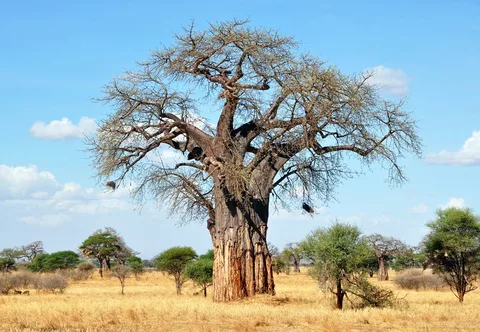
"Ruaha" sounds like the bone-chilling roar of a lion at sunset. It makes your pulse rise as your gaze sweeps over uninhabited landscapes, wide plains, ancient, gnarled baobab trees and dry riverbeds. Welcome to Ruaha National Park, one of the wildest and most unspoiled safari destinations in Tanzania.
While the safari hotspots in the north of the country, such as the Serengeti and Ngorongoro Crater, enjoy great popularity, things are much quieter in the south. Ruaha is rougher, more remote and a little more unpredictable than the famous safari classics of the Northern Circuit – and that is exactly what makes it so appealing.
Discover Tanzania's wild side – without any big fuss, but with a healthy dose of adventure.
Where is Ruaha National Park and what makes it special?
A vast wilderness in southern Tanzania
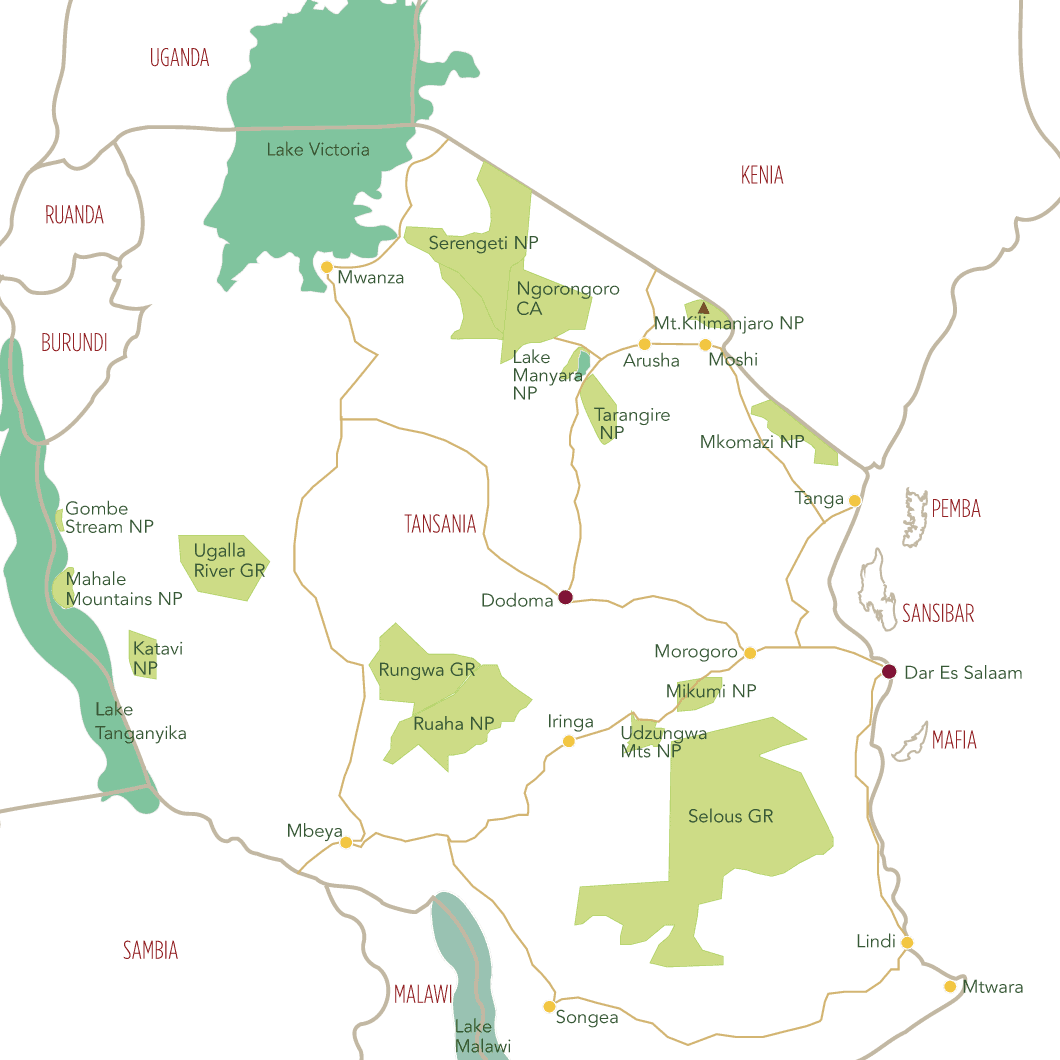
Ruaha National Park lies in south-central Tanzania, about 130 km west of the town of Iringa, and is part of the country's so-called Southern Circuit. The road is so far only partly tarmacked, and otherwise a gravel track. Alternatively, the park can be reached by air via the Msembe and Jongomero airstrips. At around 20,226 km² it is Tanzania's second-largest national park – quite an impressive figure.
Despite its size, far fewer travellers visit it than the Serengeti or Ngorongoro Crater. The reason lies mainly in its more remote location and the somewhat more involved journey. For safari fans, though, that is exactly part of the adventure: instead of convoys of vehicles, there is a great deal of space and peace here, and the feeling of really being far out in the wilderness.
Where East and Southern African wildlife overlap
Ruaha lies at a fascinating ecological crossroads: here the habitats and wildlife of East and Southern Africa meet. This creates an unusually varied mix of species and a coexistence of animals that you can hardly observe like this anywhere else.
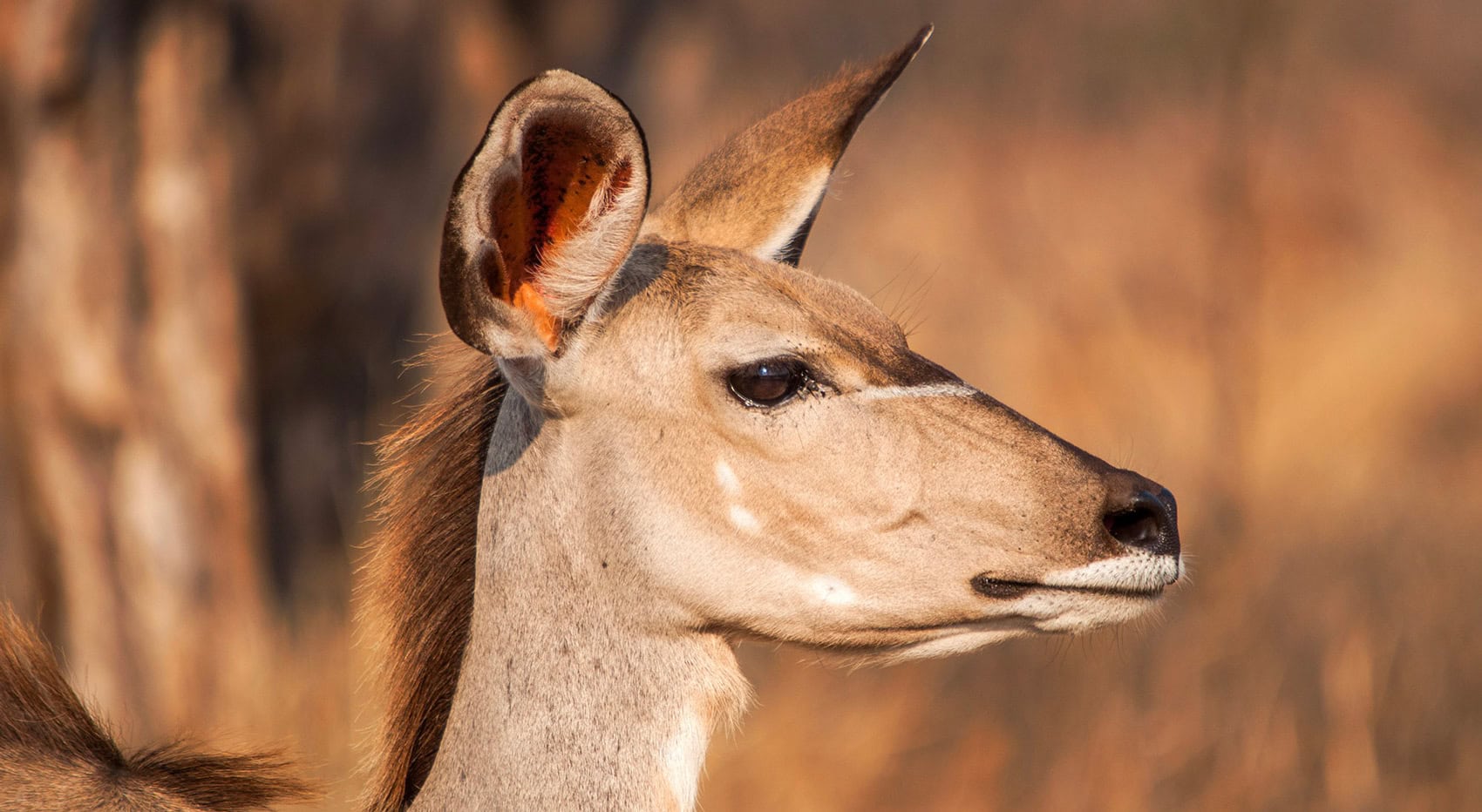
One special example: both greater kudu and lesser kudu occur here. The lesser kudu reaches the southern limit of its range here. Add to that sable and roan antelope, among others, and other species that you don't get to see in every Tanzanian safari park.
Ruaha is thus a bit like a biological crossroads: northern and southern African influences meet – wildlife and travellers alike benefit.
Which animals can you see in Ruaha National Park?
Elephants and large herds of buffalo
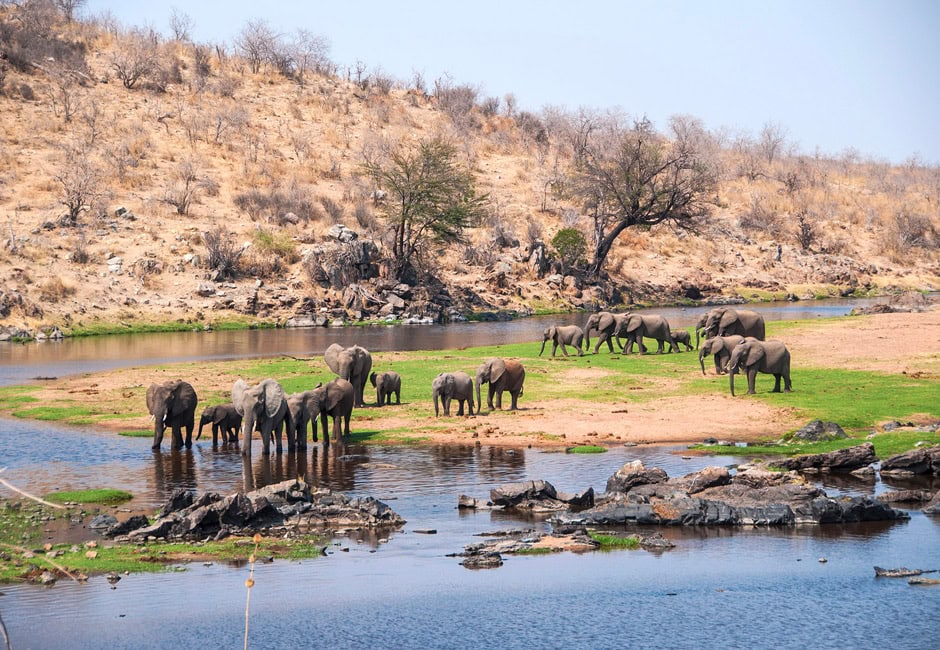
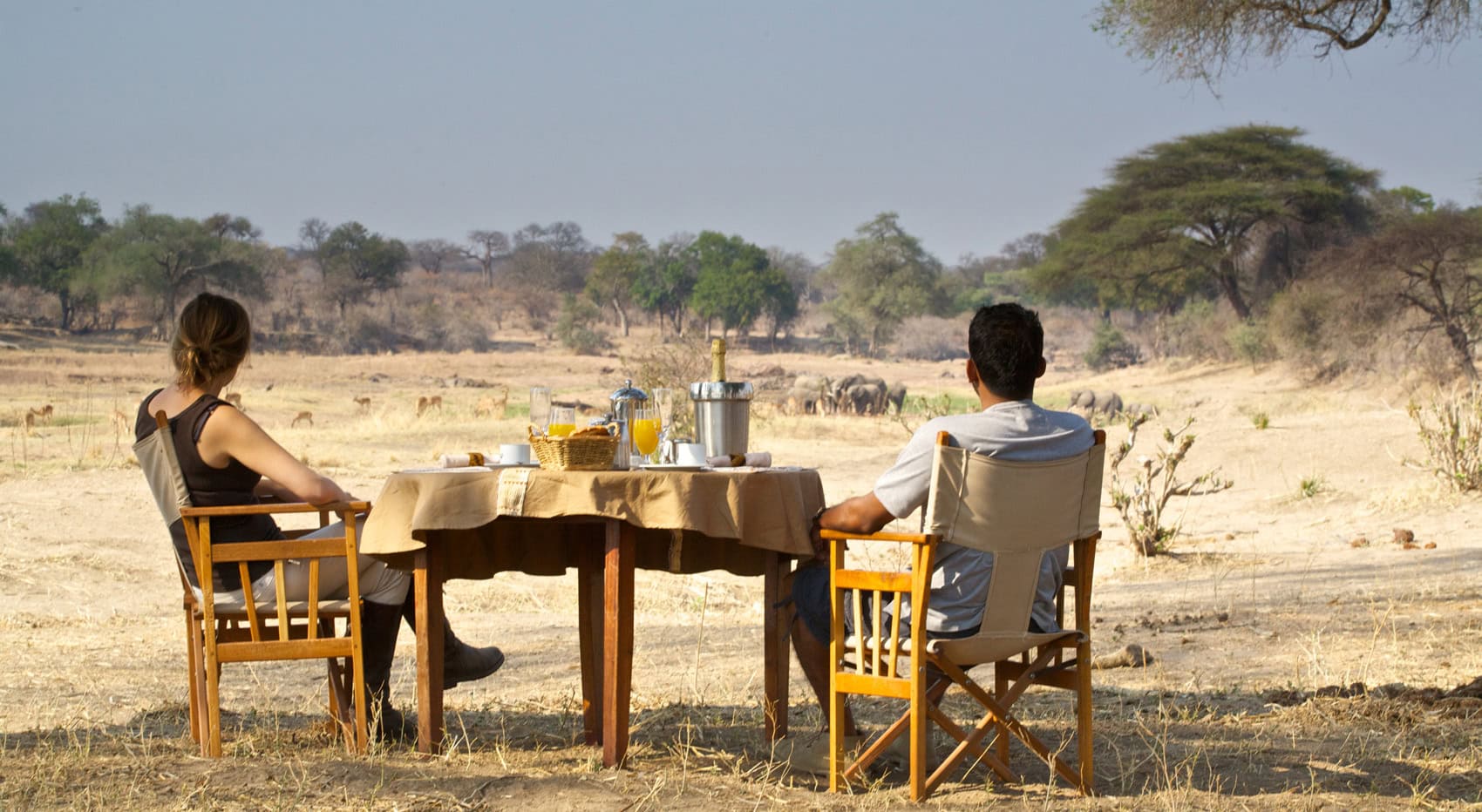
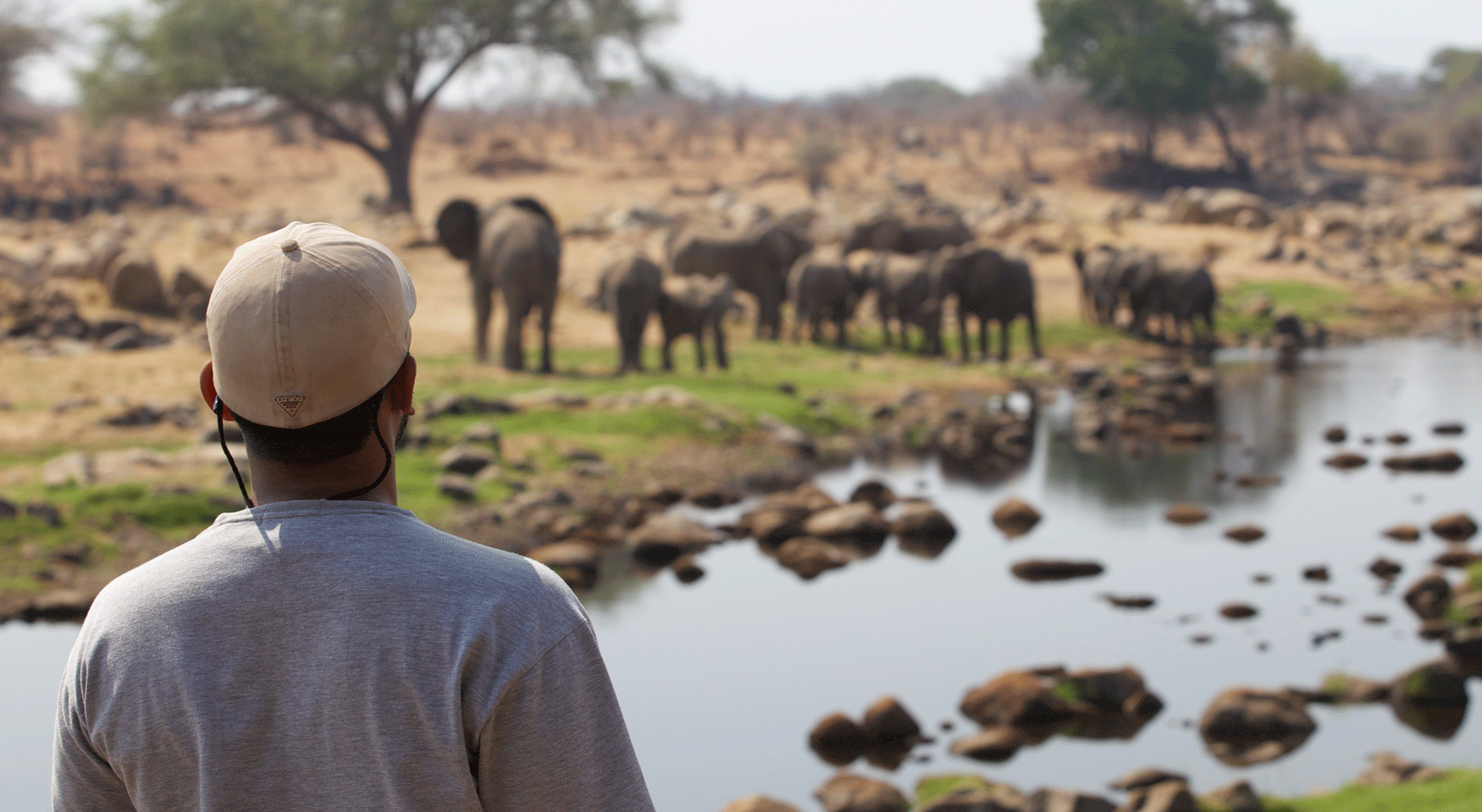
Elephants are among the big stars of Ruaha National Park. Especially during the dry season, the animals are increasingly drawn to the remaining waterholes. Along the Great Ruaha River and the sand-filled river arms, impressive gatherings can then form.
Buffalo also travel in large herds. When several dozen or even hundreds of animals move through the dry landscape, it quickly becomes clear why Ruaha is known for its large herds. And of course: where many herbivores come together, predators are usually not long in coming.
Lions, leopards and other predators
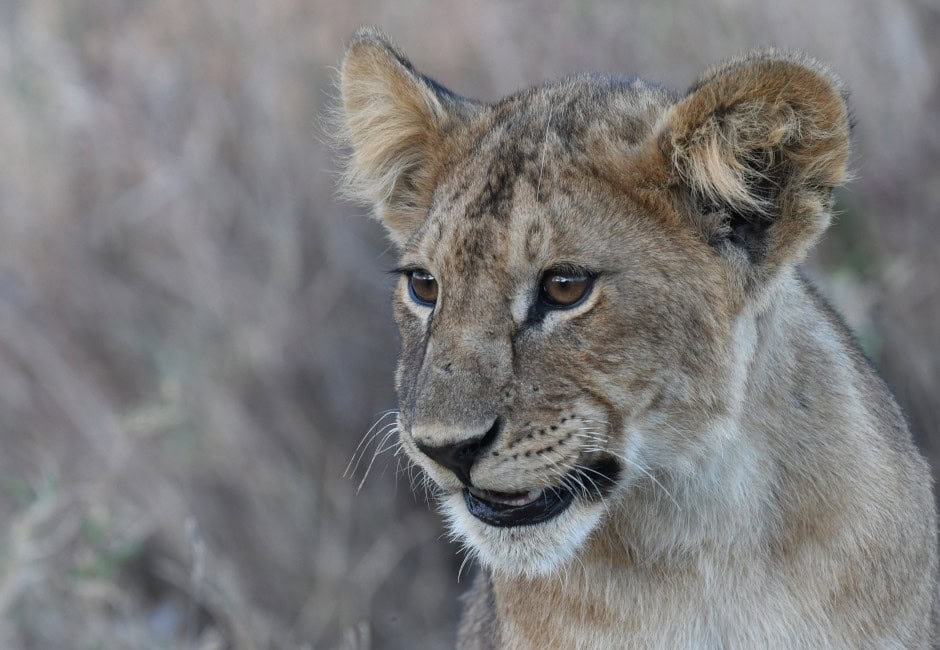
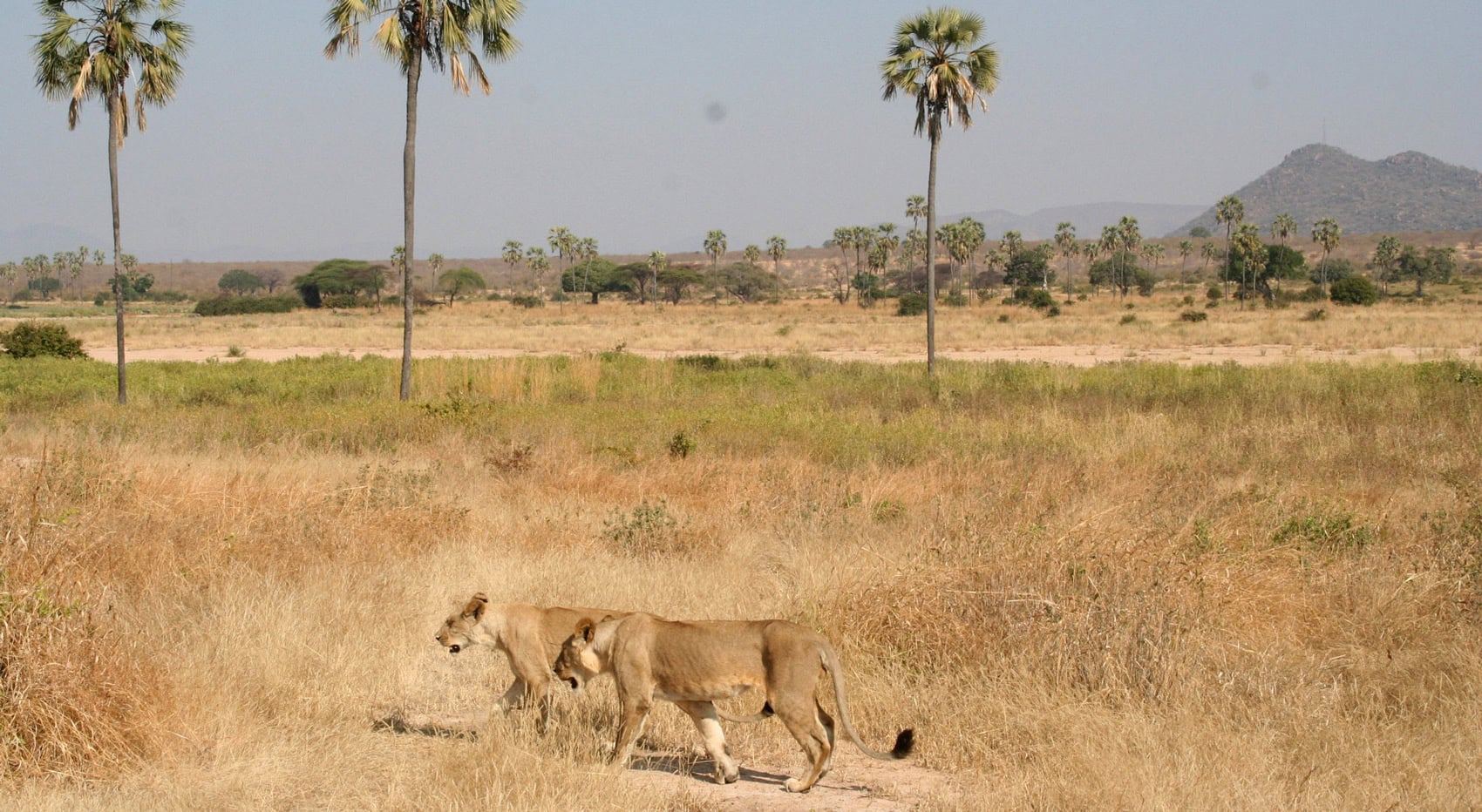
If you want to see predators, you should have Ruaha National Park very high on your safari list. The park is known in particular for its large lion prides. Lions find good conditions here in the vast savannahs and along the river landscapes. TANAPA (Tanzania National Parks) expressly highlights the large prides as well as healthy populations of leopards, cheetahs and spotted hyenas.
Leopards are by nature somewhat more secretive. With luck you will spot one on a rock, under a tree or on a cautious prowl through the riverside vegetation. Cheetahs and spotted hyenas also occasionally provide eventful safari moments.
What is exciting about Ruaha is not just the species list. Because of the park's enormous size, encounters can unfold in very different ways. Sometimes a lioness lies in the shade, seemingly bored; sometimes a pride moves across the open plain – and suddenly the leisurely game drive turns into rather exciting nature cinema.
African wild dogs and rarer antelopes
African wild dogs are among the special safari experiences in Ruaha. These highly endangered animals roam in packs across large territories and are by no means to be found on every game drive. Anyone who meets them therefore experiences a true safari moment – with or without dramatic music in the background. The best time to see them is the months from June to August, when they have pups and swap their wandering existence for a fixed den.
Things also get exciting with the antelopes: greater kudu, lesser kudu, sable antelope and roan antelope are among the species that set Ruaha apart from many other safari destinations. Added to these are other specialised species of the miombo landscapes.
Other mammals, reptiles and birdlife
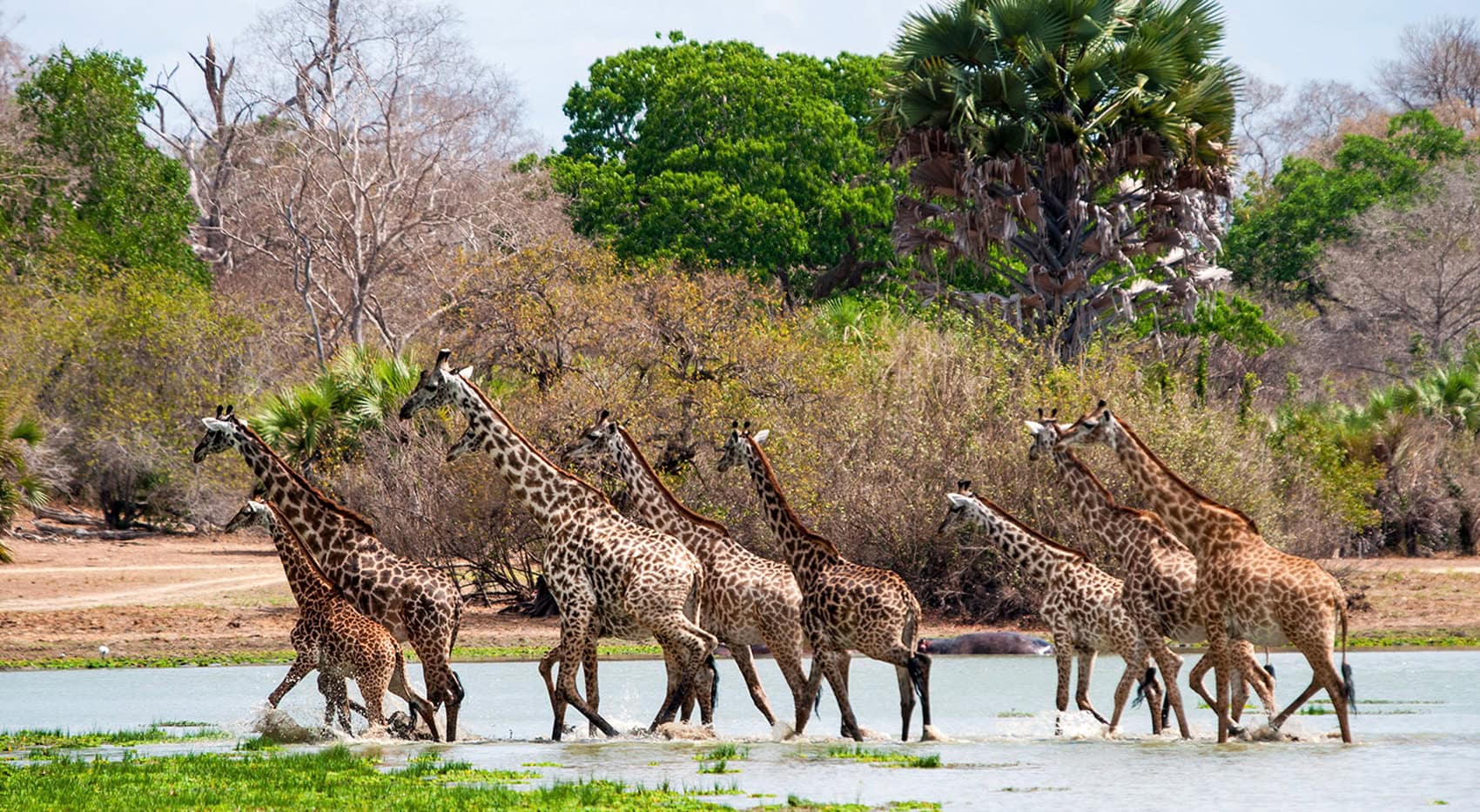
If you prefer giraffes, zebras, wildebeest, hippos, crocodiles or similar national park attractions, you will find them in Ruaha too. Particularly worth mentioning is also the birdlife. Over 570 species are recorded here. This applies above all when, in the hot rainy season, migratory birds from other parts of the world set up their summer camp in the park.
Why is the Great Ruaha River the heart of the national park?
Water determines life in Ruaha
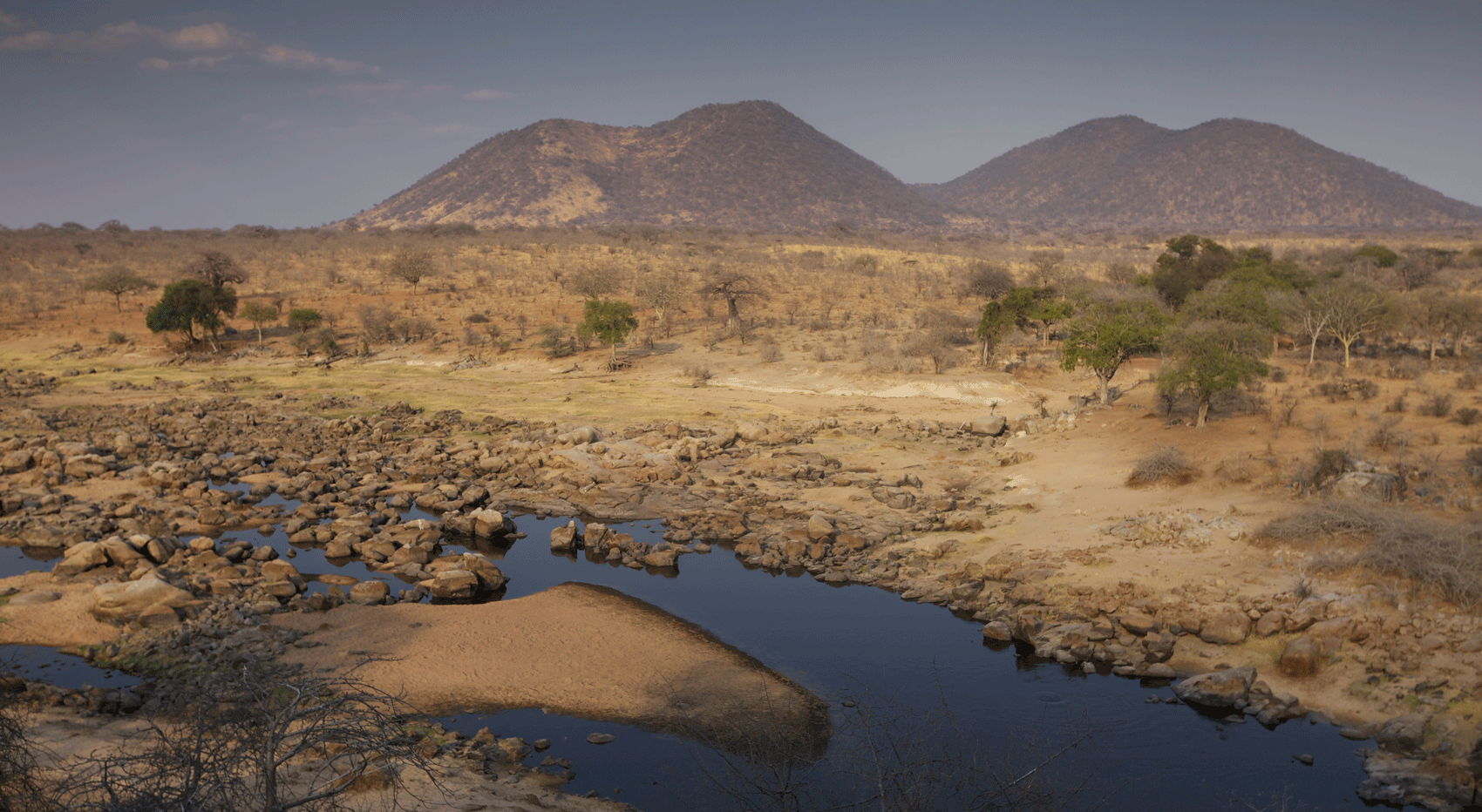
The Great Ruaha River is the lifeline of the national park. Especially during the dry months, water becomes the decisive factor for life in the savannah. When the river course dries out here and there and only individual pools or damp spots in the sand remain, many animals concentrate on these last water sources.
For safari travellers this means: the chances of exciting sightings rise. Elephants come to bathe, buffalo look for water, birds gather on the bank and predators of course also know where potential prey will turn up. In Ruaha National Park water is not simply landscape – it is a choreography of survival.
Baobabs, river landscapes and miombo woodlands
Ruaha National Park does not look the same everywhere – and that is exactly what shapes its scenic appeal. Giant baobabs stand in the open savannah, rocky kopjes rise from the landscape. Add to that dry riverbeds, riverside vegetation and extensive miombo woodlands.
This mix of open plains, woodland, rocky heights and river landscape creates very different habitats. And it ensures that the game drives stay varied too. After all, anything could be waiting behind the next baobab.
Want to find out more about trips to Tanzania?
We are happy to advise you. Get in touch with us!
What can you experience on a safari in Ruaha National Park?
Intense wildlife viewing in a vast landscape
A safari in Ruaha National Park thrives on the combination of wildlife and landscape. Instead of meeting another safari vehicle every few minutes, you can drive for a long time across the wide plains and at first – see nothing. At least apparently. Then suddenly a pair of giraffes stands among the trees or a pride of lions lies in a shady thicket. This very stillness and uncertainty is part of the experience.
Ruaha is a vast wilderness area with comparatively few visited sections. The great distances and different habitats make longer game drives especially rewarding.
Discovering Ruaha on foot
A guided walking safari completely changes the view of Ruaha National Park. Suddenly tracks in the sand, plants, insects and bird calls become just as interesting as an elephant on the horizon. Guided walks take place in designated areas with qualified and authorised guides.
Why Ruaha is also worthwhile for birdwatchers
574 recorded bird species make Ruaha National Park extremely interesting for bird fans too. The selection of birds of prey is particularly varied. Add to that bee-eaters, kingfishers and seasonal migratory birds, among others.
When is the best time to travel to Ruaha National Park?
The classically best time for a safari in Ruaha National Park is between June and October. This is the dry season, the vegetation thins out and animals concentrate increasingly on fewer and fewer remaining waterholes. If, on the other hand, you want to experience lush landscape vegetation and especially many birds, the green months offer a completely different character.
June to October: animals around the waterholes
From June to October, Ruaha National Park is especially interesting for classic wildlife viewing. The longer the dry season lasts, the scarcer the water becomes. Rivers and remaining waterholes thus gain enormously in importance – and with them the chances of wildlife sightings. Elephants and buffalo gather at the waterholes, while predators keep a close eye on the movements of their prey.
In terms of scenery, too, this season has its own charm: dry grasses, warm light and the characteristic baobabs make up the classic Ruaha backdrop. June marks the transition from the rainy season into the dry season, while July to October grow increasingly parched.
However, you should not confuse "best time to travel" with "only time to travel". Ruaha is exciting outside the main season too – provided accommodation and current road conditions suit your travel dates.
November to May: green Ruaha National Park and birdlife
With the first rains Ruaha changes visibly. The landscape becomes greener, plants grow and many animals spread out over the terrain again. At the same time a particularly interesting time begins for birdwatchers: migratory birds arrive and the already species-rich birdlife becomes even more varied.
The rainy season is therefore by no means a blanket "bad time to travel". Dramatic clouds, fresh greenery and fewer visitors can have their own appeal. However, the long rains from about March to May bring practical limitations. Many camps and lodges close at this time, and some roads can be difficult or temporarily impassable. You should therefore definitely check the current opening times of your chosen accommodation.
How do you get to Ruaha National Park and how long should you stay?
By light aircraft or overland
Ruaha National Park can be reached both overland and by light aircraft. From Iringa a road leads towards the park, partly tarmac and partly gravel track; inside the park and on the access roads a suitable 4x4 vehicle is especially important, above all in the rainy season.
For many travellers the flight is the more comfortable option. Several operators fly to the airstrips at Msembe and Jongomero; connections can be built into a safari on the Southern Circuit. Especially when Ruaha is combined with the even larger Nyerere National Park or other destinations in the south, the small plane saves a good deal of time – and, looking out of the window, gives you a first taste of the huge landscape.
How many days should you allow for Ruaha?
For Ruaha I would plan at least three nights, better three to four nights. Not only because the national park is huge, but because its appeal lies precisely in taking your time. In principle, though, anything is possible if you can also live with a taster day.
Several longer game drives make it possible to get to know different areas and habitats and not to put every wildlife sighting under the pressure of a tight schedule. If you want to look for lions in the morning, watch elephants at the river in the afternoon and in between simply gaze at a baobab landscape for minutes on end, you need a bit of breathing space in the programme.
Frequently asked questions about Ruaha National Park
Is Ruaha National Park worth a visit?
Yes. Ruaha is worthwhile and especially interesting for travellers looking for big wilderness, comparatively little-visited safari areas and diverse wildlife. Large lion prides, elephants, buffalo, African wild dogs and rarer antelopes are among the highlights. Add to that baobabs, miombo woodlands and the Great Ruaha River.
Is Ruaha better than the Serengeti?
There is no better or worse here. The two parks are too unique in their own ways and both are worth a trip. The Serengeti is famous above all for its vast plains and the Great Migration. Ruaha National Park, by contrast, scores with seclusion, varied landscapes, a huge elephant population, large lion prides, many wild dog families, unusual antelopes and a pronounced wilderness feel. The two parks therefore have a markedly different character.
Can you see African wild dogs in Ruaha National Park?
Yes. African wild dogs occur in Ruaha National Park and are among its special species. As they use large home ranges and can be constantly on the move, there is of course no guarantee of seeing them. Anyone who spots them, however, can look forward to a rather special safari moment.
Why is Ruaha National Park known for its lions?
Ruaha is known for its large lion prides. The combination of vast savannah, river landscapes and a rich supply of prey creates good living conditions for the big cats. Besides lions, leopards, cheetahs and spotted hyenas also occur. The areas along the river courses in particular can offer interesting predator sightings.
Experience Ruaha: safari in the wild south of Tanzania
Ruaha National Park is not a destination that pushes itself loudly into the foreground. It behaves more like a good host: open the door, welcome you into the wilderness, show you wildlife and landscape and leave the rest to nature.
There are the baobabs enthroned above the savannah. The Great Ruaha River, where life gathers in the dry season. Herds of elephants, large lion prides, shy leopards and, with a little luck, a pack of African wild dogs.
Above all, though, this feeling of vastness remains. Ruaha shows Tanzania from a quieter, rougher side – and that is exactly where its special appeal lies. If on safari you want not only to see animals but to experience real wilderness, you will find plenty of it here.
For further questions and support with planning your Tanzania trip, we are happy to help. Thanks to our close contact with our subsidiary in Tanzania, we are always well informed about the current situation. So get in touch with us! Your dream, our expertise – your very own Tanzania experience.
Juan Proll has lived in southern Africa since 2011 and works as a certified nature and cultural guide in South Africa, Botswana and Namibia for Elefant-Tours and its subsidiaries. After an earlier career as an adult education teacher in Germany, he swapped the classroom for the wilderness. Alongside his work as a guide, he writes for the Elefant-Tours blogs about nature, culture and sustainable travel. Juan is a member of the Field Guides Association of Southern Africa (FGASA) and the author of the books "Ich werd' dann mal Ranger" and "Das Safari-Lesebuch". The magazine DER SPIEGEL reported on his training.