Insider tip Tarangire National Park – the ultimate guide for your safari adventure
 by Juan Proll· March 17, 2025· 16 min read· Updated April 1, 2025
If you want to get to know one of Tanzania's coolest top safari destinations, visit Tarangire National Park.
The landscape is breathtaking, the wildlife sensational. And it is easy to reach, too. With this ultimate guide to your Tarangire safari adventure, there is no longer any reason to drive past Tarangire National Park.
What can I expect on a Tarangire safari – is Tarangire National Park worth it?
Tarangire National Park lies in northern Tanzania. It is often underestimated, but with its impressive baobab trees, large herds of elephants and fascinating wildlife, it is a true gem for anyone who loves wild animals.
Its lifeline is the Tarangire River, which is still there for its animals even in the dry season between June and October, providing them with water, grasses and leaves.
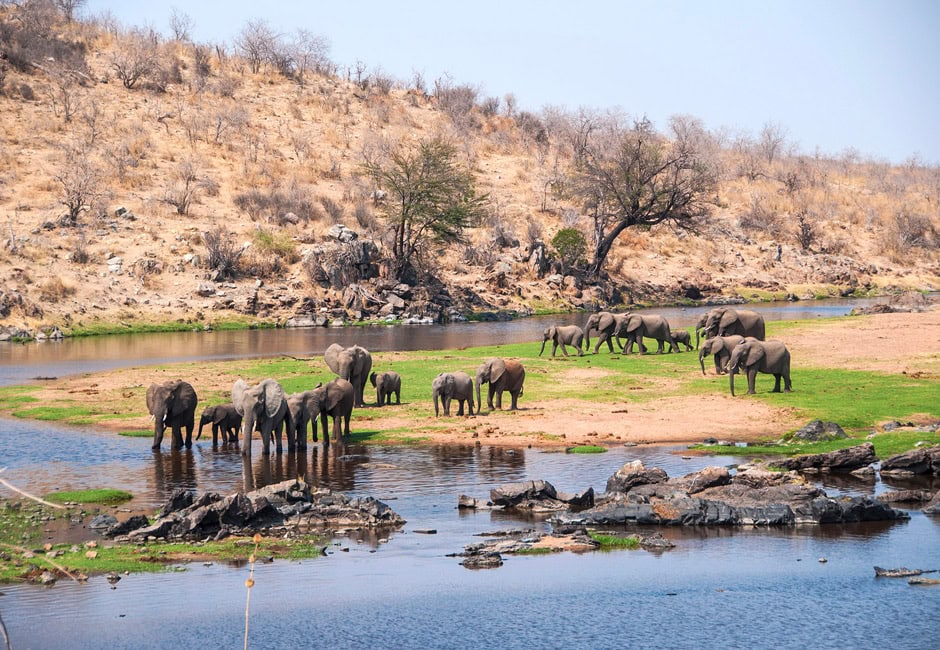
Here you can see giraffes, zebras, wildebeest and other antelopes, but also hungry predators, which increasingly concentrate along the remaining river sandbars. Particularly exciting are the large elephant populations, which ruthlessly claim the best spots here.
In the rainy season between November and April, you can also admire over 550 different bird species in the park.
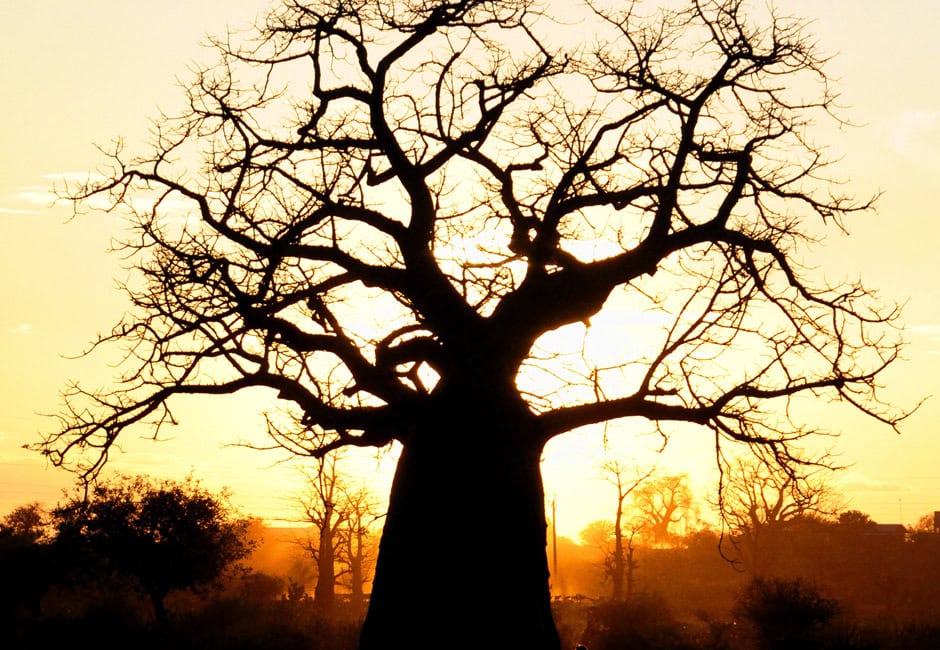
But you won't just enjoy the superb wildlife. The landscape in Tarangire, with its typically African ambience, is spectacular too: the river, the swamps, the savannah dotted with baobab and acacia trees, and the breathtaking views across the steppe.
And all of this with fewer tourists than in many of the neighbouring national parks. Yes, Tarangire National Park is worth it!

Where is Tarangire National Park?
From Tanzania's northern safari capital, Arusha, you drive just 110 km west and, depending on road conditions, need 2–3 hours to reach Tarangire National Park.
That means you are already on the route to Lake Manyara National Park, the Ngorongoro Crater and the world-famous Serengeti National Park. Tarangire National Park is part of the country's so-called “Northern Safari Circuit”.
You could hardly find better conditions for some fantastic safari experiences. Even the journey there will delight you.
On the way, you immerse yourself in authentic Africa, driving past traditional villages and meeting Maasai herders with their cattle, goats and sheep. Some ancient indigenous peoples live in this region, including the Datoga and the Hadzabe, a community protected in Tanzania and among the last hunter-gatherers.
The protected area of around 2,850 km2 lies on the Tarangire River, from which it takes its name, in a landscape shaped by waterways, swamps, woodland and savannah. There is no shortage of hills and rocky outcrops either.
Together with Lake Manyara National Park, Tarangire forms an ecosystem spanning approx. 20,000 km2. A corridor between the national parks provides an important buffer zone for the region's migrating animals.
What makes Tarangire National Park so special?
What really struck me on my first visit was the contrast between the dryness outside and the wetland landscape inside the national park.
You see the river, the swamps, green vegetation and woodland. And right in the middle of it all, the wildlife makes itself comfortable. It isn't Noah's Ark, but it feels like Noah's oasis.

The Tarangire River – the lifeline of the park
The Tarangire River is more than just the lifeline of Tarangire National Park. Especially in the dry season from June to October, it is a magnet for the region's wildlife. During this time, the year-round flowing water attracts crowds of big game.
As if drawn by the tempting aromas of a freshly prepared feast, not only antelopes but also zebras, buffalo and elephants are drawn to the area.
But you won't just be treated to the sight of this abundance of animals. The landscape that unfolds along the life-giving river is also well worth seeing. Grassland and open tree savannah create lovely retreats once thirst has been quenched.
Silale Swamp – a paradise for wildlife
The swamps also lie within the influence of the Tarangire River. In the rainy season they willingly absorb all the water and release it only slowly over the course of the dry season. River and swamp areas thus make an extremely important contribution to the ecosystem and biodiversity.
The animals of the surrounding area make the most of the benefits of this fertile, lushly vegetated landscape rich in food during the dry season. Many animals move from the rest of the park to the vicinity of the swamp, which allows for spectacular wildlife viewing.
Large herds of elephants, buffalo and lions come here to drink and cool off. Zebras, wildebeest and many species of antelope, including the shy eland, are also often seen. With a bit of luck, you can also spot leopards here.

Silale Swamp is also a paradise for birdwatchers, with numerous waterbirds, including storks, herons and African fish eagles.
Silale is, incidentally, also known as a good place to encounter rock pythons, especially in the dry season. Imagine looking one of these massively built snakes, which can grow to over 4 m long, in the eye. Don't worry! You are not on its menu.
Most travellers arrive in the north of Tarangire National Park. Silale Swamp, however, lies in the south. That is why you should plan two nights in Tarangire National Park if you want to visit Silale Swamp.
I also recommend a break at the Silale Swamp Picnic Site. From here you have an excellent view of both the tree savannah and the wide, marshy grassland with its wildlife.
I can only wholeheartedly recommend a visit to Silale Swamp. It is a real insider tip for safaris and shows why Tarangire National Park deserves more attention.
Want to find out more about Tanzania tours?
We'd be happy to advise you. Get in touch!
Safari highlights – which animals can you see in Tarangire National Park?
Tarangire National Park is a Big Four area. You will not find rhinos here. Elephants, on the other hand, are plentiful. Lions are well represented, and some of them like to spend their siesta up high on thick tree branches. Spotting a tree lion like this is a real highlight, even for an old safari hand like me.
Leopards are much rarer, but can be found especially in the dry season around the Silale Swamp area. Buffalo, on the other hand, are all the more numerous. If you want to see rhinos, you have to drive a few more kilometres to the Ngorongoro Crater or to Serengeti National Park.
In return, there is an abundance of the “Big Others” here, of which I can only mention a few. The variety is too great.
Giraffes love the park's acacia trees, while zebras and wildebeest graze the grass of the savannahs and swamps until just before it turns green. Crocodiles lurk in the Tarangire River for unwary prey. Only the hippos in their immediate neighbourhood are not intimidated by these loudmouths.
A rare sight are the fringe-eared oryx and the gerenuks, which are also called giraffe gazelles because of their long necks. Other rare sights in the national park include African wild dogs and cheetahs. Spotted hyenas are seen more often.
I have already hinted at snakes. What would a top safari destination be without snakes like the rock python, the black mamba or the puff adder? Of course, other creepy-crawlies are not missing either.
The more than 550 bird species at peak times add further colour to the landscape. Among them are iconic birds such as ostriches, flamingos, pelicans, purple-crested turacos, marabou storks, saddle-billed storks, goliath herons, lesser jacanas, secretary birds and fish eagles.

Elephants in Tarangire – an unforgettable experience
With so many elephants in Tarangire National Park, a separate section is well deserved. In the dry-season months, the park fills up in such a way that the largest elephant population in northern Tanzania gathers here.
Unfenced national parks and protected corridors ensure constant movement among the migrating wildlife. Wherever they roam in the rainy season, at some point it's time to say: “Let's head for our dry-season home in Tarangire National Park.”
Here, even in advanced drought, it is still possible to feed on grasses, roots, bark, leaves, twigs and other vegetarian material. On top of that, the Tarangire River usually flows all year round. Though not everywhere. There are spots that dry out after months without rain.
But even when the precious elixir seeps away, the pachyderms are able to dig up the ground with their trunks, tusks and powerful legs and turn sand into water.
Good for them, helpful for many other animals searching for water, and exciting for us to be able to observe this extraordinary behaviour.

My top 10 animals in Tarangire National Park
Of course I have my personal favourites when I think of the animals in Tarangire:
- Elephants that poke their trunks into the sand like dowsing rods and search for water.
- Lions that take their siesta in a tree in the Silale swamp area.
- Giraffes that, when drinking water, adopt a posture you won't see in any other animal to this extent.
- Zebras accompanied by wildebeest, whose constant wandering you can read in their faces.
- Fringe-eared oryx and gerenuks, because they are simply a rare but fascinating sight.
- Crocodiles and hippos, because I always loved watching Tarzan films.
- African wild dogs, who never cease to impress me with their social behaviour, for example bringing food back not only for the young left behind, but also for the babysitters, the old and the sick.
- Birds such as the purple-crested turaco, the lilac-breasted roller, the malachite kingfisher or bee-eaters, which are so wonderfully colourful.
- Rock pythons, which in their thickness are more reminiscent of a water pipe than a water hose.
- Green monkeys, honey badgers and banded mongooses, because they always put a smile on my face.

How long should you stay in Tarangire National Park?
Many visitors treat Tarangire National Park as a quick stopover on the way to the Serengeti or the Ngorongoro Crater. They start their safari in Arusha in the morning, arrive in Tarangire around midday and explore the park on an afternoon game drive.
As a result, most visitors spend only a few hours on game drives inside the park and spend one night either in or just outside the national park.
If you are going on a private safari, I recommend staying two nights in Tarangire National Park instead. There is more than enough to see and experience!
With two nights in Tarangire National Park you have a full safari day rather than just a few hours for game drives, and can also venture into more remote areas such as the very wildlife-rich Silale Swamp. Many visitors miss this part of the park because they want to go straight on to the Serengeti.
How many days you should plan in total for a Tanzania safari is summarised for you in this blog.
When is the best time to travel to Tarangire National Park?
Most people consider the best time to travel for a safari in Tanzania and a visit to Tarangire National Park to be the dry season from mid-June until the start of the rainy season in November.
As the dry season progresses, the Tarangire River, which carries water all year round, and the Silale Swamp, which stores water all year round, offer one of the last good drinking sources in the region. This draws elephants and other big game here in droves. Simply follow them for a very special safari experience.
You can find more details on the best time to travel to Tarangire National Park in this blog.
Our favourite safaris including Tarangire National Park:
Rainy season in Tarangire – a green oasis
River and swamp landscapes make it easy to guess that things can get quite wet and muddy in the rainy season. The result is difficult road conditions, and some tracks can be hard or even impossible to pass. Without a 4x4 off-road vehicle, nothing works here.
At the same time, the rain produces lush plant growth and blocks many a clear view. Animals are now harder to spot behind the denser bushes and tall grasses. In addition, there is now water and food everywhere close together. Many of the animals therefore don't need to move much and tend to stay hidden.
But even though the rainy season makes wildlife viewing more challenging, it also offers you special advantages.
The landscapes are more colourful and full of contrast and are popular with photographers. The rain and occasional thunderstorms add extra excitement to your safari days. It is also the season of newborns. Young animals in abundance. An experience that moves my heart again and again.
Above all, it is a time when few other tourists are around and low-season prices make the trip more affordable.
Safari in the dry season – experiencing animals up close
The roads are now easily passable, but the landscape increasingly loses its shine, colours and vegetation. In return, the night sky becomes crystal clear.
The longer the dry season progresses, the more waterholes dry up and food sources disappear. This sets the wildlife in motion, as it has to travel to the remaining water and feeding spots and gathers there. All this makes the animals more visible and easier to spot. A dynamic quickly develops that promises varied encounters and experiences.

Due to the special situation in Tarangire National Park, with its river and swamps carrying water all year round, more and more animals now stream in from outside as well.
You now see elephants almost around every corner and they come so close to your vehicle that you could reach out and stroke them. But keep your hands to yourself, because they are wild animals. And no matter how gentle they look, they can become very unpleasant if they are in a bad mood or feel threatened!
It is high season. Everything becomes noticeably more expensive and more tourists come into the country.
Practical tips for a safari in Tarangire National Park
- I strongly recommend taking part in a guided tour with a guide rather than travelling on your own. The self-drive sector is still underdeveloped, and the supposed financial advantage often turns out to be a fallacy.
In Tanzania's wild national parks, where experienced driving and the right handling of wildlife are what count, unprofessional behaviour can not only endanger your own safety but also disturb the animals' natural behaviour. - On a guided tour with the guides of our local subsidiary and an experienced team behind you, on the other hand, you are in good hands.
The guides will also give you all the important information you need for day-to-day survival on a safari. - If you want to travel in high season and get your preferred accommodation and dates, then book early, between 6 and 12 months ahead.
- On guided tours, the national park entrance fees are generally included in the tour price. This saves time and organisational hurdles.
- For a visit to the park, I recommend at least one night if time is very tight. Better is 2 to 3 days if you also want to see something of the south of the park. You can always stay longer.
- Also important is health care. A tropical medicine consultation with a doctor covers sensible vaccinations and prophylaxis.
Tanzania is generally a country with a risk of malaria and Tarangire National Park is also an area with tsetse flies, which can transmit sleeping sickness. - Plenty of sunshine in the dry season means you should have enough water, sunglasses and a hat with you, and apply sunscreen regularly.
- Also remember to bring snacks, as there is no supermarket inside the park. You will be well looked after on our guided tours, but long game drives can make you hungry.
- If you take photographs, you should bring a camera with zoom and a focal length of up to 400 mm and more.
I personally use focal lengths between 18 and 600 mm and plan to get a wide-angle lens soon. If only they weren't so expensive. - A pair of binoculars should not be missing either. The animals are not always as close as you would like. Without binoculars, many exciting details are then lost.
We have summarised tips for choosing the best binoculars for your Tarangire safari in this blog.

Accommodation in Tarangire National Park – your options
There is a wide range of accommodation in and around Tarangire National Park, including permanent lodges, tented camps and public campsites.
The solidly built lodges certainly offer the most protection, but also mean the greatest concentration of travellers.
Sleeping in tents, on the other hand, usually feels less protected, but is also closer to nature. Especially when the tented camp has no fence, it requires caution and discipline, particularly in the dark.
I love this kind of accommodation myself. Add a campfire, the stars … Above all, though, I prefer accommodation inside the park. That way I feel right in the middle of things.
Safari lodges
Among the lodges inside the park is, for example, the Tarangire Safari Lodge. A lodge that is already lovingly run by a family in its second generation and sits on a cliff just under 10 km beyond the park entrance. It offers a breathtaking view of the wildlife along the Tarangire River.
Another option is the Maramboi Tented Lodge, which, however, lies outside the park in the Burunge Wildlife Management Area. This conservation area forms a corridor for migrating wildlife between Lake Manyara National Park and Tarangire National Park.
Tented accommodation – from luxurious tented camps to simple campsites
The options for tented accommodation include budget-friendly campsite variants as well as luxurious safari camps. The latter include, for example, Oliver's Camp in the heart of Tarangire National Park.
It was founded by Paul Oliver, one of the pioneers in the fight against poaching in Tarangire. To this day the camp has preserved the adventurous spirit he once created, while not giving up on excellent service.
Another jewel among the tented camps is Kuro. A small but luxurious camp full of heart and soul. Hidden among acacia and sausage trees, at one with its surroundings, it is hardly noticed by the wildlife, which makes many spontaneous wildlife sightings possible outside the game drives.

An example of a simple campsite is Tarangire Public Campsite No. 1. It is located inside the park, a good 5 km from the entrance gate. There is a block with shared toilets and showers as well as a shared kitchen. You do, however, have to bring your own drinking water and food.
A very special experience is a night in our Mobile Explorer Camp. This is set up for you by the team of our local subsidiary on private campsites. Here you experience a mix of camping and comfort in the middle of the wilderness and far away from other tourists. A unique experience for true safari lovers.

How do I plan a safari to Tarangire National Park?
You can wonderfully build a safari in Tarangire National Park into a “Northern Circuit” safari in northern Tanzania. This is where the country's best-known safari destinations are located. You can visit Tarangire either on a mini-group tour or a private safari, also in combination with the Serengeti.
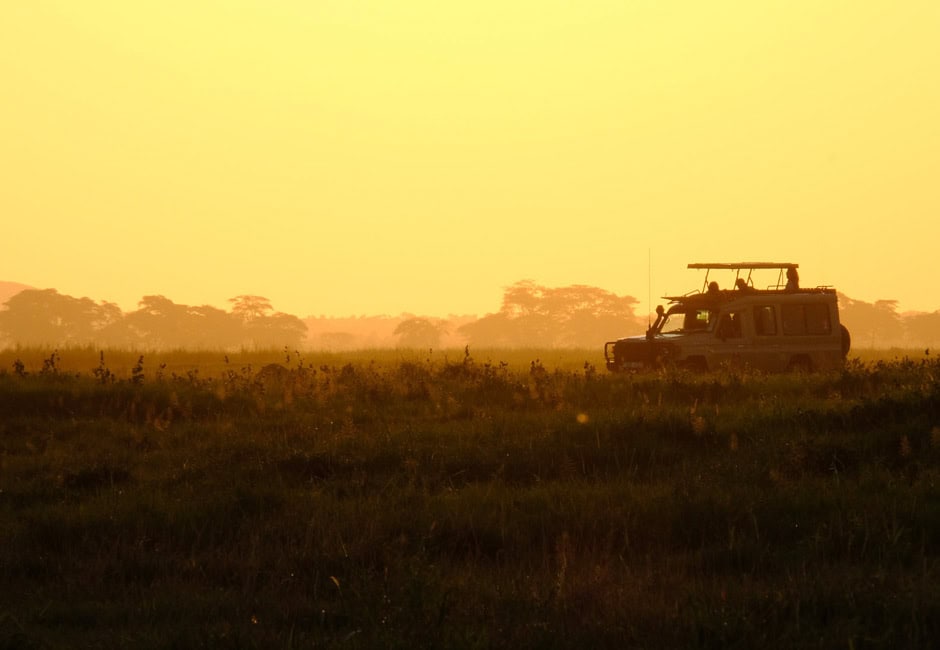
With both options you travel in a 4x4 Toyota Land Cruiser that has room for a maximum of 7 guests plus guide. That way a window seat is guaranteed.
On a mini-group tour, you spend an afternoon on a game drive in Tarangire National Park and stay overnight in a personal camp just outside the park. A private safari can be designed however you like. So you can also stay several nights in Tarangire National Park.
Our team of Tanzania travel experts is regularly on the ground and can advise you personally and plan your Tarangire safari with you.
All Tanzania tours with Elefant-Tours are carried out by our local subsidiary. With specially converted safari vehicles and very well-trained guides, our colleagues make the best safari experience possible for you.
It all starts with a personal consultation!
Personal conclusion – is a safari in Tarangire worth it?
A visit to Tarangire National Park is definitely worth it! It offers safari experiences of the finest kind. Landscape and wildlife create a special feeling of wildness.
The wildlife is particularly impressive, especially the large population of elephants that can be observed here. But it is the diversity of animals as a whole, with its lions, giraffes, zebras, various species of antelope, predators and birds, that makes this park a great destination for safari fans and photographers.
For me, the beautiful landscapes with their ancient baobab trees, open savannahs and river courses, which create a unique safari backdrop, are also a feast for the eyes.
The dry season is especially recommended, when many animals gather around the few remaining water sources, increasing your chances of unforgettable wildlife viewing.
When I visit the park at this time, it feels as if I am entering another world – parched landscapes outside, wetlands with lush vegetation inside. You can't go wrong with a visit here.
Tarangire National Park is a hugely underrated park, which also makes it a less-visited park and therefore a real insider tip for guests. It is worth visiting this very authentic park and also spending a few extra days there.
We are therefore happy to answer any further questions and support you in planning your Tanzania trip.
Thanks to our local subsidiary, we are always well informed about the current situation. So, get in touch! Your dream, our expertise – your very own individual Tanzania experience.
Juan Proll has lived in southern Africa since 2011 and works as a certified Nature and Cultural Guide in South Africa, Botswana and Namibia for Elefant-Tours and its subsidiaries. After an earlier career as an adult-education teacher in Germany, he swapped the classroom for the wilderness. Alongside his work as a guide, he writes for the Elefant-Tours blogs about nature, culture and sustainable travel. Juan is a member of the Field Guides Association of Southern Africa (FGASA) and the author of the books “Ich werd’ dann mal Ranger” and “Das Safari-Lesebuch”. The magazine DER SPIEGEL reported on his training.