Okavango Delta: everything you need to know for your trip planning
 by Juan Proll· June 15, 2026· 15 min read· Updated September 10, 2026
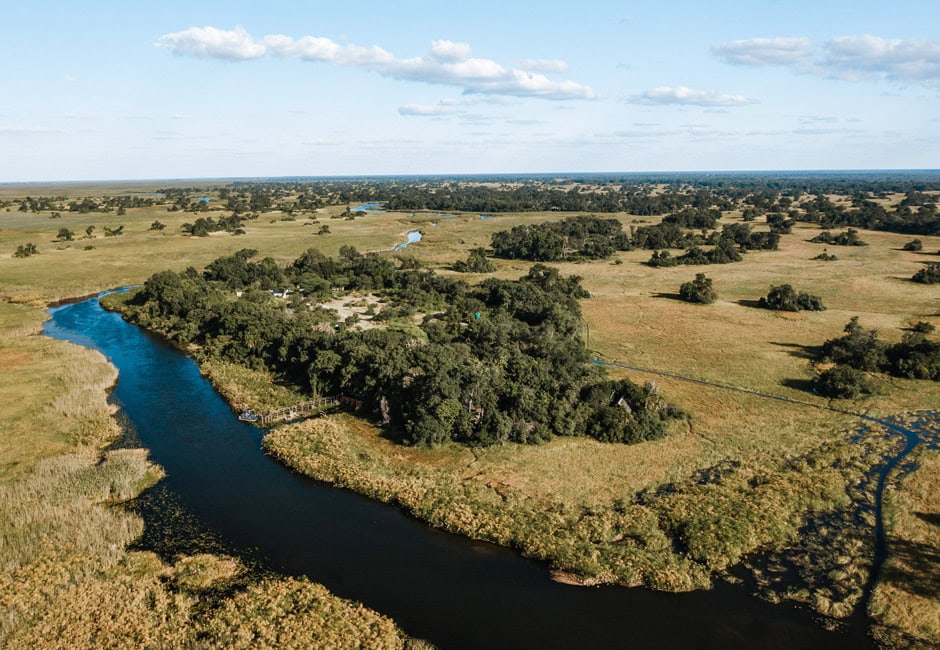
The Okavango Delta is one of Africa's most extraordinary natural wonders. Instead of flowing into the sea, the mighty Okavango River seeps away in the middle of Botswana's desert, creating a unique oasis full of wildlife, waterways and adventure.
Here you will find out why the Delta is so special, which wildlife you can see there, what makes a safari there so unique and what you need to know for planning your trip.
Where is the Okavango Delta?
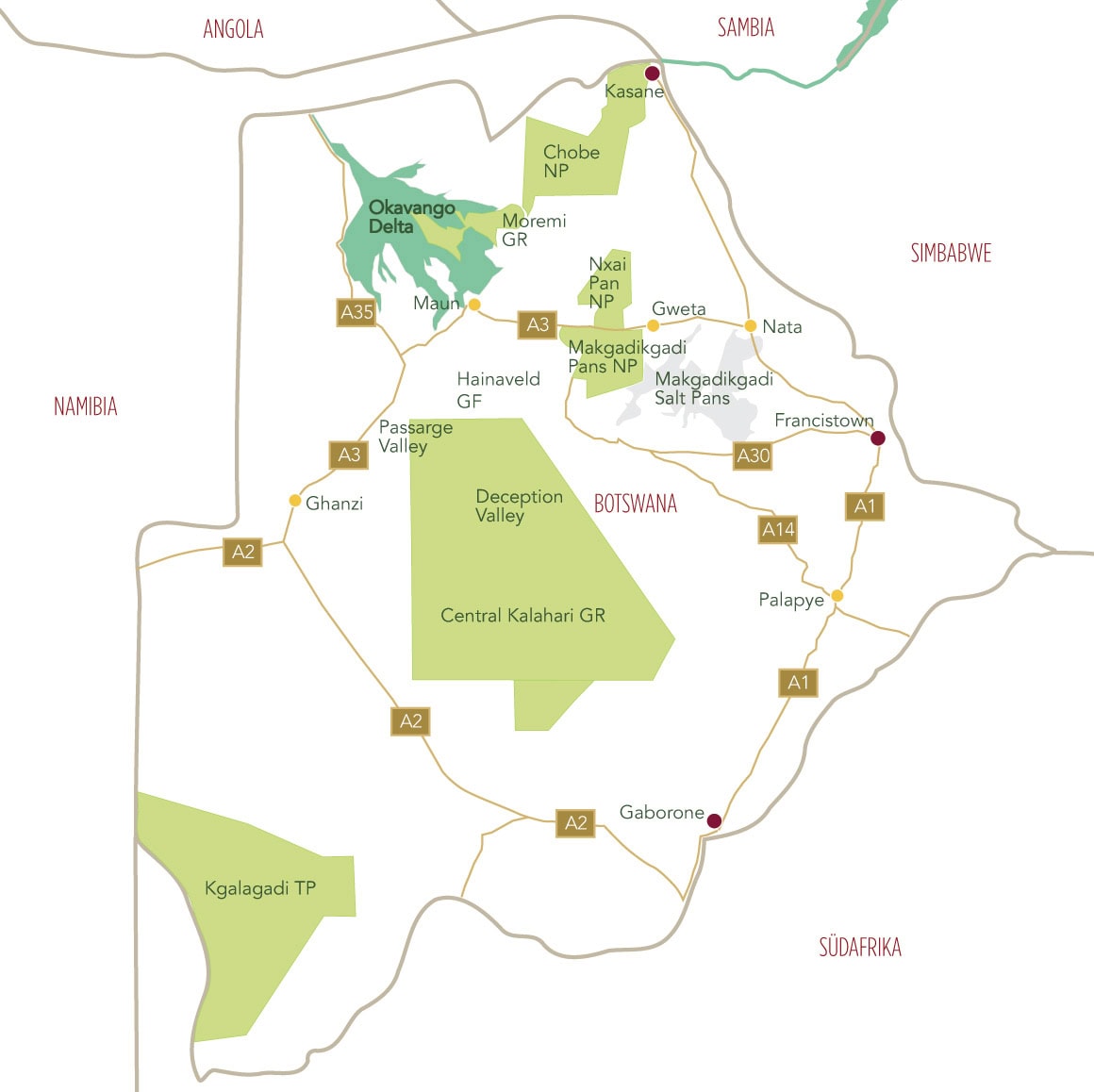
The Okavango Delta is nestled in the Kalahari Desert in north-west Botswana and is considered the largest inland delta in the world. Surrounded by dry savannahs, it forms a fascinating contrast to the otherwise water-scarce landscape. Thanks to its location, the Delta is a popular starting point for safaris through southern Africa.
Location in Botswana
The Okavango Delta extends across north-west Botswana over an area of up to 20,000 square kilometres. The most important gateway to the region is the town of Maun, which lies directly on the southern edge of the Delta. From Kasane, the starting point for safaris in Chobe National Park, it is around 270–300 kilometres, depending on the access gate.
The Delta thus links some of Botswana's best-known natural highlights. Embedded in the Kalahari Desert, this water-rich ecosystem offers an exciting contrast that makes the region so unique.
How is the Delta formed?
The natural wonder is created by the Okavango River, which has its source in the highlands of Angola. Every year, at the start of the rainy season, it carries enormous volumes of water towards Botswana. Months later, the water reaches the flat Kalahari plain, where it fans out across thousands of channels, lagoons and islands.
In addition to the year-round swamplands, which alone cover around 6,000 square kilometres, up to a further 14,000 square kilometres of flooded grassland are added. The seasonal floods usually peak between June and August.
The remarkable thing: the water never reaches the sea. Instead, it evaporates or seeps into the sandy soil of the Kalahari – and in doing so creates one of the most species-rich ecosystems in Africa.

Why is the Okavango Delta so special?
Imagine a river setting off through the desert towards the sea – and simply not making it. Instead, its destiny is to be a unique watery world in the middle of the Kalahari, offering spectacular wildlife viewing, ever-changing landscapes and safaris like nowhere else in Africa.
The largest inland delta in the world
The Okavango Delta is the largest inland delta on Earth – and a true master of transformation. Every year, the floodwaters from Angola flood Botswana's dry landscape and turn it into a mosaic of floodplains, channels, swamps, islands and lagoons.
The exciting part: no two years look exactly alike. Water levels, animal migrations and even entire waterways change constantly. Where there is an island today, a lagoon may form tomorrow. This dynamism makes the Delta a living natural wonder that keeps reinventing itself.
UNESCO World Natural Heritage Site
Since 2014, the Okavango Delta has been a UNESCO World Natural Heritage Site. The designation recognises not only the extraordinary landscape but also its enormous importance for conservation. Thousands of animal and plant species find a protected habitat here – including many endangered species that depend on this unique ecosystem.
Safari on the water
While other safaris mostly take place on dusty tracks, in the Okavango Delta you often head out onto the water. Particularly popular are trips by mokoro, a traditional dugout canoe that glides silently through the reed channels.
If you want to cover more ground, you can take part in motorboat safaris. The best part: many lodges combine water and land safaris, so you can experience hippos, elephants, lions and other icons of African wildlife from different perspectives in a single day.
Discover Botswana with us.
Get in touch with us!
Which animals live in the Okavango Delta?
The Okavango Delta is like an all-inclusive resort for Africa's wildlife – just without the sunlounger reservations at six in the morning. Thanks to the year-round water supply, some of the continent's most impressive animals gather here. Elephants wade through the river arms, hippos doze in the lagoons and crocodiles lie motionless in wait on the banks.
Lions, leopards, cheetahs and wild dogs also call the Delta home. Buffalo and rhinos (Chief's Island) complete the Big Five. Also found here: zebras, giraffes and antelopes.
Particularly during the dry season, the water attracts numerous animals and creates spectacular safari moments. In short: if you want to experience Africa's wildlife up close, this is exactly the right place.
A paradise for birdwatchers
Bird lovers also get their money's worth in the Okavango Delta. More than 400 bird species are recorded here, including kingfishers, bee-eaters, herons and the rare African fish eagle. With a bit of luck, you may even spot the colourful African skimmer. Don't forget your binoculars – there is chirping, fluttering and circling on every corner.

The different regions of the Okavango Delta
The Okavango Delta is huge and by no means the same everywhere. Depending on where you travel, you can expect different landscapes, wildlife viewing and safari experiences. From permanently water-rich channels to seasonally flooded plains – each region has its very own character.
Moremi Game Reserve
Moremi Game Reserve is considered the heart of the Okavango Delta and combines the best of the region. Here, dry savannahs meet water-rich lagoons, resulting in an exceptionally high density of wildlife. Elephants, buffalo, lions and leopards are almost part of the furniture.
Unlike in many other reserves, you can enjoy classic game drives as well as boat and mokoro safaris here. A true safari all-rounder, in other words.
Private concessions
The private concessions around the Delta are the luxury class among safari areas. As only a few lodges are permitted, you encounter significantly fewer visitors than in public reserves.
Many concessions also allow activities that are restricted elsewhere, such as night drives or guided bush walks. The result: more exclusive wildlife experiences and a more intense feeling of nature. If you want to experience the Delta as privately as possible, this is exactly the right place.
Permanent Water Region
In the Permanent Water Region, there is water all year round. The landscape is shaped by winding channels, reed beds and palm-fringed islands. Boat and mokoro safaris play the leading role here, as many areas can only be reached by water.
Hippos, crocodiles and numerous bird species feel particularly at home in this habitat. The region shows the Delta at its calmest and, at the same time, most fascinating.
Seasonal Floodplains
The seasonal floodplains are the shape-shifters of the Delta. While in the dry months they often look like open grasslands, with the annual floods they turn into expansive stretches of water.
These changes attract large herds of animals and create ideal conditions for predators. Particularly exciting: no season is like another. Anyone travelling here experiences the impressive dynamism of the Okavango Delta first-hand.

Which types of safari are there in the Okavango Delta?
The Okavango Delta offers safaris to suit every taste. Whether on the water, on foot, in a 4x4 or even from the air – every perspective reveals a different side of this extraordinary natural paradise.
Game drives in a 4x4
The classic safari must of course not be missed. In an open 4x4, you set off in search of lions, leopards, elephants and other residents of the Delta. Thanks to experienced guides, hardly any animal star escapes you – even the well-camouflaged ones.
Mokoro safari
A mokoro safari is probably the most relaxing way to explore the Delta. You glide silently in a traditional dugout canoe through narrow waterways, past water lilies and reeds. On the banks you see the unique wildlife. It feels almost like a safari in slow motion – only considerably more exciting.
Boat safari
If you want to cover more distance, hop on a motorboat. This lets you reach remote lagoons and hidden channels that are often inaccessible from land. Hippos, crocodiles and waterbirds are particularly easy to observe – from a safe distance, of course.
Walking safari
On foot through the African wilderness? Sounds daring – and it is. Together with an experienced guide, you discover tracks, plants and animals from a completely new perspective. Suddenly even a beetle becomes an exciting safari story.
Flights over the Delta
It is only from the air that the true size of the Okavango Delta becomes visible. On a scenic flight, a vast mosaic of islands, waterways and lagoons unfolds beneath you – a fantastic backdrop for the presence of large herds of elephants, which make the Delta shine with wildlife even from above.

When is the best time to travel to the Okavango Delta?
The good news: the Okavango Delta is worth visiting all year round. The better news: every season has its own character. The best time to travel therefore depends on whether you are looking for maximum wildlife viewing or spectacular landscapes.
Dry season (May to October)
The dry season is considered the high season for safaris with the highest density of wildlife. As water becomes scarce in the surrounding regions, many animals are drawn to the rivers and waterholes of the Delta. The vegetation is also less dense, making it easier to spot elephants, lions or leopards.
Pleasant temperatures and dry tracks provide ideal conditions for game drives. In short: if you dream of classic safari moments, now is exactly the right time to travel.
Rainy season (November to April)
During the rainy season, the Delta shows its green and colourful side. The landscape positively blossoms, many animals give birth to their young and young life bustles across the savannah.
At the same time, the high season for bird lovers begins, as numerous migratory birds arrive. Another plus: there are significantly fewer visitors around than in the dry season. If you love nature, peace and quiet and photo opportunities, you will now find your own personal safari happiness.
The flood in the Delta
One of the Okavango Delta's curious quirks: the biggest flood happens to fall in the dry season. The water takes several months to travel from Angola's rainy regions to Botswana. That is why the floods reach their peak usually between June and August – when it is actually dry all around. Nature can sometimes be quite surprising.

How many days should you plan for the Okavango Delta?
As so often when travelling, the honest answer is usually: more than you originally planned. Just a few days are enough for unforgettable experiences, but combined with other National Parks, Botswana unfolds its full safari potential.
Short stay (2–3 nights)
Even with little time, you can experience the Okavango Delta intensively. A classic 3-day fly-in safari, such as our Short Safari – Okavango Delta Fly-In Safari, usually starts in Maun and takes you by light aircraft straight into the heart of the Delta. The flight over the branching waterways is a highlight in itself.
On site, mokoro trips, boat safaris, bush walks and relaxed hours in the midst of the wilderness await you. This short break is perfect as an add-on to a round trip through southern Africa. If you stay only two or three nights, you get a fascinating taster – and usually want more straight away.
Combining with other National Parks in Botswana
If you really want to get to know Botswana, you should plan at least 8 to 10 days and combine several safari areas. Particularly popular is the route from Victoria Falls via Chobe National Park with its huge herds of elephants to Moremi Game Reserve and finally the Okavango Delta, as on our fly-in safari Stylish Botswana
Each region offers different landscapes and wildlife experiences: from river safaris on the Chobe River to game drives in Moremi Game Reserve and mokoro tours in the Delta. Thanks to short flights between the camps, there is more time for safaris and less time on bumpy roads. The result is a varied trip that ranks among Africa's finest safari experiences.

How much does a safari in the Okavango Delta cost?
The short answer: less than a light aircraft – but more than a beach holiday. Botswana deliberately focuses on high-quality, sustainable tourism, without overburdening its wildlife reserves with too many travellers. As a result, safaris in the Okavango Delta are often somewhat more expensive than in other African countries.
In return, you can expect exclusive camps, excellently trained guides and a nature experience with surprisingly few other visitors.
Beginners can experience a multi-day Botswana safari from around 3,400 euros per person, for example on a camping trip with a flight over the Okavango Delta, a mokoro trip and game drives. This is the case, for example, on our 9-day small-group tour Botswana – a real safari experience.
Comfortable fly-in safaris often start at around 4,300 euros per person, as on our 9-day tailor-made trip Fly-in safari in Botswana. If you combine several premium regions such as Chobe National Park, Moremi Game Reserve and the Okavango Delta by light aircraft, you should budget around 7,000 euros and more, as on our 10-day fly-in safari Stylish Botswana.
Popular Botswana tours
Practical tips for your trip
So that you can concentrate fully on lions, elephants and spectacular sunsets once you are there, a little preparation is worthwhile. With the right equipment and a few practical tips, your safari will be even more relaxed.
Clothing and equipment
On safari, the rule is: comfort beats fashion. Light, neutral colours such as beige, khaki or olive green are ideal, as they attract less attention from animals and insects. Pack lightweight clothing for warm days and a warm jacket for the often surprisingly cool early mornings.
A sun hat, sun cream and insect repellent also belong in your luggage. And very importantly: comfortable shoes. After all, you want to explore the wilderness and not focus on tending your blisters.
Health and vaccinations
Before a trip to Botswana, you should find out about recommended vaccinations in good time. Standard vaccinations are often recommended, as well as vaccinations against hepatitis A depending on your route. In the Okavango Delta there is also a risk of malaria, especially during the rainy season.
We therefore recommend that you seek advice from a travel doctor on tropical medicine before your trip. A small travel first-aid kit with personal medication, plasters and mosquito repellent can also be very useful along the way.
Camera and binoculars
Your camera will probably work overtime in the Okavango Delta. A telephoto lens (at least 400 mm focal length) helps you capture even distant animals so they fill the frame. A good pair of binoculars is at least as important. Your guide will often spot animals long before you notice them at all – with binoculars, though, you won't miss any of the safari stars.
Tipping
Tips are customary on safaris in Botswana and are greatly appreciated by guides and camp staff. Many lodges provide shared tip boxes at reception for this purpose, into which you can put around 5 euros per night and room for the hotel team (excluding guides).
As a rough guide for guides, around 10 to 12.50 euros per day and person is customary, more on longer tours. If there is a separate driver, 5 to 7 euros per day is appropriate. Of course, the amount always remains a personal decision and should be guided by your impression of the service.

Frequently asked questions
Is the Okavango Delta safe?
Yes, the Okavango Delta is considered one of the safest destinations in southern Africa. The safari camps are very well organised and experienced guides ensure that visitors can experience the wildlife safely. Of course, elephants, lions and other wild animals live here – so the rule is: always follow the rangers' instructions.
If you bring common sense and respect nature, you can enjoy your stay in a relaxed way. The greatest danger is often falling in love with the landscape and wildlife and never wanting to leave.
When do you see the most animals?
The best chances of spectacular wildlife viewing are during the dry season from around May to October. Then many animals gather at the Delta's waterholes and channels. Particularly in the morning and late afternoon, elephants, antelopes, buffalo and predators are active.
That does not mean, however, that the other months are boring. On the contrary: the green season brings numerous young animals, plenty of birds and a beautiful landscape. Every season has its very own safari magic.
What is a mokoro safari?
A mokoro safari is probably the most relaxing way to explore the Okavango Delta. You glide silently through the narrow waterways in a traditional dugout canoe. The mokoro is propelled by an experienced “poler”, who moves the boat through the shallow water with a long pole.
Seeing African wildlife in the waters and on the banks of the Delta from a tiny boat is the ultimate adventure. Without engine noise, you hear birdsong, the rustling in the reeds and sometimes even a passing hippo. It feels a bit like paddling straight through a nature documentary.
Can you see the Big Five?
Yes, in the Okavango Delta, travellers with a bit of luck can spot the famous Big Five: lion, leopard, elephant, buffalo and rhino. Elephants, buffalo and big cats in particular are among the highlights of many safaris. Rhinos, on the other hand, are much rarer.
Particularly well known for rhino sightings is Chief's Island in Moremi Game Reserve, where the animals were reintroduced as part of successful conservation programmes. But even if not all five species make it onto your list, encounters with wild dogs, giraffes or hippos often provide the most unforgettable safari moments.
Is the Okavango Delta suitable for families?
Yes, but with restrictions. The Okavango Delta can be a great destination for families, but not all camps cater for children. Many accommodations have age restrictions or only allow participation in certain safari activities from a set age.
Families should therefore look specifically for child-friendly lodges. Choosing the right accommodation lets you give your children unforgettable encounters with elephants, giraffes and other wild animals – an adventure that is often more exciting than any theme park.
How does the Okavango Delta differ from the Serengeti?
The biggest difference lies in the landscape. While the Serengeti is known for its vast grasslands and huge animal migrations, the Okavango Delta consists of a fascinating network of waterways, islands and lagoons. Here, visitors experience safaris often by boat or mokoro rather than exclusively in a 4x4.
The wildlife is impressive in both regions, but the Delta usually feels more exclusive and considerably more water-rich. If you want to feel as though you are travelling through a wild oasis, this is exactly the right place.
Is a fly-in safari worth it?
For many travellers, the answer is clearly: yes. On a fly-in safari, you fly in small bush planes directly to remote camps in the Delta. This saves long driving times and opens up spectacular views of the branching watery landscapes from the air. The flight itself becomes an experience.
Fly-in safaris are usually more expensive than classic round trips, but they often offer more comfort, exclusivity and access to particularly secluded regions. If you want to treat yourself to something special, you won't regret the investment.

Conclusion
The Okavango Delta undoubtedly ranks among the most spectacular safari destinations in Africa. The combination of a watery world, species-rich wildlife and extraordinary safari experiences makes the region unique.
Whether you glide silently through the channels in a mokoro, watch herds of elephants or marvel at the Delta from the air – new goosebump moments await you every day. A trip is particularly well suited to nature lovers, photographers and anyone who wants to experience Africa away from the big tourist crowds.
For the ultimate Botswana adventure, we recommend combining the Okavango Delta with other highlights of the region, such as Chobe National Park or Victoria Falls. The result is a trip that stays with you for a long time – and sparks wanderlust while you are still planning it.
We are happy to answer any questions and support you in planning your Botswana trip, whether on a guided group tour, a guided private tour or a self-drive tour.
Thanks to our close contact with our subsidiary in Botswana, we are always well informed about the current situation. So get in touch with us! Your dream, our expertise – your very own individual Botswana experience.
Juan Proll has lived in southern Africa since 2011 and works as a certified nature and cultural guide in South Africa, Botswana and Namibia for Elefant-Tours and its subsidiaries. After an earlier career as an adult-education teacher in Germany, he swapped the classroom for the wilderness. Alongside his work as a guide, he writes for the Elefant-Tours blogs about nature, culture and sustainable travel. Juan is a member of the Field Guides Association of Southern Africa (FGASA) and the author of the books “Ich werd’ dann mal Ranger” and “Das Safari-Lesebuch”. The magazine DER SPIEGEL reported on his training.