Chobe National Park – everything you need to know for your trip planning
 by Juan Proll· June 29, 2026· 17 min read· Updated October 26, 2026
Elephant herds instead of crowds, lion roars instead of alarm clocks, romantic boat trips instead of rush-hour traffic: welcome to Chobe National Park! Botswana's famous wildlife reserve delights with huge herds of animals, spectacular river landscapes and unforgettable safari experiences.
In this guide you will find everything you need to know for perfect trip planning – from the best time to travel to the most beautiful safari adventures.
Where is Chobe National Park?
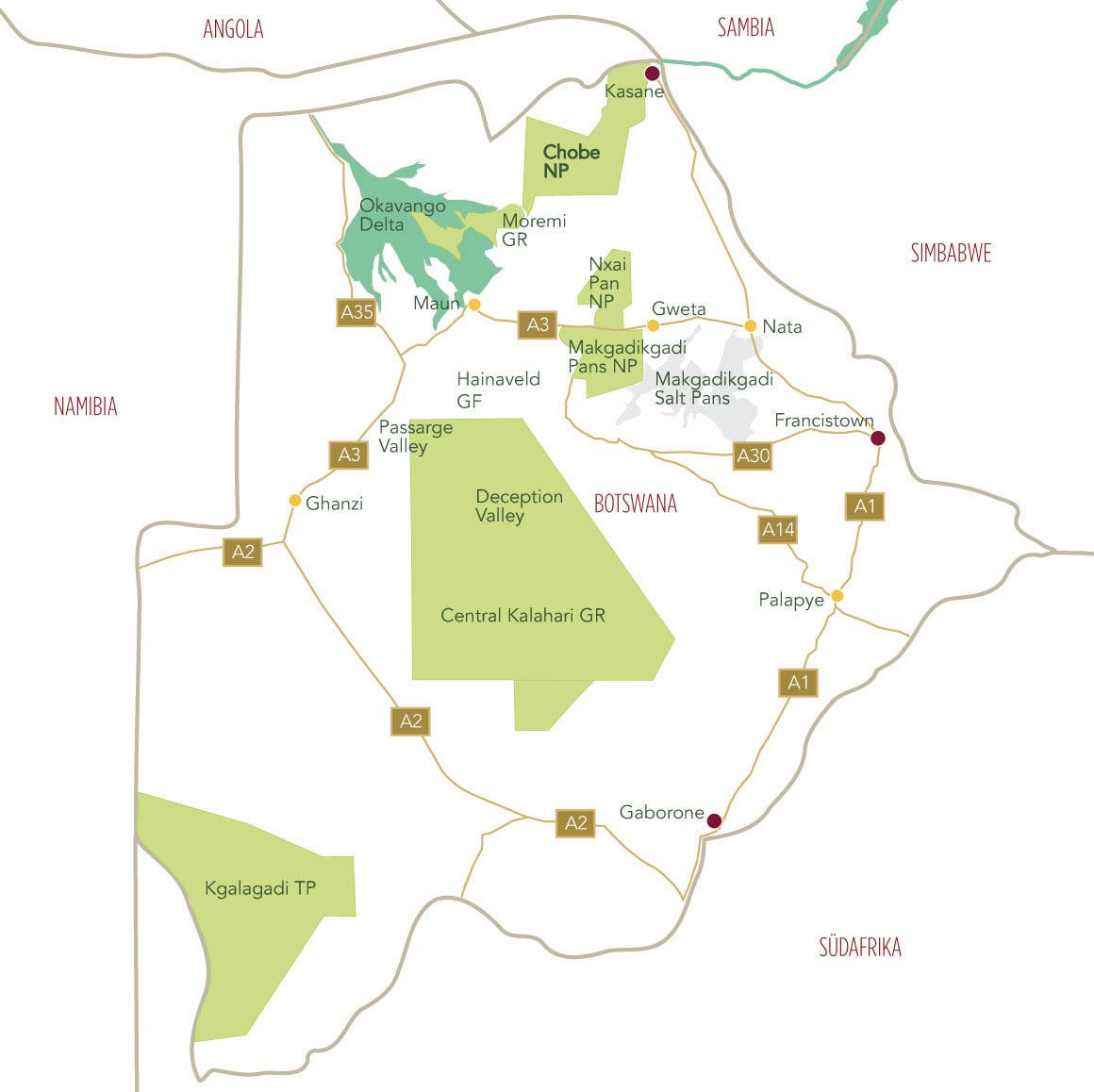
Chobe National Park lies in the far north-east of Botswana and is one of Africa's best-known safari destinations. It covers around 11,700 km2, borders the Chobe River in the north and the Okavango Delta in the south-west. Namibia, Zambia and Zimbabwe are also only a lion's leap away.
Particularly handy: the small town of Kasane – Botswana's safari capital of the north – is right at the park entrance and is easily reached via the international airport.
The park is above all famous for the Chobe River, which winds through the region and attracts numerous animals. Thanks to its location, a visit combines ideally with nearby Victoria Falls. That way travellers can experience several highlights of southern Africa within just a few days.
What makes Chobe National Park so special?
Chobe National Park is one of Africa's most impressive wildlife reserves, and for good reason. It is especially well known for its large elephant herds: particularly during the dry season, numerous elephants gather at the Chobe River, where you can watch them drinking, bathing and crossing the water.
If you have always wanted to watch an elephant herd bathing, drinking or taking a leisurely stroll, this is the place for you.
But Chobe has far more to offer than its gentle giants. The park combines different landscapes – from riverbanks and floodplains to savannahs and woodland.
As a result, numerous animal species find an ideal habitat. Lions, leopards, buffalo, giraffes, hippos, crocodiles and countless bird species are among the regular sightings.
Another highlight is the boat safaris on the Chobe River. While other national parks mainly offer game drives, here you can watch wildlife in a relaxed way from the water – with the best view of the animal action both in the water and on the bank.

The different regions of Chobe National Park
Chobe Riverfront
The Chobe Riverfront is the best-known and most visited region of the national park – and for many visitors love at first sight. Along the Chobe River, huge elephant herds gather, especially in the dry season, coming to the water to drink, bathe or play.
Often hundreds of animals can be watched at the same time – a real safari spectacle. Besides elephants, buffalo, hippos, crocodiles and numerous bird species are also frequently seen.
Particularly popular are the boat safaris, which offer a completely different perspective on the wildlife. While life pulses on the bank and in the water, you glide leisurely along the river and enjoy first-class wildlife viewing. A boat trip into the sunset is among the most romantic safari experiences in Africa.
Savuti
Savuti is regarded as the wild and dramatic side of Chobe National Park. Known for its high density of predators, the region is a paradise for safari fans hoping for exciting wildlife encounters. Lions and hyenas in particular are often found here, wild dogs occasionally. Also unique – lion prides that specialise in hunting elephants.
Savuti is also famous for the mysterious Savuti Channel. The watercourse dries up for years on end and begins to flow again just as unexpectedly – a natural phenomenon that still fascinates researchers today.
The open plains, dead trees and wide landscapes give Savuti an almost cinematic backdrop that turns every game drive into a small adventure.
Linyanti
If you would like to experience safaris away from the already small visitor numbers, consider the Linyanti region. This remote part of the Chobe ecosystem is considered particularly exclusive and offers an intense nature experience with plenty of peace and privacy.
Thanks to the lower visitor numbers, wildlife viewing here often feels much more authentic. Linyanti is best known for its populations of African wild dogs, which are among the continent's rarest predators and excellent pack hunters.
In addition, elephants, leopards, lions and numerous antelope species can be observed. The combination of unspoilt wilderness, luxurious safari camps and excellent viewing opportunities makes Linyanti a real insider tip for Africa travellers.

Which animals can you see in Chobe National Park?
The famous elephants of Chobe
The park's stars have trunks and are hard to miss: well over 100,000 elephants live in Botswana. Chobe National Park is known for its large elephant herds. Especially during the dry season, many of them gather at the Chobe River.
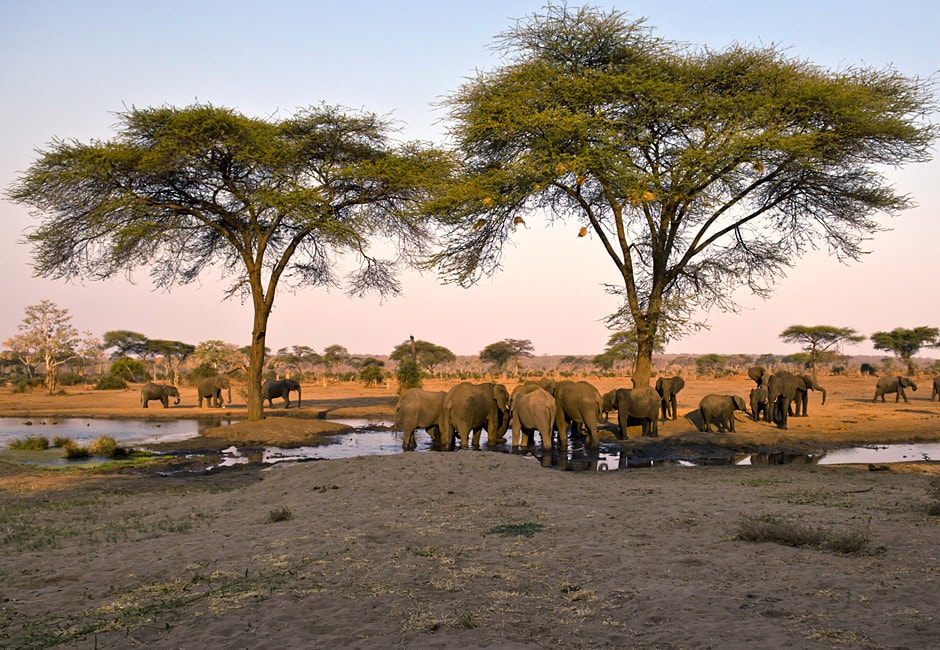
Along the Chobe River, huge herds then move through the landscape. In the midday heat they love to bathe, and in the evening they head together to the “bar” – water to their heart's content. From the curious baby elephant to the mighty bull, a natural spectacle unfolds here that amazes even safari veterans.
Predators in Chobe National Park
Chobe has plenty to offer predator fans too. Lions are among the most common sightings and are especially easy to find in the Savuti region. Savuti's grasslands also offer the best chances of seeing the particularly scarce cheetahs.
In addition, leopards roam the woodland and bushland, while hyenas usually become active in the early morning or evening hours. With a little luck you can even watch rare African wild dogs. Every game drive brings the chance of exciting encounters and unforgettable safari moments.
Hippos, crocodiles and other water dwellers
A large part of the animal life plays out at the Chobe River. Hippos usually spend the day contentedly in the water and regularly surface with a loud snort. Not far away, Nile crocodiles lie motionless on the bank waiting for their chance.
Waterbuck, the rarer red lechwe, puku and sitatunga antelope and countless bird species also feel at home here. On a boat safari you experience the park's watery world up close – and sometimes closer than expected.
Birdlife along the Chobe River
With around 450 bird species, Chobe is a paradise for birdwatchers. Particularly colourful are yellow-billed storks, flamingos, kingfishers, bee-eaters, rollers and the special Schalow's turaco. Along the river you can also spot herons, eagles and vultures.
Especially during the rainy season, the sky becomes a stage for numerous migratory birds. Even visitors without binoculars quickly get a taste for it here, because everywhere they warble, flutter and fly.

Best time to travel to Chobe National Park
Chobe National Park can be visited all year round. Which time is best, however, depends on your priorities. If you want to see as many animals as possible, the dry months are ideal. If, on the other hand, you prefer green landscapes, bird diversity and fewer visitors, you will love the rainy season.
Dry season from May to October
The dry season is considered the classic safari season in Chobe National Park. In these months there is hardly any rain, the temperatures are pleasant and the vegetation becomes increasingly sparse. This makes animals much easier to spot.
As many water sources dry up, elephants, buffalo, antelope and predators gather increasingly along the Chobe River. Especially between July and October, wildlife viewing is often spectacular.
Boat safaris also reach their peak now, as new impressive natural spectacles unfold on the riverbank every day. If you are visiting Chobe for the first time, the dry season is usually the safest choice.
Green season from November to April
With the first rains in November, the park turns into a green oasis. The landscape feels much more alive, many animals give birth to their young and numerous migratory birds return to the region.
The main rainy season is usually between January and March. Often enough, though, the rain doesn't come, but the great heat rarely stays away.
For photographers, the green season offers especially beautiful subjects. The animals do spread out more across the park, but there are fewer visitors around and the atmosphere often feels even wilder.
When do you see the largest elephant herds in Chobe National Park?
The largest elephant herds can usually be seen between August and October. During the late dry season, thousands of trunk-bearers are drawn to the Chobe River every day, as many other water sources have dried up. Huge groups gather on the bank to drink, bathe or cross the river.
It is precisely these impressive scenes that have earned Chobe its worldwide reputation as an elephant paradise.

Safari experiences in Chobe National Park
Boat safari on the Chobe River
A boat safari is one of the absolute highlights of Chobe National Park. Instead of driving along dusty tracks, you glide leisurely along the river and watch the wildlife from the water: elephants splashing about, hippos submerging and crocodiles sunbathing.
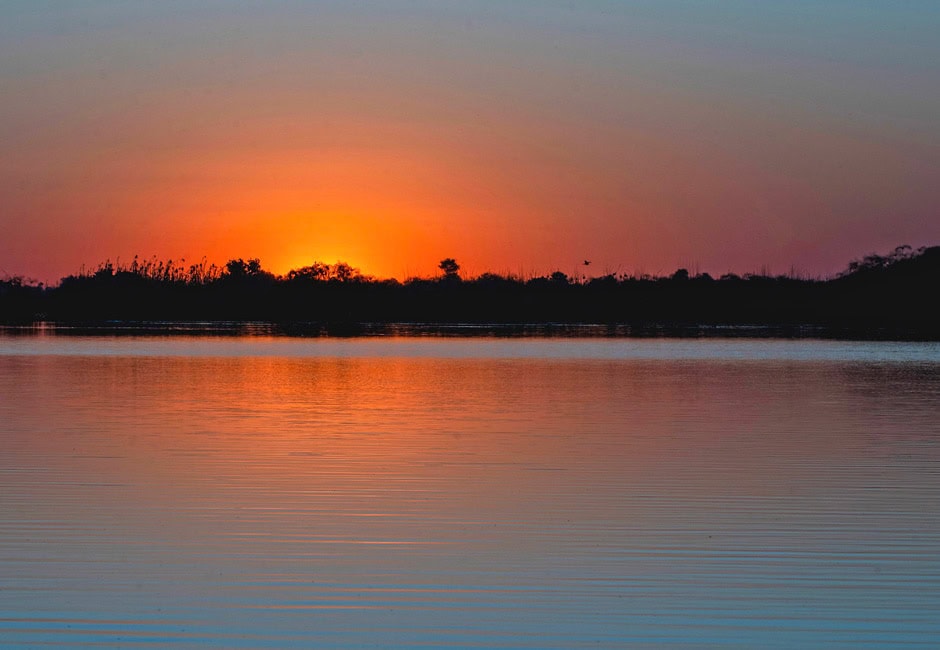
The birdlife is huge too: colourful, iridescent, big, small, in the air and on the water. And when the boat heads towards the sunset, a fiery red spreads across the waters – pure romance, water-level perspectives to fall in love with, animals up close and without obstructing vegetation. A paradise not only for photographers.
Game drives along the Riverfront
The Riverfront is among Botswana's best safari areas. On game drives along the river, visitors often encounter large herds of elephant and buffalo as well as numerous antelope species, zebras and giraffes. Lions and leopards too can be spotted with a bit of luck.
Every drive is different, because you can't make appointments with animals. It is precisely this unpredictability that gives a safari in Chobe National Park its special appeal, paired with the constantly opening-up new perspectives on the fascinating river landscape.
Safari in Savuti
Savuti is the region for anyone who dreams of exciting predator sightings. The open plains and the comparatively high density of predators regularly produce exciting sightings. Lions, hyenas and leopards are among the most common residents here.
At the same time, the landscape impresses with its wide expanses and the famously mysterious Savuti Channel. A safari in Savuti often feels a little wilder, more remote and more adventurous than in other parts of the park.
Walking safaris
If you would like to experience nature without a vehicle for once, you can join a guided walking safari. Together with experienced guides you explore the wilderness on foot and learn a great deal about tracks, plants and animal behaviour.
The perspective is completely different – and surprisingly exciting, even without a direct sighting of large animals.
Sunset on the Chobe River
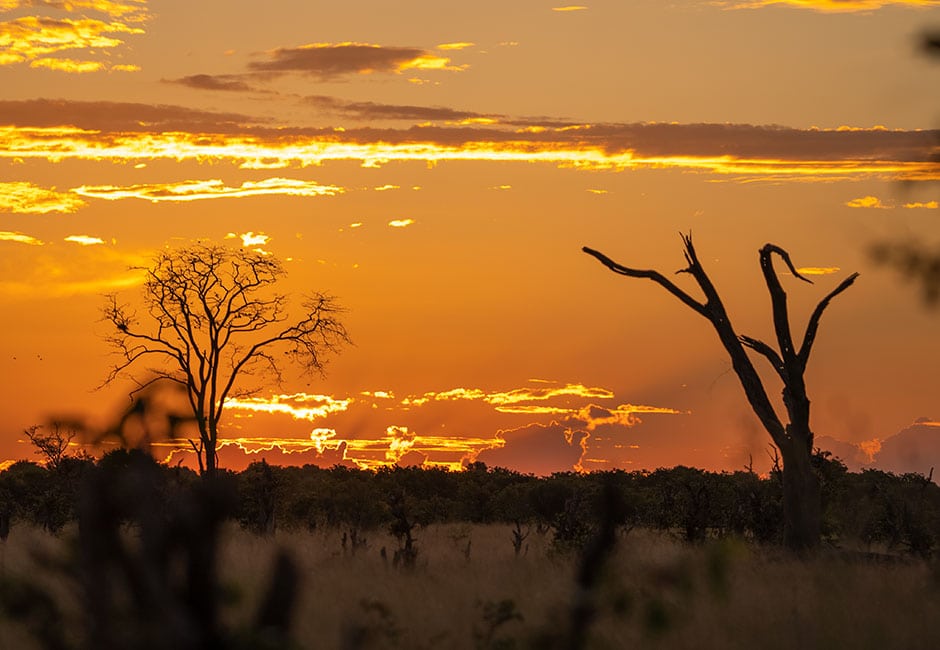
When the sun slowly disappears behind the riverbanks, Chobe shows its most beautiful side. The sky turns orange, red and gold, while elephants pass as silhouettes and birds, with their steady wingbeats into the evening mood, lift your inner harmony.
Photographers sometimes forget to take pictures, families their children. Couples hug more tightly and solo travellers feel at one with nature. A sunset cruise on the Chobe River is therefore one of the most unforgettable moments of their trip for many visitors.

Chobe National Park safaris – how to experience Botswana's elephant paradise
Fly-in safari
If you have little time but still want to experience maximum safari magic, a fly-in safari is ideal. Instead of hours of driving, you float by light aircraft straight into the heart of the wilderness. Even on the approach to landing you may spot elephants, buffalo or antelope with a bit of luck.
On the ground, exclusive lodges, spectacular views and first-class game drives await you. In short: less road, more safari and a more intense national park experience.
Lodge safari
The lodge safari is the perfect mix of adventure and comfort. By day you go on game drives through Chobe National Park, in the evening you enjoy the sunset from the terrace of your accommodation.
Many lodges lie directly on the Chobe River, so wildlife viewing begins practically on your doorstep: elephants drinking, hippos in the water and bird concerts included. After an eventful day, a good meal in a relaxed atmosphere and a bed instead of a sleeping bag await you – a safari from its cosy side.
Popular lodge safaris
Comfort camping
On a comfort camping safari, the wilderness becomes your temporary home. You travel with experienced guides through different regions and stay overnight in comfortable tented camps set up in the middle of nature. That means: more genuine bush feeling, evenings around the campfire and sleeping under the stars.
In the morning you may be woken by birdsong, at night the sounds of Africa accompany you to sleep. This safari option is ideal for anyone seeking adventure who wants to experience Botswana especially intensely.
Combining with other safari areas
Chobe National Park combines superbly with other safari hotspots. Especially popular is the link with the Okavango Delta, where water channels and lagoons open up a completely different safari world. The famous Victoria Falls are not far away either.
That way you experience the most exclusive of different worlds on one trip. The best part: every day feels like a new chapter of an exciting Africa adventure – starring spectacular landscapes and breathtaking wildlife.

Accommodation in Chobe National Park
Lodges and tented camps
Lodges and tented camps are the most popular accommodation in Chobe National Park. They combine an authentic safari feeling with a pleasant level of comfort. While lodges often score with spacious rooms, a pool and a restaurant, tented camps bring you closer to nature – without having to forgo a comfortable bed.
Many accommodations lie directly on the Chobe River and offer fantastic views of elephants, hippos and other wildlife. That way the safari often begins at breakfast.
Exclusive camps
If you want to treat yourself to a particularly luxurious safari experience, an exclusive camp is just right. Small guest numbers, personal service and spectacular locations ensure the highest level of privacy.
Private game drives, gourmet cuisine and dreamy views are often standard. Here wilderness meets luxury – and in a very stylish way.
Accommodation in Kasane
The town of Kasane is considered an important gateway to Chobe National Park and offers accommodation for almost every budget. From cosy guesthouses to comfortable hotels, there is something for everyone.
Particularly handy for our self-drivers: many accommodations organise safaris, boat trips and transfers. If you feel spontaneously inspired to do more than you have booked so far, you will find an ideal base here for your adventures in northern Botswana.
Mobile camps
Mobile camps are aimed at travellers who seek adventure and want to experience nature as intensely as possible. The tented camps are set up at selected locations and allow a stay in the middle of the wilderness.
Despite their mobile construction, many camps offer a surprisingly high level of comfort. In the evening you sit at the campfire under a sparkling starry sky while somewhere in the distance a lion roars or a hyena cackles gleefully – pure safari atmosphere.

How do I plan a Chobe National Park safari?
Getting there via Kasane
Kasane is the most important starting point for safaris in Chobe National Park. The small town lies directly at the park entrance and has an international airport with connections within southern Africa. Many travellers combine the visit with a side trip to Victoria Falls – just an hour and a half away.
From Kasane, numerous game drives and boat safaris start. It couldn't be more convenient: fresh off arrival, the way into the park is hardly longer than from your flat to the garden. And there are nice restaurants and supermarkets to stock up on provisions here too.
How many days should you stay?
For a first impression, two to three days in Chobe National Park are enough. If, however, you want to explore the different regions and have enough time for game drives as well as boat safaris, you should plan more like three to five days.
If you also want to go on to neighbouring regions such as Victoria Falls or the Okavango Delta, it quickly turns into even more days. The wildlife viewing is often so spectacular that the “I want more of this” feeling arises quickly and you simply can't get enough.
Our 9-day mini-group tour Fascination Botswana is an example of how these days can be combined.
Budget and costs
The costs of a Chobe safari vary widely depending on accommodation and travel style. Budget-friendly options start with simple accommodation in Kasane, while luxury lodges and exclusive camps are considerably more expensive.
Park fees, activities and transfers come on top. As a rule: Botswana is not a classic budget destination, but rewards visitors with exceptional nature experiences.
Our tours, such as our 9-day small-group tour Botswana – a real safari experience, which combines Chobe National Park and the Okavango Delta, start at 3,430 EUR. A 10-day fly-in safari from Victoria Falls via Chobe National Park to the Okavango Delta, on the other hand, starts at 7,030 EUR. But either way – you get a lot for your money!
Combinations within Botswana
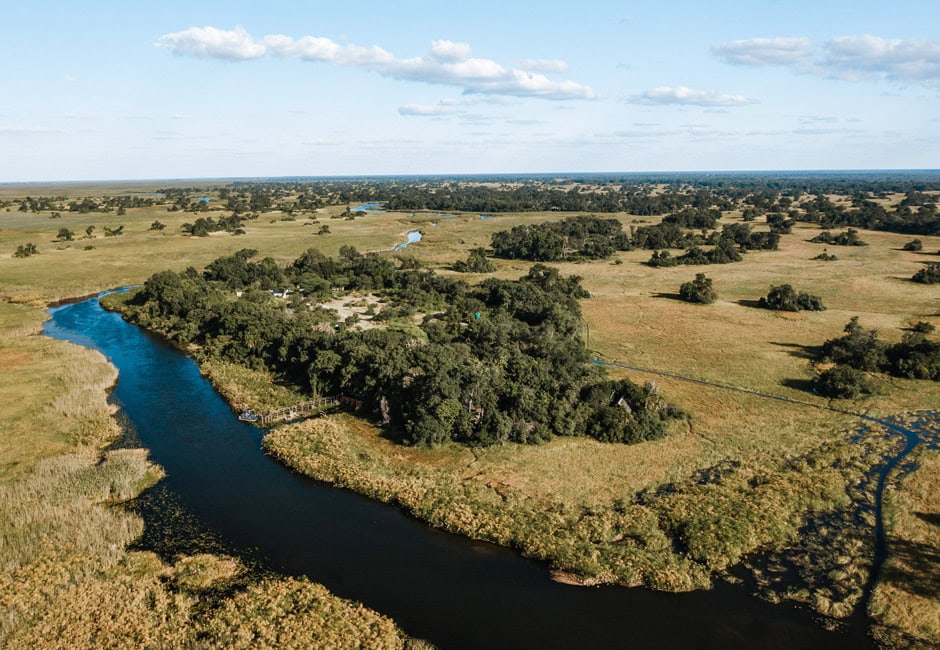
Chobe National Park is ideal for a round trip through Botswana. Particularly popular is the combination with the Okavango Delta, which, with its narrow water channels and possible mokoro rides (dugout canoe), forms an exciting contrast to the wildlife at the Chobe River.
If you want to immerse yourself even deeper in Botswana's nature, you can add the Makgadikgadi salt pans. This creates a varied safari trip in which every stage has its own character. One example is our 14-day group tour Botswana – Explore the Wild, which links all these regions.

Tips for your Chobe National Park trip
Clothing and equipment
On safari the rule is: comfortable, practical and as inconspicuous as possible. Light natural colours such as beige, khaki or olive are ideal, while garish colours belong more on the catwalk than in the wilderness. Besides light clothing for the day, pack a warm jacket for cool mornings, a sun hat, sunscreen and binoculars.
For your luggage you should prefer a soft-shell suitcase to a hard-shell one, as the storage space in safari vehicles is better suited to more flexible bags.
Camera and photography tips
In Chobe National Park your camera is guaranteed no rest. A telephoto lens – preferably with at least 400 mm focal length or equivalent zoom – helps with animals further away, while a spare battery and extra memory cards are worth their weight in gold.
The most beautiful light usually awaits you in the early morning or late afternoon – exactly when the animals are also particularly active. By the way: don't forget dust protection!
Health and safety
A good first-aid kit belongs on every safari. Also find out in good time about recommended vaccinations and possible malaria prophylaxis. Chobe National Park is a malaria area and the risk is higher especially in the rainy season.
In the park itself, always follow the guides' instructions and keep a sufficient distance from wildlife. Even if elephants look cute – they usually have other plans than a joint selfie.
What to bear in mind on boat safaris
Boat safaris are among the highlights of Chobe National Park. Adequate sun protection, enough water, a precautionary snack and a camera with zoom should definitely come along. Make sure to protect your equipment from spray.
And don't forget: while you glide leisurely along the river, hippos and crocodiles can surface surprisingly close – keeping your eyes open in all directions is worthwhile.

FAQ about Chobe National Park
Where is Chobe National Park?
Chobe National Park is located in the north-east of Botswana and is one of Africa's best-known protected areas. It borders Namibia, lies not far from Zambia and Zimbabwe and is only a few kilometres from the town of Kasane. Particularly handy: the famous Victoria Falls are in the immediate neighbourhood too.
Thanks to this location, Chobe fits superbly into a round trip through southern Africa. Anyone travelling here lands in the middle of a region known for spectacular nature and wildlife experiences.
How many elephants live in Chobe National Park?
An exact figure cannot be given across the board: the elephants migrate between the park and surrounding areas, so their number fluctuates with the season. An aerial survey from 2018 estimated the population within the surveyed park areas at around 15,400 elephants. That is a snapshot, not a current population figure. Higher figures that are often quoted refer to larger areas.
Large herds can often be watched coming to the water to drink or bathe, especially along the Chobe River. If you love elephants, you will probably see more pachyderms here than on any other safari of your life.
Is a boat safari on the Chobe River worth it?
Definitely! A boat safari is one of the absolute highlights of Chobe National Park. From the water you get completely different perspectives on the wildlife than on classic game drives. Elephants bathing, hippos in the water and crocodiles on the bank are not uncommon.
Bird lovers get their money's worth too. Particularly impressive are the trips in the late afternoon, when the sun bathes the river in golden light and the animals head for the waterhole.
How many days should you plan for Chobe?
For most travellers, two to three days are ideal for getting to know Chobe National Park. That leaves enough time for several game drives and at least one boat safari.
If you are looking for a particularly intense safari experience or want to explore different regions of the park, you can easily stay longer. The chances of exciting wildlife viewing rise with every additional day. Nature also shows a slightly different side every day – boredom is practically ruled out here.
Can you combine Chobe and the Okavango Delta?
Yes, and this is exactly one of the most popular safari combinations in Botswana. While Chobe is known for its huge elephant herds and the mighty river, the Okavango Delta delights with waterways, lagoons and unique wildlife.
The two regions complement each other perfectly and offer completely different safari experiences. Many travellers combine both destinations on one round trip and thus experience Botswana's impressive diversity in just one holiday.
Can you combine Chobe with Victoria Falls?
Absolutely. Victoria Falls are only about an hour and a half from Kasane and combine superbly with a visit to Chobe National Park. Many travellers spend a few days on safari and then continue to one of the largest waterfalls in the world.
The combination of spectacular wildlife viewing and mighty natural forces makes this route especially popular. You also enjoy two of southern Africa's best-known highlights on a single trip.

Conclusion – is a safari in Chobe National Park worth it?
Quite clearly: yes! Chobe National Park is one of Africa's most impressive safari destinations and delights with exceptional wildlife, spectacular landscapes and unforgettable experiences. The huge elephant herds in particular make the park a real highlight.
Whether on a classic game drive, a boat safari on the Chobe River or a multi-day round trip through Botswana – new adventures await here every day. Thanks to the easy access via Kasane and the proximity to Victoria Falls, Chobe also combines superbly with other destinations.
If you want to experience Africa in its wild beauty, this is the place for you.
We are happy to help with any questions and support in planning your Botswana trip, whether on a guided group tour, a guided private tour or a self-drive tour.
Thanks to our close contact with our subsidiary in Botswana, we are always well informed about the current situation. So get in touch with us! Your dream, our expertise – your very own Botswana experience.
Juan Proll has lived in southern Africa since 2011 and works as a certified nature and cultural guide in South Africa, Botswana and Namibia for Elefant-Tours and its subsidiaries. After an earlier career as an adult education teacher in Germany, he swapped the classroom for the wilderness. Alongside his work as a guide, he writes for the Elefant-Tours blogs about nature, culture and sustainable travel. Juan is a member of the Field Guides Association of Southern Africa (FGASA) and author of the books “Ich werd’ dann mal Ranger” and “Das Safari-Lesebuch”. The magazine DER SPIEGEL reported on his training.