Namibia safari & wildlife viewing: the best time to travel
 by Juan Proll· January 12, 2026· 11 min read· Updated September 11, 2026

Namibia fascinates not only with its diverse desert landscapes. Its wildlife is just as impressive and attracts visitors from all over the world. In today's blog, you will find out when the best time to travel to Namibia for safaris and wildlife viewing is.
Why the travel season matters for safaris in Namibia
The travel season is crucial for safaris and wildlife viewing in Namibia because climate, vegetation and water availability vary with the seasons – and that is exactly what determines how well you can see animals.

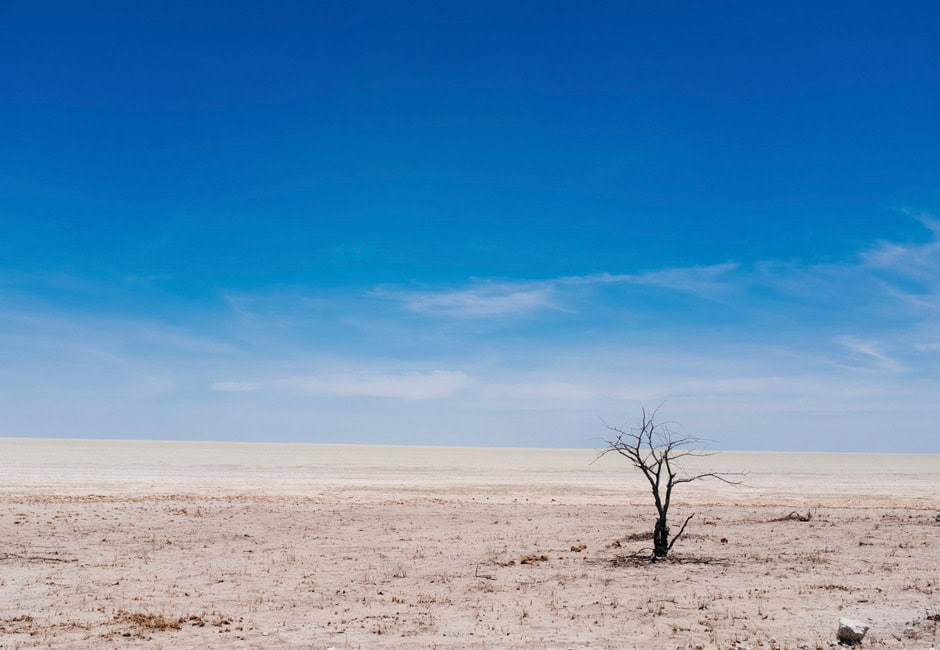
So May to October is considered the best time for Namibia safaris, because it is the dry season in the country. The desert nation now offers plenty of sand and little water. The vegetation dries out, the water disappears and the wildlife concentrates in ever larger numbers around the remaining drinking spots – great for wildlife viewing.
From November to April, the rainy season brings more bush vegetation and fresh grasses. Natural water sources increase and the animals spread out in all directions – which makes wildlife viewing more a matter of chance.
Namibia's seasons at a glance
It is the months of the rainy season and dry season that decide whether wildlife viewing in Namibia is better or more difficult.
Dry season – May to October
The dry season from May to October is generally regarded as the best time to travel to Namibia. Conditions for safaris, desert tours and other activities are ideal now.
When the vegetation dries out and the water runs dry, more and more animals gather around the remaining natural watering holes – much to the delight of travellers, as wildlife viewing is now particularly easy.
With every month of this dry season, the very good visibility of wildlife increases. In Etosha National Park in particular, from June/July you can enjoy relaxed waterhole hopping and take in the wildlife in great numbers, especially in the morning and late afternoon.
From May to August you can also look forward to very pleasant daytime temperatures – warm but not too hot.

Rainy season – November to April
The rainy season from November to April changes conditions less often in the south of the country than in the north. National parks such as Etosha, Bwabwata or Nkasa Rupara receive so much rain that abundant vegetation and a dense network of water sources develop.
Animals can now spread out and hide easily – good for the many young animals, worse for wildlife viewing.
In addition, away from the paved roads you must expect conditions that are hostile to two-wheel drive, which make some crossings a challenge even for off-road vehicles. It also gets very hot and the humidity is noticeable.
But this time of year is not only especially suited to adventure seekers – a safari is now also worthwhile for nature photographers, bird lovers and travellers who want fewer crowds.
Would you like to find out more about trips to Namibia?
We are happy to advise you. Get in touch with us!
Best time to travel for wildlife viewing in Namibia
Whether rainy season or dry season – the best time to travel ultimately depends very much on your interests and expectations. If you would like to see snakes, scorpions and spiders, for example, the rainy season is your time. If you want animals served up on a plate, come in the dry season.
Desert-adapted animals & special species
A great special feature of Namibia is the chance to encounter exotic animals such as oryx, kudus, springboks, warthogs or ostriches living wild throughout the country – all year round and almost everywhere.
In the northern Namib region between the Brandberg and Purros it gets even more fantastic. Here – especially in the dry season – you may even encounter desert elephants, desert lions (with a great deal of luck), leopards, rhinos, jackals, giraffes or zebras.
It is the mostly dry riverbeds such as the Hoanib or Ugab between which the animals move in considerable seclusion.
The wildlife in Bwabwata National Park in the Zambezi Strip also enjoys a year-round, “barrier-free” existence. Although the north-east is considerably wetter than the Namib in the west and is a popular habitat for elephants and water-loving animals such as crocodiles, hippos, buffalo, sitatunga or lechwe antelopes, it is best accessible in the dry season.

Big game such as elephants, lions & rhinos
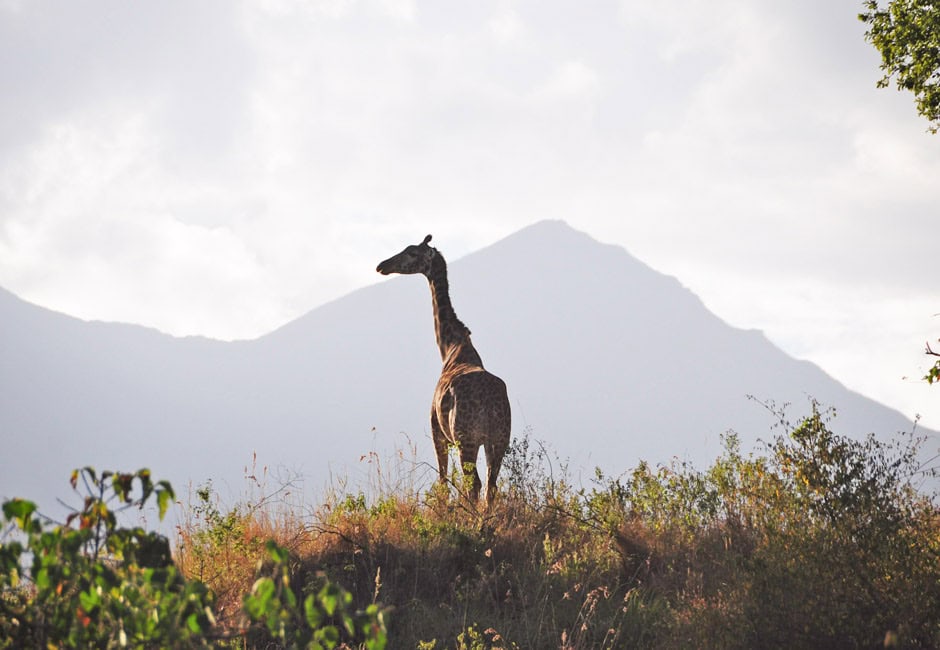
In no other protected area in the country is the presence of big game as obvious as in Etosha National Park. You get a particularly good impression at the waterholes, which quickly fill with animals, in the morning and late afternoon hours during the dry season months. Nowhere else in the country do you have such good chances of seeing lions, rhinos, zebras or giraffes.
Alongside Etosha, Bwabwata National Park is a hotspot for elephants. Especially at the “Horseshoe”, which is extremely popular with insiders – a horseshoe-shaped bend of the Kwando River – you can see many migrating pachyderms alongside the resident elephants, particularly in the dry season.
Birds & birdwatching
On a Namibia safari you will always see interesting birds – and not only on the passenger seat next to you. But especially in the rainy season, attracted by the warmth and moisture, migratory birds arrive here from Europe and Asia. The diversity of species is breathtaking.
They come to enjoy the summer temperatures with plenty of water and to use their stay for their breeding season. It is especially spectacular in Etosha National Park roughly between January and March, when the rain has filled the salt pans of the reserve and thousands of waterbirds such as flamingos and pelicans form a unique carpet of plumage.

Best time to travel by region
Etosha National Park in the central north, Damaraland on the northern west coast, Sossusvlei on the southern west coast and the Zambezi Strip in the far north-east are four very different regions for fundamentally different Namibia safari experiences.
Etosha National Park
The best time to travel for safaris in Etosha National Park is the dry season from May to October. During this time more and more vegetation disappears and the animals concentrate at a few permanent waterholes around the huge Etosha Salt Pan. As a result, elephants, lions, rhinos, giraffes and large herds of antelope are particularly easy to observe.
The salt pan itself is usually dry and reflects the light strongly, creating exceptional photo opportunities. In the rainy season (November–April) the pan partly turns into a shallow expanse of water and attracts flamingos, but offers fewer classic wildlife sightings, as water is now accessible everywhere.
Damaraland & Kaokoveld
The ideal time to travel to Damaraland and the Kaokoveld is also between May and October. These remote regions are characterised by spectacular rocky landscapes, dry river valleys and extreme, desert-like conditions between the Brandberg and Purros.
In the dry season in particular, desert animals adapted to these conditions travel along the dried-out riverbeds, looking for water. Desert elephants, rhinos or oryx antelopes also search for precious plant food, while lions look for herbivores.
The temperatures are moderate during the dry months, roads are easier to pass and hikes more pleasant. During the rainy season the landscape becomes greener, animals spread out in all directions, and remote routes can be difficult to access.
Namib Desert & Sossusvlei
For the Namib Desert and Sossusvlei, May to September is considered the best time to travel for a Namibia safari. In these months daytime temperatures are more bearable, especially for activities in the dunes. In April and October you can also still be lucky with pleasant conditions.
The best light conditions occur early in the morning and late in the afternoon, when the low sun creates intense colour contrasts between red dunes and the pale salt-and-clay ground. The morning scenery in particular, with oryx herds or springboks striding gracefully past, is dreamlike. Ostriches and jackals add to the romantic atmosphere with their presence.
At midday it can get very hot even in the cooler season, which is why early starts are recommended. In the summer months (November–March) heat and glaring light are a challenge, but at times offer dramatic clouds and moods.
Zambezi Strip
The Zambezi Strip differs greatly in climate from the rest of Namibia. The best time to travel for wildlife viewing is the dry season from May to October. Then elephants, buffalo, hippos and antelopes retreat to the great rivers such as the Zambezi, Kwando and Chobe.
The region is rich in water, green and particularly rich in species, including birds. In the rainy season (November–April) the landscapes are lush and impressive, but flooding and dense vegetation make safaris harder. Nothing works here without a 4×4. On the other hand, this time is ideal for birdwatchers and nature photographers.

Types of safari & the ideal time to travel
Whether you travel on guided Namibia safaris, a self-drive safari or a camping safari should also play a role in your considerations.
Guided safaris & group tours
The best time to travel for guided safaris and group tours in Namibia is the dry season from May to October. In these months wildlife viewing is particularly reliable, as wildlife has fewer places to hide behind bushes and gathers at water sources.
The temperatures are pleasant, roads are easy to drive and daily schedules can be planned. This is ideal for groups, as timetables can be kept and sightings are more frequent. In addition, professional guides are in particularly high demand in high season and offer well-founded insights into wildlife, landscape and ecology.
Self-drive safaris
Namibia is suitable for self-drive safaris almost all year round. However, April to October is especially recommended. You may still be lucky in November too. During this time the tracks are mostly dry and easy to drive, and the risk of flooding is low.
Wildlife viewing is easier during the dry season, especially in Etosha National Park. The cooler morning and evening hours between May and September are particularly ideal for game drives. Before and after that it can be noticeably hotter.
In the low season, self-drivers benefit from less traffic, lower prices and greater flexibility when planning their route.
Camping safaris
The ideal time to travel for camping safaris is the cooler dry season from May to September. The nights are fresh and starry, yet comfortable for sleeping, and daytime temperatures are moderate. Wildlife can be observed well at water sources, often directly from the camps, which are usually close by.
In the rainy season, camping can be made more difficult by heat, insects and softened access roads. At the same time, this period offers green landscapes and spectacular thunderstorms – ideal for experienced campers with a love of adventure.
Popular tours:
Frequently asked questions about the best time to travel for Namibia safaris
When is the best time to travel for a Namibia safari?
The best time to travel for a Namibia safari is the dry season from May to October, as animals increasingly stay at water sources during this phase. The vegetation is greatly thinned out, which improves visibility, and daytime temperatures are pleasant right through September.
The dry season months offer stable weather conditions and high chances of wildlife viewing. This time is ideal for classic safaris in Etosha National Park as well as for guided and individual game drives.
Which months are best for wildlife viewing in Namibia?
The best months for wildlife viewing in Namibia are June, July, August and September. In these winter months it is dry and relatively cool, so wildlife mostly stays active for longer during the day.
As the dryness increases, the vegetation thins and the natural water sources dwindle. The routes between feeding ground and watering place become longer for the animals, and more and more thirsty wildlife gathers at the remaining waterholes. Reliable sightings of elephants, predators and antelopes increase.
Is the rainy season bad for safaris in Namibia?
The rainy season from November to April is not inherently bad for safaris. The rain conjures up green landscapes, and the animals spread out over a wider area and are harder to find. In return, this time is ideal for birdwatching, young animals and nature photography.
This applies especially to the north and north-east of the country, while the southern half and the west are affected less often.
Fewer tourists, dramatic clouds and lively landscapes also speak in favour of this season, and with the necessary flexibility and realistic expectations they also allow for lovely safari experiences.
Can you travel to Namibia all year round?
Yes, Namibia can be visited all year round, as the country is predominantly dry and rarely has extreme weather. Each season offers different advantages: the dry season is excellent for wildlife viewing, while the rainy season creates green landscapes and attracts fewer visitors.
Regional restrictions are possible, for example due to extreme heat in the south or rain in the north, but can be handled well with good planning.
When is Namibia least visited?
Namibia is least visited in the months January to March, i.e. during the main rainy season. During this time significantly fewer tourists travel to the country, which means quieter national parks and a relaxed atmosphere.
Accommodation is often cheaper and more readily available. However, high temperatures, occasional flooding and difficult road conditions can occur. For experienced travellers who appreciate solitude and nature, this is nevertheless an appealing time to travel.
Which time to travel is best for self-drivers?
For self-drivers, the time from April to October is particularly suitable, often even until November. The roads and gravel tracks are mostly dry and easy to drive, water-filled dips in the road are unlikely, and crossing them is rarely a problem.
At the same time, wildlife viewing is easier and more reliable in the dry season. Temperatures are moderate, which makes long driving days more pleasant. Beginners in particular benefit from the stable conditions, the good infrastructure and the high planning reliability in these months.

Conclusion – finding the best time to travel for your Namibia safari
The best time to travel for your Namibia safari depends above all on your expectations of wildlife viewing, climate and travel style. In general, the months May to October are considered ideal, as the dry season offers excellent conditions for safaris.
Wildlife gathers at water sources, the vegetation is parched and animal sightings are particularly reliable. Pleasant temperatures and roads that are easy to drive make this time ideal for guided safaris, self-drive tours and camping trips.
The rainy season from November to April shows Namibia from a green, lively side and wins people over with fewer visitors, special light moods and rich birdlife. So a safari is worthwhile now too, especially for nature photographers, bird lovers and travellers who want fewer crowds.
For further questions and support in planning your Namibia safari, we are of course happy to help, whether you are travelling on a guided tour or a self-drive trip.
Thanks to our close contact with our subsidiary in Namibia, we always know exactly what the current situation is.
So get in touch with us! Your dream, our expertise – your very own individual Namibia experience.
Juan Proll has lived in southern Africa since 2011 and works as a certified nature and cultural guide in South Africa, Botswana and Namibia for Elefant-Tours and its subsidiaries. After an earlier career as an adult education teacher in Germany, he swapped the classroom for the wilderness. Alongside his work as a guide, he writes for the Elefant-Tours blogs about nature, culture and sustainable travel. Juan is a member of the Field Guides Association of Southern Africa (FGASA) and the author of the books “Ich werd’ dann mal Ranger” and “Das Safari-Lesebuch”. His training was covered by the magazine DER SPIEGEL.