Big 5 safaris in Kenya
 by Juan Proll· June 30, 2025· 13 min read
Experience the adventure of a lifetime with a Big 5 safari in Kenya! Discover majestic lions, elephants, leopards, rhinos and buffalo in their natural surroundings. Amid spectacular landscapes, Kenya offers unforgettable wildlife viewing and authentic safari experiences for nature lovers and adventurers.
What does Big Five actually mean?
The expression comes from English and means literally “the big five”. It refers to five famous African wild animals: elephant, rhino, buffalo, lion and leopard. They are not the biggest animals, but were once considered the most difficult and dangerous animals for hunters.
The history behind the term
The term “Big 5” has its origins in the colonial era, when Africa was a popular destination for European big-game hunters.
At that time, elephant, rhino, buffalo, lion and leopard were classed as the five most dangerous animals that could be hunted on foot – not necessarily because of their size, but because of their behaviour and the challenge of bringing them down.
The term was later adopted by safari tourism, but in a completely different sense: today it no longer stands for hunting, but for the protection and observation of these impressive animals in their natural surroundings.

Interestingly: originally only the black rhino, considered particularly aggressive, counted among the Big Five – not the calmer white rhino. The black rhino was more dangerous for hunters, as it often reacted unpredictably and charged faster.
Today, by contrast, both species – black and white rhino – are grouped under the term “Big Five” on safaris, even though the white rhino is far less aggressive. This development reflects the shift from a hunting mindset to a conservation mindset.
Safari in Kenya – an unforgettable experience
Kenya is not only a wonderful travel country with scenic mountains and beautiful coasts. Above all it is a safari country, where wildlife encounters create unforgettable experiences.
Why Kenya is ideal for a Big Five safari
They are all here – lions, elephants, leopards, rhinos and buffalo. In Kenya they live in their natural surroundings in the wild. For that reason alone, the country is undoubtedly one of the best destinations in the world for an exciting Big Five safari.
In general, Kenya offers an impressive variety of animal species in their original habitat – a true paradise for safari fans. Famous game reserves such as the Maasai Mara are home to the Big Five and offer the chance to see these majestic animals up close.
It becomes an even more unforgettable experience between July and October, when millions of wildebeest, zebras and gazelles gather in the Maasai Mara during the annual Great Migration.

Kenya is distinguished by its vast savannas, dense bushland and river courses, which provide ideal habitats for wildlife. The friendly locals, the rich culture of peoples such as the Maasai and the high-quality safari accommodation round off the experience.
Whether on a guided Land Cruiser safari or a hot-air balloon flight – Kenya offers unforgettable moments and the chance to experience Africa's fascinating wildlife up close. That makes it a dream destination for every safari fan!
Want to find out more about Kenya trips?
We are happy to advise you. Get in touch with us!
Where can you see the Big 5 in Kenya?
Kenya's diverse ecosystems in the various parks and reserves create the perfect backdrop for observing Africa's spectacular wildlife. The following examples are places that offer unique opportunities for encounters with the Big Five:
Masai Mara National Reserve – the heart of safari
Masai Mara National Reserve is Kenya's most famous safari destination, known for its rich wildlife and the annually recurring Great Migration. Thanks to its diversity of species and the vast, open plains, it is an exceptional place to see all members of the Big Five.
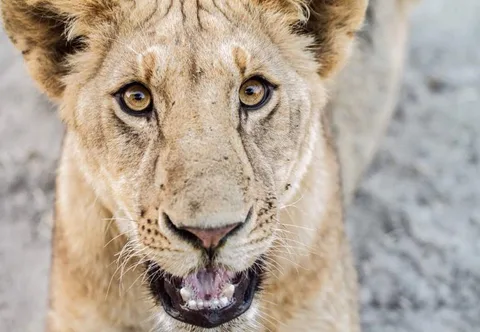
You will often find the lions in the tall grass or under acacia trees. They like the area around the Mara River, especially during the Great Migration. Leopards are a rarer sight. They are at least spotted more often in the dense tree cover of the Mara Triangle, where they rest on sturdy branches.
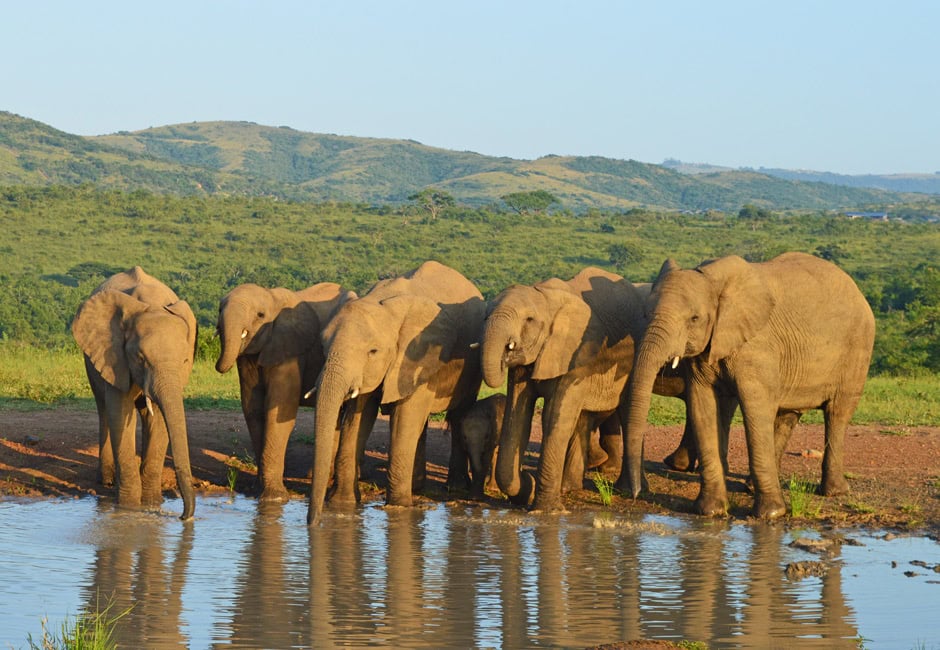
You often see large herds of elephants throughout the reserve, but especially near the Mara River and in the wooded areas. You will frequently meet buffalo in large herds on the Mara plains and near water sources.
Rhinos are rarely seen. You are more likely to find them in the neighbouring Mara North Conservancy.

Amboseli – national park with a view
Amboseli National Park is home to buffalo, leopards, lions and elephants – at least four of the Big Five celebrities, though not the rhino.
The park is famous for its breathtaking view of Kilimanjaro and its large herds of elephants. The park's wetlands and savannas offer ideal habitats for members of the Big Five.
You often see lions near the swamps and open grassland, where they like to laze in the shade of acacia trees. Leopards are considered a rare sight. They can, however, be spotted in the more wooded areas of the park, for example in the region around Observation Hill.
Large herds of elephants roam throughout the park, especially near the swamps and water sources. Buffalo here are found more in smaller herds in the southern areas of the park.
There are currently no rhinos in Amboseli. However, this park combines wonderfully with nearby reserves such as Tsavo West and Tsavo East National Parks.
Tsavo National Parks – diversity in south-east Kenya
The huge Tsavo reserve is divided by a national through road into Tsavo East National Park and Tsavo West National Park. Tsavo's varied landscapes, ranging from volcanic hills to dense bushland, offer exciting Big Five encounters.
The lions of Tsavo are famous for their size and their dark manes. They are well distributed across the parks. Spotting leopards is a challenge here too. They prefer the wooded and rocky areas of the parks, for example in the Mzima Springs region of Tsavo West.
Tsavo is the home of the “red elephants”, especially in Tsavo East. They are often powdered with the red dust of the park floor. Large herds of buffalo are often seen near water sources.
Rhinos are found here too, but given the size of the reserve they are hard to find. They are easier to encounter in Ngulia Rhino Sanctuary, which is attached to Tsavo West National Park.

Laikipia region and Ol Pejeta Conservancy
The Laikipia region was once a patchwork of huge cattle ranches and farmland. Today it is a place for exciting encounters with African wildlife and the Big Five. Game reserves and conservancies such as Ol Pejeta are less famous and yet very much worthwhile.
Ol Pejeta promotes community development and funds various community projects in the areas of education, health and infrastructure.
Above all, though, Ol Pejeta is considered Kenya's best place to see Africa's different rhinos – black rhinos and white rhinos. Among them are even the world's last two surviving northern white rhinos.
Besides the resident lions, leopards and buffalo and the specially protected rhino section, a fence-free corridor system allows animals to move between areas of the Laikipia region, and so also lets the elephants come and go.
As a conservancy, the reserve enjoys greater freedom in what it offers and provides exciting safari activities by Land Cruiser, on horseback, by bicycle or on foot.

Solio Game Reserve – rhinos in focus
Solio Ranch is a reserve where you have to do without elephants, but can have excellent encounters with black rhinos and white rhinos.
In this game reserve north of Nairobi, you can observe the wonderful wildlife from a Land Cruiser, but also on foot, on horseback or by mountain bike, including lions, leopards and buffalo.
During a breakfast or lunch in the bush you can even enjoy the backdrop of Mount Kenya in the distance.
Samburu National Reserve – safari off the beaten track
Samburu National Reserve lies somewhat further north than Solio. Compared with many other places in the country, Samburu is blessed with rather less rain. Dry bushland and open grass savannas therefore dominate the landscape.
Samburu is particularly known for its so-called Samburu Special 5: these include the oryx, Grevy's zebra, the rare gerenuk (giraffe gazelle), reticulated giraffe and the blue-grey-legged and -necked Somali ostrich.
Big Five fans unfortunately have to do without rhinos in Samburu. But the reserve has a reputation as the best place in the country for leopard sightings.
Expect exciting wildlife, great landscapes, opportunities for cultural encounters and superb accommodation. Samburu is a little paradise for nature lovers and travellers seeking peace and quiet.

When is the best time to travel for a safari in Kenya
The equator runs through Kenya and brings tropical conditions with mild temperatures all year round. Even so, temperatures of up to 28° C can delight guests in the safari areas. In the mountains the weather is more unpredictable and cooler.
Kenya's best time to travel is therefore guided by the seasonal rainy and dry seasons. Because in the dry season, wildlife sightings are considerably easier.
For one thing, the vegetation is less dense, which makes it easier to spot wild animals. For another, in the dry season many animals gather at and near permanent water sources.
The long dry season, from the end of May to the end of October, is also Kenya's high season. Within this dry period, many consider July to October the best time to travel. This is also the time when the Great Migration crosses the Mara River.
A further short dry season between mid-December and the end of March then offers another rain-free breather and likewise good safari conditions. In Kenya this period counts as the shoulder season.
A real insider tip, because there are significantly fewer tourists about than in the classic high season. That way you can often enjoy wildlife viewing in peace, without big crowds.

Safari tours in Kenya – for every taste
In Kenya, the homeland of safaris, you head very variedly into the vast savannas of the Masai Mara, the scenic backdrops of Amboseli, the dense bushland of Tsavo or private reserves such as Ol Pejeta Conservancy with high Big Five chances.
Kenya fly-in safari with Masai Mara – exclusive & intensive
A fly-in safari lets you quickly cover long distances in the country, save time and reach very remote areas more easily. Small aircraft fly you directly to the accommodation in the game reserves.
With an exclusive fly-in safari such as the Kenya fly-in safari with Masai Mara you enjoy the perfect combination of luxury, comfort, exciting wildlife sightings and activities. It takes you to two game reserves that are among the best in the country.
First you fly to Ol Pejeta Conservancy in the Laikipia region. It is a Big Five area, is home to many endangered species and is considered a stronghold of rhino conservation.
From there the journey takes you to Mara North Conservancy, where all the highlights of a Masai Mara safari await you. Experience, for example, the Great Migration between July and October.
In the private conservancy you enjoy the special advantage that only a few vehicles are permitted – exclusivity and a personal safari experience await you.
“Best of Kenya” safari – group tour with German-speaking guide
The “Best of Kenya” safari serves up 8 days full of exciting wildlife viewing on a German-guided lodge safari in a mini-group – a great chance to see the Big 5 in Kenya.
In a four-wheel-drive off-road vehicle, with an experienced guide at your side, you explore such choice safari destinations as the Masai Mara, Amboseli and Tsavo West National Park.
The many wildlife sightings will certainly impress you. Between July and October in the Masai Mara you even have the chance to witness the Great Migration of a wildebeest herd millions strong.
In Amboseli you will meet large herds of elephants, with luck even against the backdrop of Kilimanjaro, Africa's highest mountain. Among the Big Five in Tsavo West National Park, the elephants powdered red by the soil dust are particularly worth seeing.
Beforehand you make a short detour to Lake Naivasha, a freshwater lake with a boat-tour option and the chance to observe aquatic animals and waterbirds.
The trip ends on the tropical beaches of the Indian Ocean in the small coastal town of Diani Beach.
Experiencing northern Kenya – a safari insider tip with depth
A trip to private reserves and conservancies awaits you on the tour Northern Kenya – experiencing remoteness. Safaris in these destinations often give you more freedom to shape your experience than, for example, the national parks.
In Solio Game Reserve or Ol Pejeta Conservancy you can experience your safari either from a Land Cruiser or on foot, on horseback or by mountain bike.
For exclusive and very private experiences, you head to Samburu National Reserve. The spectacular landscapes and the extraordinary wildlife there make it unique compared with other reserves. The giraffe antelope or “gerenuk” is one of the eye-catchers.
This trip also combines wonderfully with the “Best of Kenya” mentioned above to create the ultimate Big 5 safari in Kenya.
Tours on which you have a chance of the Big 5 in Kenya:
Frequently asked questions – Big 5 safari Kenya
What are the Big Five animals?
These are lions, elephants, rhinos, leopards and buffalo. Former big-game hunters named them the Big Five. They saw them as big game animals that could be especially dangerous to them when hunting.
Where can you see the Big Five?
You can see them above all in the many different game reserves of East and southern Africa, sometimes all of them, sometimes fewer. Kenya has a whole series of such parks where the Big Five, or at least the Big Four, can be admired.
What can you expect on a Big 5 safari?
Unforgettable wildlife viewing awaits you, and the chance to experience Africa's most famous wild animals in the wild: lions, elephants, rhinos, leopards and buffalo. But however impressive the encounters are: the animals live in the wild, and sightings can never be guaranteed. That is exactly what makes every safari so exciting and unique.
Is Kenya a good destination for a Big Five safari?
Since Kenya offers a great many game reserves with Big Five or at least Big Four wildlife in breathtaking landscapes, it is an excellent destination for Big Five safaris.
When is the best time to travel?
The best time to travel is considered to be the dry-season months from June/July to October and January to March. These months bring good road conditions, thinning vegetation, drying waterholes and increasing numbers of animals gathering at the remaining water sources.
Can I combine a safari with a beach holiday?
Of course! The “Best of Kenya” safari even ends on the Indian Ocean, where you can let your trip wind down under the coconut palms. But you can also fly there from many other safari locations.
Is a Big 5 safari dangerous?
A residual risk always remains, after all you are in the wilderness. But if you follow the rules of the reserves and the instructions of the experienced guides at your side, nothing should really go wrong.
Conclusion – Big 5 safaris in Kenya
In summary, a Big 5 safari in Kenya offers ideal chances to see the most famous and notorious animals: lion, leopard, elephant, rhino and buffalo.
Kenya offers an impressive variety of national parks and reserves that create optimal conditions for observing these iconic animals. Particularly well known are the Masai Mara, Amboseli and Tsavo, where the chances of seeing the Big Five, or at least the Big Four, in their natural surroundings are especially high.
Breathtaking landscapes also make the safari a visual highlight. A Big Five safari in Kenya is therefore not only an adventure, but also creates a deep connection with nature and the animals.
The best time to travel for a Big 5 safari in Kenya is in the dry season, from June/July to October, when the bush thins out and the animals gather at water sources and are easier to spot.
For further questions and support in planning your Kenya trip, we are happy to help.
Thanks to our close contact with our subsidiary in Kenya, we are always well informed about the current situation. So get in touch with us! Your dream, our expertise – your very own Kenya experience.
Juan Proll has lived in southern Africa since 2011 and works as a certified nature and cultural guide in South Africa, Botswana and Namibia for Elefant-Tours and its subsidiaries. After an earlier career as an adult education teacher in Germany, he swapped the classroom for the wilderness. Alongside his work as a guide, he writes for the Elefant-Tours blogs about nature, culture and sustainable travel. Juan is a member of the Field Guides Association of Southern Africa (FGASA) and author of the books „Ich werd’ dann mal Ranger“ and „Das Safari-Lesebuch“. The magazine DER SPIEGEL reported on his training.