Hluhluwe-iMfolozi Park: Pure safari – tours, accommodation & tips
 by Juan Proll· July 30, 2025· 12 min read· Updated August 8, 2025
Small but mighty – Hluhluwe-iMfolozi Park, which many international guests often call Hluhluwe National Park, is a real powerhouse in Africa's safari landscape. In today's blog you will learn what you need to know about it.
An insider tip for safari fans
Even though you sometimes hear the name Hluhluwe National Park – Hluhluwe-iMfolozi Park is officially not a national park. It is, however, the most important publicly accessible provincial park in KwaZulu-Natal, enjoying the protection level of a national park and rich in wildlife – including the Big Five of lions, elephants, leopards, rhinos and buffalo.
What makes the park so special?
The park is much smaller than the famous Kruger National Park, but it is less crowded and above all offers far better chances of seeing white and black rhinos.
In the early 1960s, “Operation White Rhino” was carried out here, and later also for black rhinos – the world's most concentrated rescue effort in the fight against the extinction of rhinos.
As a result, this park today has one of the highest concentrations of rhinos in the whole world. But the park is also one of South Africa's safari destinations where you can see wild dogs and one of the largest populations of wild nyala in Africa.
All this in beautiful and varied panoramic landscapes.

Who is the park ideal for?
The park is ideal for self-drivers and travellers on guided tours who want to combine unique wildlife viewing with experiencing beautiful African landscapes. Photography fans will also quickly feel welcome in the green season.
You are also exactly right here if you want to significantly increase your chances of seeing rhinos.
And if you like manageable areas with modest visitor numbers and abundant wildlife, you will feel even more at home here. Take 2 days, enjoy the park's relaxed atmosphere and look forward to plenty of animal encounters.
Where is Hluhluwe-iMfolozi Park?
From Durban it is a good 240 km north to Nyalazi Gate, the nearest accessible entrance gate to the park. It is just under 272 km to Memorial Gate in the northeast.
Many travellers, however, mainly combine a visit to St. Lucia and iSimangaliso Wetland Park on the Indian Ocean with a safari tour in Hluhluwe-iMfolozi. From here you reach the park's Nyalazi Gate after around 55 km, or an hour's drive.
As the park overview map shows, there are 3 entrance gates you can head for. Unlike Cengeni Gate in the far southwest of the park, Nyalazi Gate in the centre and Memorial Gate in the far northeast are the easiest to reach.
The R618 country road runs through the park and separates the Hluhluwe section from the iMfolozi section. This road also leads to Nyalazi Gate. From here you land directly in the iMfolozi section of the park, but you can also drive straight into the Hluhluwe section via an underpass road.
Meaning and origin of the name
The present-day name is a combination of the names of the “Hluhluwe Game Reserve” and “Umfolozi Game Reserve”. They were proclaimed as independent reserves in 1895, are among the 5 oldest in South Africa, and were linked by a corridor in 1989.
The name chosen at the time, Hluhluwe-uMfolozi Game Reserve, was later changed not to Hluhluwe National Park but to Hluhluwe-iMfolozi Park.
Hluhluwe
Hluhluwe (pronounced: //Shluch-shloo-eh//) comes from the isiZulu name umHluhluwe for the plant Dalbergia armata, known in English as the “Hluhluwe creeper”. This plant is a woody climber with a diameter of up to 15 cm that grows in coastal forests, wooded slopes and on riverbanks.
The stem and branches bear long, sharp, strong thorns 5–10 cm in length. The Zulu use the plant to make a muzzle that is placed around the nose of calves during weaning to stop them from suckling.
iMfolozi
iMfolozi is a shortened form of the isiZulu words “Umfula Wulazi”, which means roughly “river of fibres”. It was so named because both the White and the Black Umfolozi rivers have a row of large deciduous to semi-evergreen fig trees on their banks, especially at the confluence. The bark of these trees is used to make the sewing fibre “Uluzi”.
Popular tours:
The park's highlights – pure wildlife & nature
Among the park's highlights is above all the unique combination of magnificent, abundant wildlife with beautiful scenery.
Can you see the Big Five in Hluhluwe-iMfolozi Park?
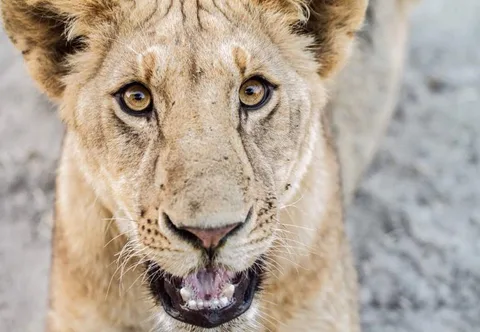
The wildlife area, often called Hluhluwe National Park, offers great safari experiences. These include the Big Five of lions, elephants, leopards, buffalo and rhinos. You will find the latter better here than in any other public reserve in KwaZulu-Natal Province.
Rhino conservation is the park's flagship.
The park has also been committed to lions in particular since 1999. At that time a project to conserve the lion populations, which were suffering from inbreeding, was launched. Since then, unrelated lions have supplemented the inbred prides and brought fresh genes.
Another regular and easy sight are buffalo herds, which are among the Big Five because, for all their apparent placidity, they can actually become very dangerous.
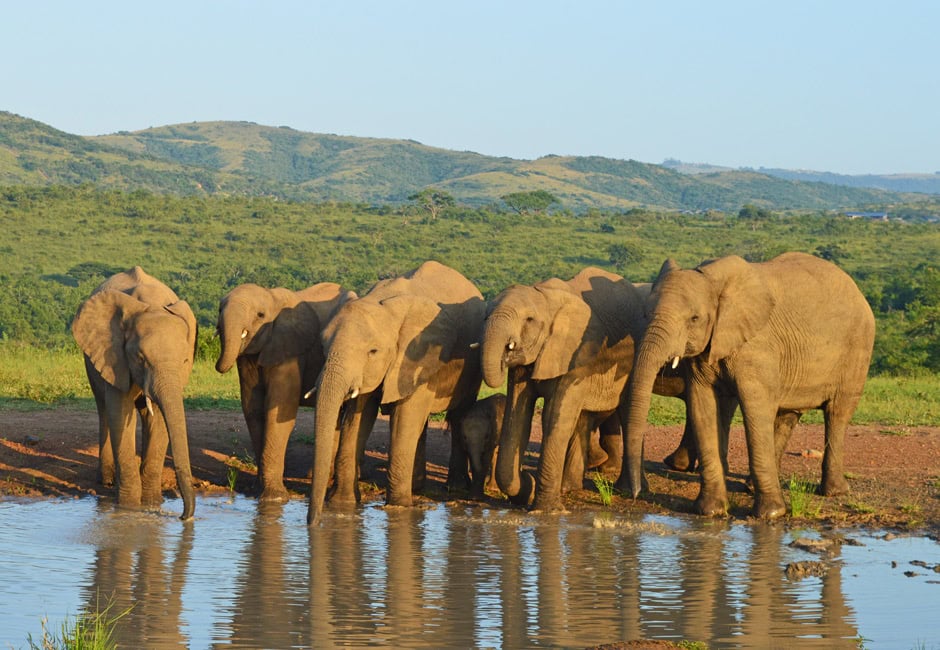
The same goes for the elephants, who are also well represented in this park. Only the leopards are very shy and require a little more luck in the search.
Landscape and vegetation – more than just savanna
Steep, rugged landscapes, gentle hills and valleys as well as plateaus and undulating lowland characterise the park's panorama, which spans altitudes between 80 m and 540 m above sea level.
The Hluhluwe area in the north of the park is more rugged and mountainous, with grassland and in places dense woodland. In the iMfolozi area in the south, near the Black and White Umfolozi rivers, you will more often find open savannas.
For visitors, this rise and fall of the terrain is a feast for the eyes, because it often leads to glorious views into the distance. Here you can impress your fellow travellers by spotting elephants, giraffes or buffalo on the far horizon.

Safari options – guided tour or self-drive?
Hluhluwe-iMfolozi Park allows self-drivers as well as guided tours.
Can you drive yourself in Hluhluwe-iMfolozi Park? – Freedom with responsibility
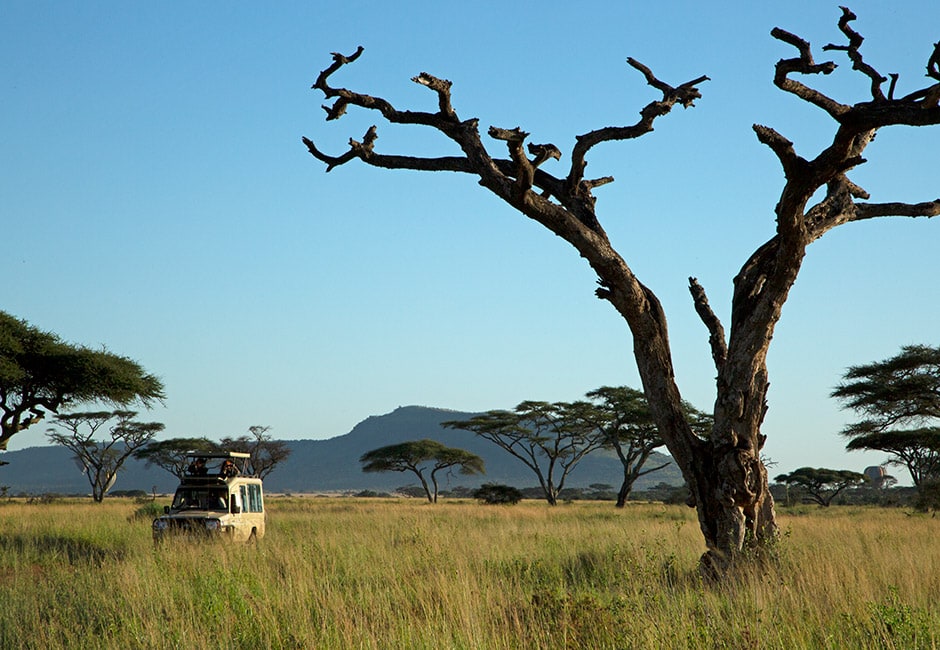
The park is excellent for self-drivers who want to explore this Big Five landscape on their own initiative.
In the dry season the roads are suitable for all vehicle types. Four-wheel-drive cars are recommended in the rainy season, however, when roads can flood or unpaved tracks become very muddy.
Of course, the freedom of driving yourself also brings responsibility. Be considerate of the wildlife. Stick to the maximum permitted speed of 40 km/h. And always carry enough drinking water.
You can buy a road map at the entrance or download one as an app, such as “Tracks4Africa”. If in doubt, though, it is certainly enough to photograph the large overview map displayed outside at the reception buildings.
Guided game drives – travelling with an expert
On guided tours, by contrast, you are in very good hands, at least with the partners we work with.
You have a guide at your side who knows the land, the people and the animals and their behaviour very well and shares fascinating knowledge with you. With him you also have a team behind you that is very experienced, from the organisation office to the vehicle maintenance workshop.
If you join a non-private group tour, you will also get to know new, mostly very likeable people with a similar interest in Africa. You share your time, impressions and experiences with them and can sit back, relax and enjoy the tour.
Want to find out more about South Africa trips?
We are happy to advise you. Get in touch with us!
Our tour recommendation
We have included Hluhluwe-iMfolozi Park in various tour offers, both for self-drivers and for guided tours
Self-drive round trip South Africa
Our self-drive offers provide different options for visiting the park. Either as a day trip from St Lucia on the Indian Ocean or with 2 nights inside the park.
With the day-trip option, such as on the self-drive tour “Northern South Africa: North & East Coast Intensive”, you really do travel in your own rental car in Hluhluwe-iMfolozi too.
On the self-drive tour “South Africa Highlights – Comfort” we offer the advantage of both worlds: your own drive to the park and through the park to your overnight accommodation, and from there guided safaris with a lodge guide, in a Land Cruiser or on foot.
Fascination South Africa
On our guided Fascination South Africa round trip, a guide will accompany you for the entire trip. With the group and the guide you also travel together from St Lucia to this beautiful park in KwaZulu-Natal.
You spend the day in the game reserve with the group and the guide, but at the end of the day you do not drive back to the coast at St Lucia, instead heading to Pongola Game Reserve at the gates of the Kingdom of eSwatini. The next highlight is already waiting for you there.

When is the best time to travel to Hluhluwe-iMfolozi Park?
For the best possible safari experience with the most favourable conditions for good wildlife viewing, the best time to travel matters in this park too.
Dry season vs. rainy season – when is a visit worthwhile?
Basically, Hluhluwe-iMfolozi Park is a year-round adventure.
Dry and rainy seasons alternate here. The annual rainfall is strongly seasonal, with most rain falling between October and March. The dry season runs from May to September.
Often, though, conditions during the dry period are still ideal for good wildlife sightings well into October.
In general, the dry months from May to September offer ideal safari conditions in this park. The vegetation thins out and the animals become more visible. Water becomes scarcer and the concentration of animals at some water sources increases.
Annual temperatures range between ±13 °C and ±35 °C and are also strongly influenced by altitude. Frosts are rare. Thunderstorms are a common feature of the summer rainfall period.
If there is heavy rainfall, some stretches of road are quickly cut off and impassable. Then you either have to wait and hope the floodwaters recede, or go back to the gate you came through and drive a huge detour.
But since it does not rain constantly or always heavily in the rainy season, during the rainy-season months you can enjoy above all lush green and very photogenic landscapes. It is also the time of the many young animals with a high “aww, how cute” factor.
What accommodation is there in Hluhluwe-iMfolozi Park? – From rustic to luxurious
In the park you will find provincially run accommodation that can be booked through Ezemvelo KZN Wildlife . There are also private lodges inside and outside the park, often of a high standard. There is something for every taste in accommodation.
Important note: Especially in high season (July – October) or on South African public holidays, you should book your accommodation in good time in advance.
Provincially run accommodation
Hilltop Camp (Hluhluwe part of the park)
- Provincially run accommodation for self-catering guests in chalets, rondavels and family units, but also with campsites.
- It also has a restaurant, a small shop and a petrol station.
- Game drives, night drives and bush walks can be booked on site.
- It has a great location with panoramic views from the reception and restaurant area.
Mpila Camp (iMfolozi part of the park)
- Provincially run accommodation for self-catering guests in chalets and tents.
- No mains electricity, but solar systems and generators. Petrol station and small shop for basics such as milk or firewood. Game drives and bush walks.
- More rustic and closer to the wilderness.
- Animals can wander through the camp, as there is only an elephant fence!
Others
A number of smaller self-catering accommodations within the park complement the public offering, but provide no further infrastructure. These include, for example, Nselweni Bush Lodge, Gqoyeni Bush Lodge and Hlatikhulu Bush Lodge.
Private accommodation
There are some private lodges inside the park and plenty outside.

Rhino Ridge Safari Lodge (on the western edge of the park)
- Guided tours & views: Safaris and activities with guides; panoramic views of the surroundings.
- Luxurious & close to nature: High-quality facilities with stylish design.
- Wellness included: On-site spa area for relaxing days.
Ama Zulu Guesthouse & Safaris (18 km from the park)
- Ideal for self-catering: Pool, barbecue area and mini-bar in the communal area.
- Good value & modern: Offers upmarket facilities at a small price.
- Modern style with African flair: Simple elegance, partly African décor.
Leopard Walk Lodge (35 km from the park)
- Forest setting & seclusion: On the edge of the UNESCO World Heritage Site iSimangaliso Wetland Park; far from busy tourist spots.
- Glass rooms with all-round views: “Secrets of the Forest” suites with large glass walls.
- Comfort & privacy: Quiet, natural setting with a luxurious atmosphere.
Hluhluwe River Lodge (29 km from the park)
- Beautiful views & nature experience: Ideal for wildlife-rich game drives and quiet days by the water.
- Luxury on the river: Right on the river with elegant lodge design.
- High comfort: Large rooms, restaurant, pool, often including a tracker service.
Malaria & health – what you should know
Hluhluwe-iMfolozi Game Reserve lies in a malaria risk area. The risk exists mainly in the rainy season, but is generally rated as very low. Malaria prophylaxis, at the very least by avoiding mosquito bites, is therefore sensible.
Also read my blog: “Malaria protection on Africa trips”
If you stay in the country longer or travel in basic conditions (e.g. with a tent and backpack), the following vaccinations may currently also come into consideration: hepatitis, rabies and typhoid.
Before your trip to South Africa and your visit to this safari park, you should take precautions for all health eventualities and seek tropical medicine advice.
On the go you should always carry enough water and protect yourself well from the sun.
What are the entrance fees & opening hours in Hluhluwe-iMfolozi Park?
Compared with the neighbouring countries in southern Africa, the entrance fees for this park are somewhat higher. But compared with prices in East Africa, they are a real bargain.
How much does it cost to enter Hluhluwe-iMfolozi Park?
From 1 November 2025 the park charges a daily conservation fee of R300 (around €15) per adult and R150 (around €7.50) per child under 12.
Residents of South Africa and of the Southern African Development Community (SADC) countries can apply for a discount on this fee on presentation of ID (R150 per person per day).
Opening hours & important information for visitors to Hluhluwe-iMfolozi Park
The following opening and closing times apply both at the park's three main entrance gates and in the respective overnight camps inside the park:
Oct – Mar 05:00 – 19:00
Apr – Sep 06:00 – 18:00
Please observe these times very carefully when you are travelling within the park. Otherwise fines may follow. Many guests naturally come up with the most outlandish excuses. A timely call to reception, for example in the event of a breakdown on the road, can help, though.
If you are still outside the park before the gates close and reception estimates the travel time to your accommodation in the park so that you will not make it there in time, you will have to stay outside.

Conclusion – is Hluhluwe-iMfolozi Park worth it?
Hluhluwe-iMfolozi Park in KwaZulu-Natal is undoubtedly a jewel for nature lovers and adventurers. With its impressive wildlife, picturesque landscapes and rich history, it offers an unforgettable safari experience for all travellers. You will quickly understand why, as majestic as it is, it could also be called Hluhluwe National Park.
Whether you choose a self-drive tour or book a guided safari – the park makes it possible to experience South Africa's fascinating wildlife, including the Big Five, up close and to enjoy the beauty of nature in all its glory.
The best time to travel to Hluhluwe-iMfolozi Park is during the dry season from May to September, when the animals gather more densely around water sources and the thinning vegetation allows better visibility.
The location in the heart of KwaZulu-Natal makes the park easy to reach. For overnight stays there is something for every taste. Various accommodation options are available – from luxurious lodges to campsites.
Remember the health precautions. Bring enough water and sun protection and immerse yourself in the magic of Hluhluwe-iMfolozi Park – an adventure you will remember for a long time!
We are happy to help with questions and support in planning and booking your South Africa trip – whether you are travelling on a guided group safari, a guided private safari or a self-drive tour.
Thanks to our close contact with our subsidiary in South Africa, we are always well informed about the current situation. So get in touch with us! Your dream, our expertise – your very own South Africa experience.
Juan Proll has lived in southern Africa since 2011 and works as a certified nature and cultural guide in South Africa, Botswana and Namibia for Elefant-Tours and its subsidiaries. After an earlier career as an adult education teacher in Germany, he swapped the classroom for the wilderness. Alongside his work as a guide, he writes for the Elefant-Tours blogs about nature, culture and sustainable travel. Juan is a member of the Field Guides Association of Southern Africa (FGASA) and author of the books „Ich werd’ dann mal Ranger“ and „Das Safari-Lesebuch“. The magazine DER SPIEGEL reported on his training.