On safari in South Africa: when is the best time to travel?
 by Juan Proll· September 8, 2025· 9 min read· Updated September 10, 2025
A safari in South Africa is one of the most popular reasons to visit the country at the Cape. The fantastic African wildlife invites you to experiences of superlatives in South Africa's most beautiful national parks. But when is the best time to travel for a safari in South Africa? Find the answers here.
Why the time of travel is crucial
Choosing the right time to travel is crucial to get the most out of your safari in South Africa. In optimal conditions, your chances of experiencing the wildlife in all its diversity increase. But when is the best time to travel for a safari in South Africa?
In the dry season of most top safari areas, which runs from May to September and often well into October, waterholes are scarce. This brings the animals together and makes them easier to watch. The landscapes are also often barer, so the animals are easier to spot.
In the rainy season, from October to April, nature is lush green, which offers beautiful photo motifs. On the other hand, visibility of animals can be limited.
In addition, at this time water sources are widely scattered and the animals spread out more. So the time of travel significantly shapes your safari experience, as well as your comfort and your chances of impressive wildlife sightings.

Best time to travel for safaris in Kruger National Park
With any question about the best time to travel, it quickly becomes clear that, besides various factors such as climate and wildlife sightings, it also depends on personal preferences.
The national park, located in north-eastern South Africa, has a subtropical climate. Two main seasons therefore shape the weather: a rainy season and a dry season.
The South African “winter”, which is synonymous with the dry season and stretches from May into October, has a lot in common with a central European summer.
It is warm, dry and sunny. Paradoxically, it is too cold for snakes and scorpions. This time is far too dry for mosquitoes, and many birds have already moved on to warmer areas.
It is the time when the grass fades, the vegetation thins out and the water becomes increasingly scarce, until it is reduced to a few year-round waterholes. The animals now gather at these few remaining drinking oases.
For travellers who mainly want to see Africa's wildlife, May to October is the best time to travel for Kruger National Park. Here are 10 tips for a safari in Kruger National Park.

Kruger National Park in the rainy season: also worthwhile?
In Kruger National Park the “summer”, which is synonymous with the rainy season from November to April, can be as hot, humid and rainy as in Germany.
The rain brings freshly growing grass, lush vegetation and plenty of wild waterholes. Perfect conditions for the animals to spread out and to hide better. Pregnant females use this advantage to give birth to new life.
Snakes, scorpions, spiders and mosquitoes also crawl out of their holes at this time of year. Birds likewise return from their winter homes.
Most of the rain pours down between December and February and causes the odd flood. An increased malaria risk is also likely at this time.
Would you like to find out more about South Africa trips?
We are happy to advise you. Get in touch!
Safari in Addo Elephant Park: when is it most worthwhile?
In Addo Elephant National Park the weather is generally more reliable and a visit can easily be combined with a trip along the Garden Route National Park. The main travel season on the Garden Route is between October/November and April/May.
Addo does have rainy and dry seasons, but it lies in a climatically special location where both phases are not as pronounced as elsewhere. That makes this safari national park a true all-year-round option.
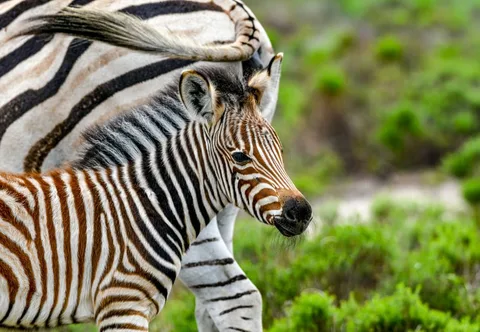
Don't be fooled by the name of the park. There is far more than just elephants here. All of the Big Five are present: elephants, lions, rhinos, leopards and buffalo. Plus plenty of antelope, ostriches, zebras and even meerkats.
Another advantage of this park is that it is a malaria-free area. Rain may increase the number of annoying mosquitoes, but if they bite, it is without the malaria parasite.
You can find out why Addo Elephant Park is worth it in our blog.

Hluhluwe-iMfolozi: best time to travel for this insider tip
The best possible safari experiences are also to be had in Hluhluwe-iMfolozi Park. When it comes to the optimal conditions for good wildlife viewing, the best time to travel matters in this park too. The speciality here is rhinos.
And although dry and rainy seasons alternate here, the park is fundamentally a year-round adventure.
Annual rainfall is strongly seasonal and heaviest between October and March. The dry season runs from May to September.
Often, however, the dry period extends well into October and is ideal for good wildlife sightings.
In general, the dry months in this park offer ideal safari conditions. The vegetation density decreases, and the animals become more visible. At the same time water becomes scarcer and the concentration of animals at some waterholes increases.
If heavy rainfall sets in, some stretches of road are quickly cut off and impassable. Then you either have to wait for the water to subside or drive back to the gate you came through, possibly making a huge detour to your accommodation.
However, it does not rain constantly or always heavily in the rainy season. So during the rainy-season months you can enjoy above all lush green and very photogenic landscapes. At the same time it is the time of the many young animals with a high “aww, how cute” factor.
You can find more on tours, accommodation & tips in Hluhluwe-iMfolozi Park here.

Dry season vs. rainy season: which suits you better?
The question “When is the best time to travel for a safari in South Africa?” is generally about asking whether the dry or rainy season better suits your safari expectations. Because both the dry season and the rainy season have their very own appeal.
The dry season (May to September/October) – best time to travel for a safari in South Africa
The South African dry season means less water in rivers and waterholes in the safari areas, which makes wildlife viewing easier as the animals gather around the few remaining water sources.
The landscape is often barer, and visibility therefore clearer, which offers excellent photo opportunities around the wildlife. The weather is usually warm during the day, then rather cool to mild in the morning and evening, ideal for safari-friendly temperatures.
So if you are mainly focused on big wildlife and value clear visibility, the dry season is the best choice.
The rainy season (October/November to April)
The South African rainy season brings frequent, short rain showers to the safari destinations, making nature shine in rich green.
These months are perfect if you want to experience the bush in lush, blooming splendour and love birdwatching, as many migratory species set up their summer camp here during the rainy season.
Big game is often harder to see at this time, however, because water and food are plentiful. But the landscape is spectacular and the atmosphere lively. Perfect for photographers focusing on landscape photography.
The rainy season is also the birthing season for many animals, which allows exciting observations. It can, however, get very hot and humid.
As low season, the rainy season generally offers significantly lower prices for accommodation, parks and tours.

Regional differences: the best time is not the same everywhere
Climatic, geographical and cultural factors influence the best time to travel for a safari in South Africa in different regions of South Africa.
For example, in the north-eastern region – where Kruger National Park is also located – the best time to travel falls in the European summer months, while areas further south such as Cape Town have their high season in the European winter.
The climate, with its temperatures, rainfall and hours of sunshine, varies greatly within this country. This means that certain activities or events are best at different times in the individual regions.
Popular safaris in South Africa:
Frequently asked questions: best time to travel for a safari in South Africa
When is the high season?
The high season for safaris in South Africa is in the dry season, which lasts from May to September. At this time wildlife viewing is particularly good, as waterholes become scarce and animals gather at them.
Are there malaria-free safari options?
There are malaria-free safari options, above all in South African national parks such as Addo Elephant National Park.
How much does it really rain in the rainy season?
During the rainy season (November to March) it can rain heavily, often in short but intense showers, which makes the landscape green and lush. Animal activity is less consistent in the rainy season, but the landscape is breathtaking.
When do you see the most animals?
In the dry-season months. Especially when it is further advanced and the vegetation thins out and water becomes scarcer.
When are accommodation prices lowest?
For cheaper accommodation, it is worth travelling outside high season, for example in late spring or early autumn. The months of March and April are also considered an “insider tip”, as they attract fewer tourists and good wildlife viewing is still possible.
Is wildlife viewing worse in the rainy season?
Yes, it is, because the landscapes are generally lusher and waterholes form scattered everywhere. The animals therefore usually stay well hidden in the thicket.
Which months count as an “insider tip” for a South Africa safari?
For me these are the months September to October. The landscapes may by now often look very grey and parched, but the animals are particularly easy to see now. It is also a time when there are not yet too many travellers around.
When is the best time to travel to see the Big Five?
The best time to travel in South Africa to see the Big Five (lion, elephant, buffalo, leopard and rhino) is during the dry season. In most safari regions that runs from May to September.
During these months the animals are easier to observe because waterholes become scarcer and the vegetation thins out, making sightings easier. The months July to September are particularly recommended, when the weather is cool and dry, animal activity is high and visibility is optimal.
Avoid the rainy season (October/November to April), as the dense vegetation and high water levels make wildlife viewing harder.

Our conclusion: so when is the best time to travel for a safari in South Africa?
With its diverse safari destinations such as Kruger National Park, Hluhluwe-iMfolozi and Addo Elephant National Park, South Africa is a true paradise for animal lovers and nature fans.
A safari here can also be combined well with other activities in the country. If you would like to find out more about the best time to travel in South Africa, you can read more in this blog.
The best time to travel for safaris in South Africa depends largely on your individual interests . Overall, South Africa's safari destinations offer fascinating nature experiences all year round.
The dry season is generally the preferred time for wildlife viewing, while the rainy-season months (October to April) are often a special experience, with lush vegetation, green countryside and the chance to experience the impressive wildlife during the breeding and birthing season.
A trip is therefore worthwhile in every season, as each period has its own appeal.
We are happy to answer questions and to provide support with planning and booking your South Africa trip – whether on a guided group safari, a guided private trip or a self-drive tour.
Thanks to our close contact with our subsidiary in South Africa we are always well informed about the current situation. So get in touch! Your dream, our expertise – your very own individual South Africa experience.
Juan Proll has lived in southern Africa since 2011 and works as a certified nature and cultural guide in South Africa, Botswana and Namibia for Elefant-Tours and its subsidiaries. After an earlier career as an adult education teacher in Germany, he swapped the classroom for the wilderness. Alongside his work as a guide, he writes about nature, culture and sustainable travel for the Elefant-Tours blogs. Juan is a member of the Field Guides Association of Southern Africa (FGASA) and the author of the books “Ich werd’ dann mal Ranger” and “Das Safari-Lesebuch”. The magazine DER SPIEGEL reported on his training.