Climbing Mount Kenya: trekking tours in Kenya
Hikes through beautiful landscapes. Climb Mount Kenya to Point Lenana. High-quality equipment, experienced guides. Book here!
Mountain hike up Mount Kenya
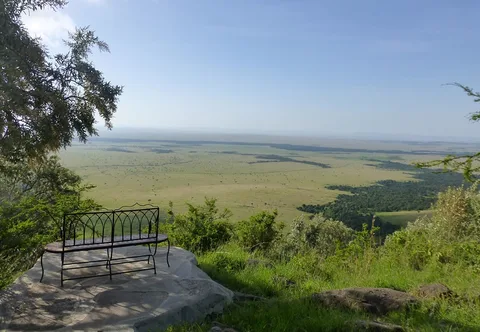
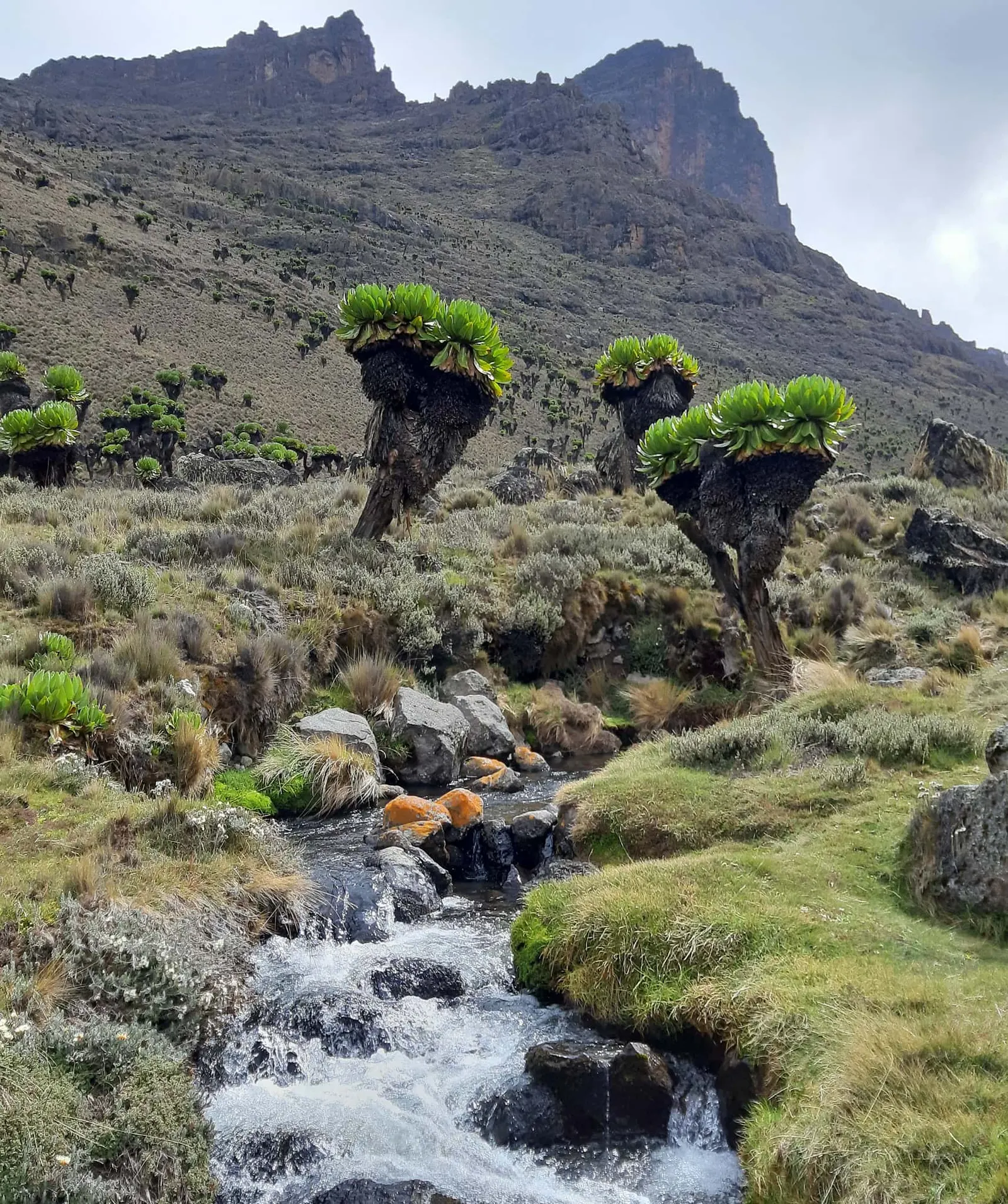
Crystal-clear mountain streams, beautiful forests and wide high-mountain landscapes characterise a trekking tour on Mount Kenya.
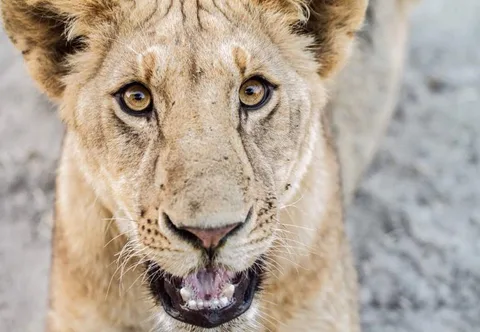
Along varied routes you experience impressive nature and, in the lower regions, with a bit of luck also wildlife. As the mountain is less frequented, you enjoy the peace and unspoilt character of this special environment.
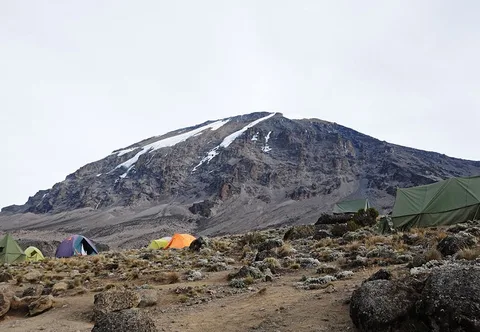
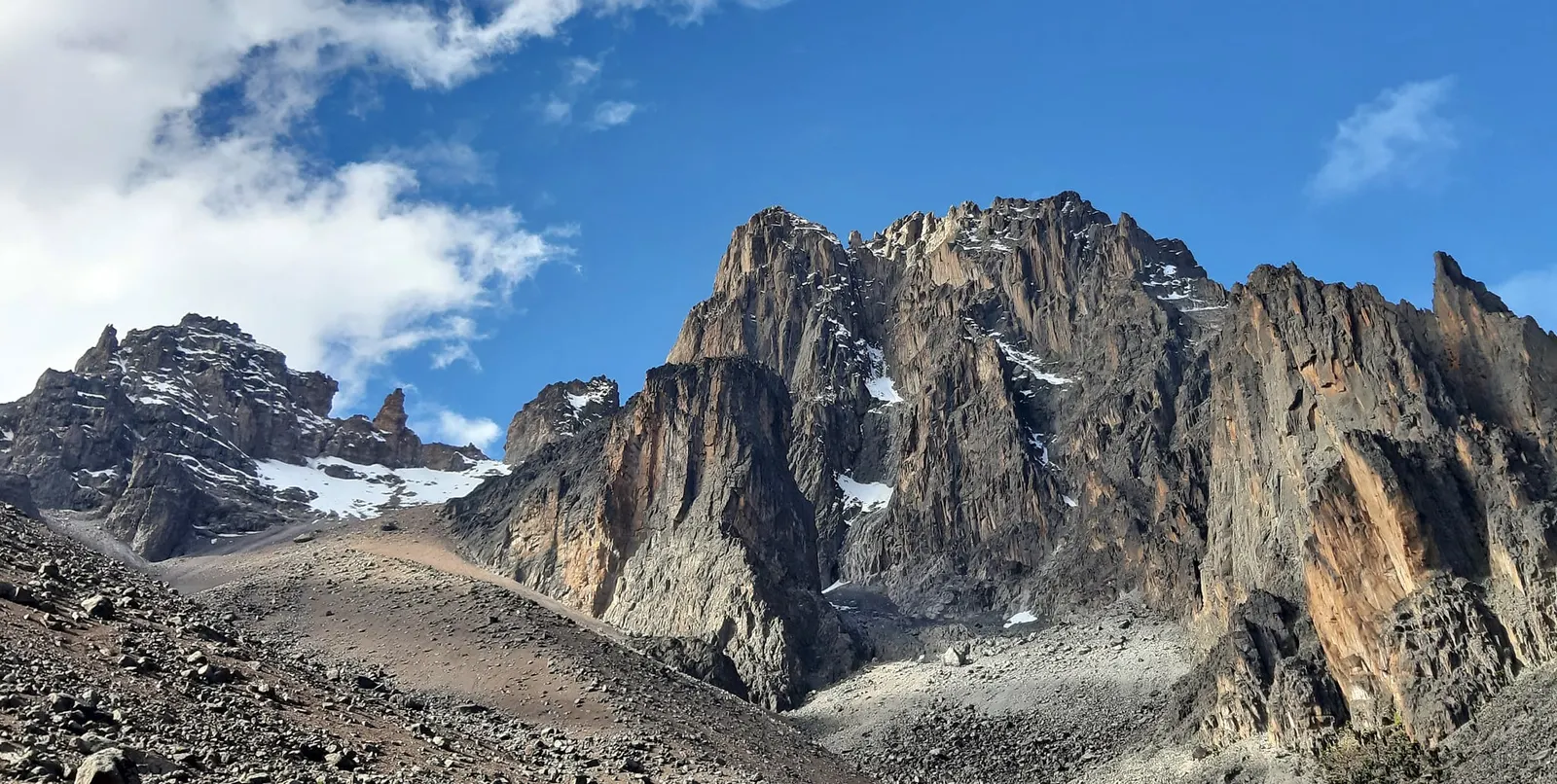
Mount Kenya delights with diverse landscapes from green hills to alpine zones. While experienced mountaineers aim for Batian (5,199 m), many hikers successfully reach Point Lenana (4,985 m).
The nights in a tent or in simple huts make the experience authentic and close to nature.
Our most popular trekking tours on Mount Kenya
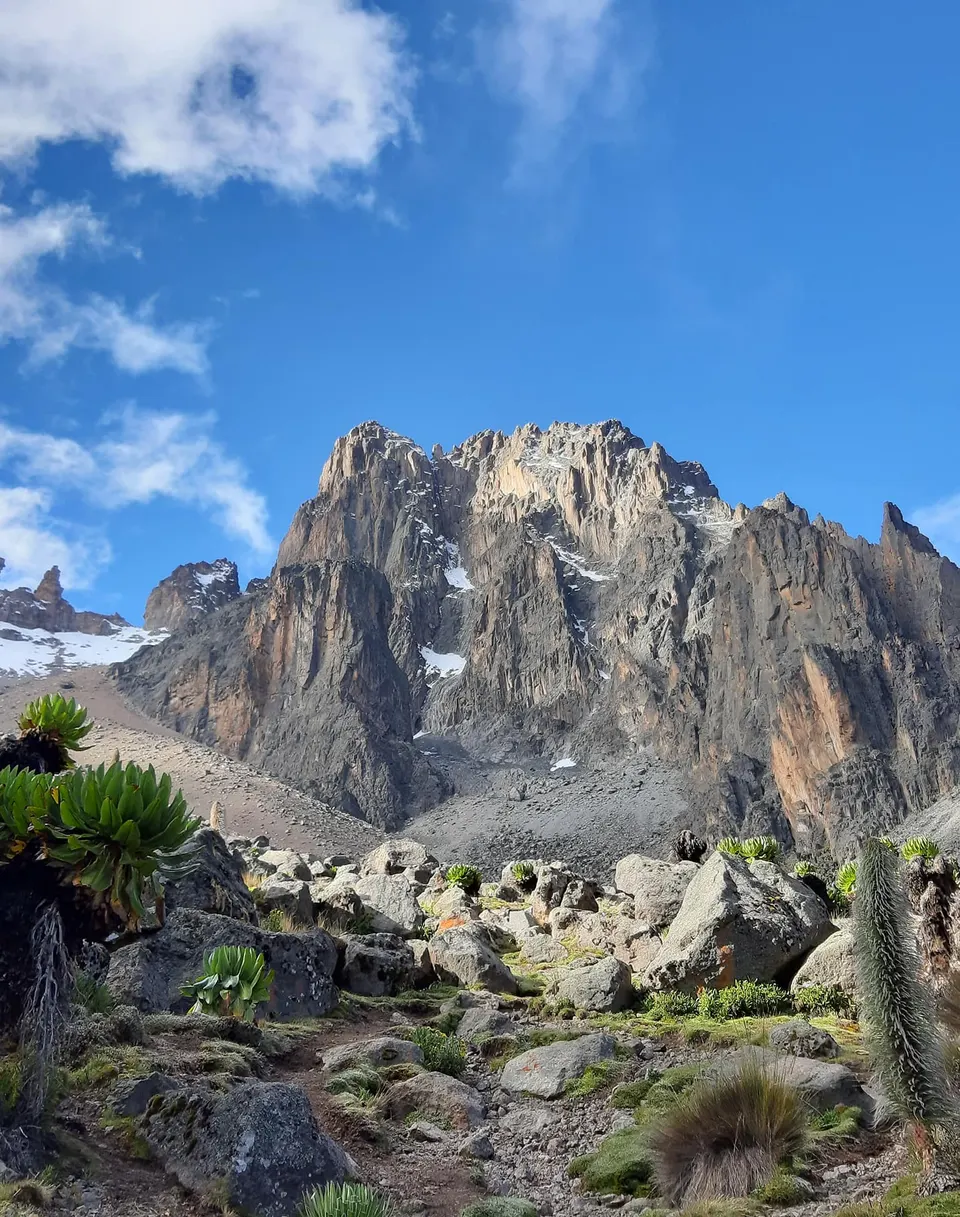 Kenya
5 days
Mt Kenya Trekking: Chogoria Route
from 1.175 € per person
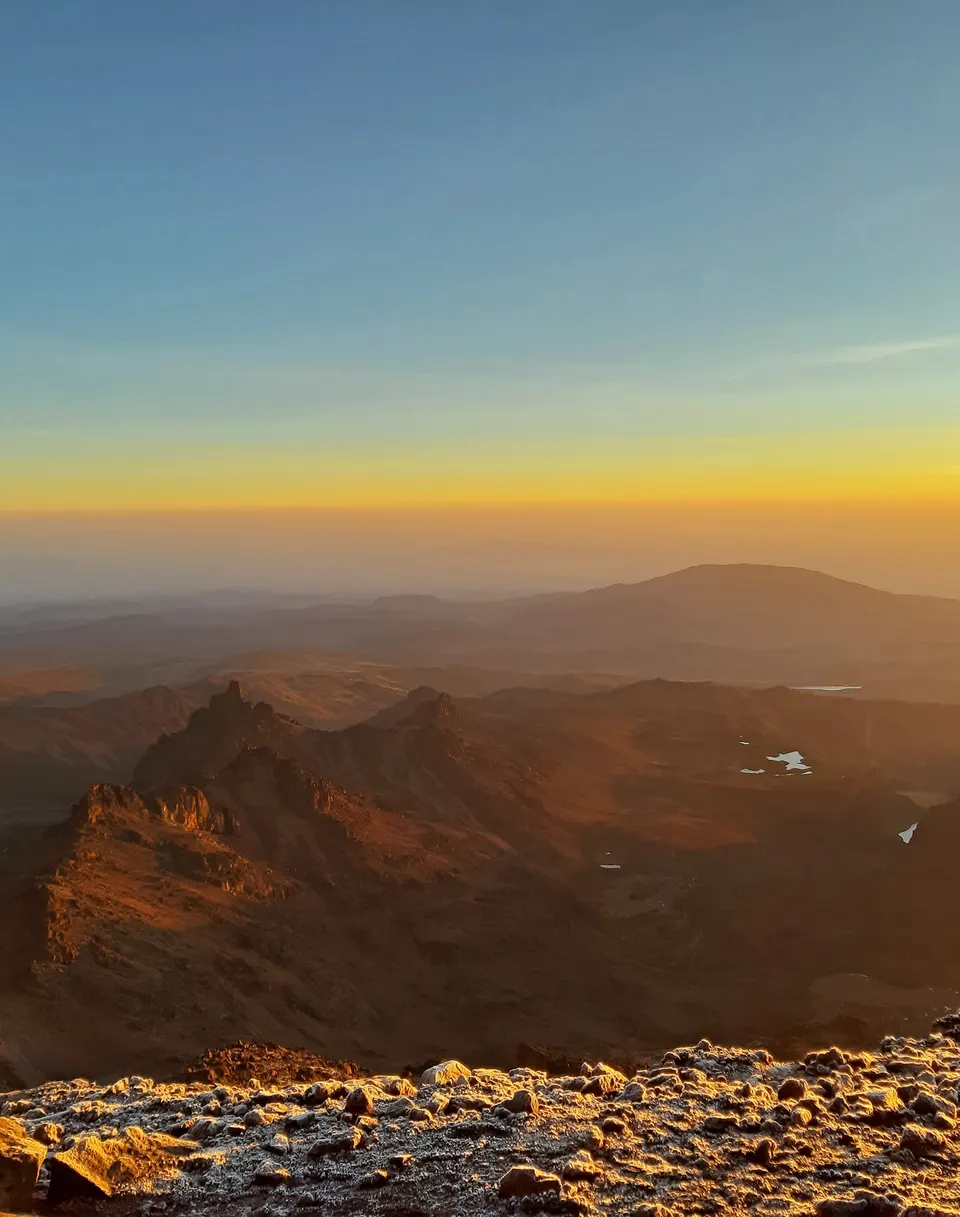 Kenya
4 days
Mt Kenya Trekking: Sirimon Route
from 980 € per person
All prices exclude international flights.
Highlights of a Mount Kenya climb
On a Mt Kenya climb the routes can be adapted flexibly. Day or multi-day hikes without a summit ascent are also possible and an impressive experience!
Mt Kenya trekking is for true nature and hiking lovers who seek peace, an unspoilt environment and a return to nature.
Look forward to the following highlights
Individual tour planning
Very good summit chances
Chances of wildlife sightings
Dreamlike mountain landscapes
The most popular routes on a Mount Kenya climb
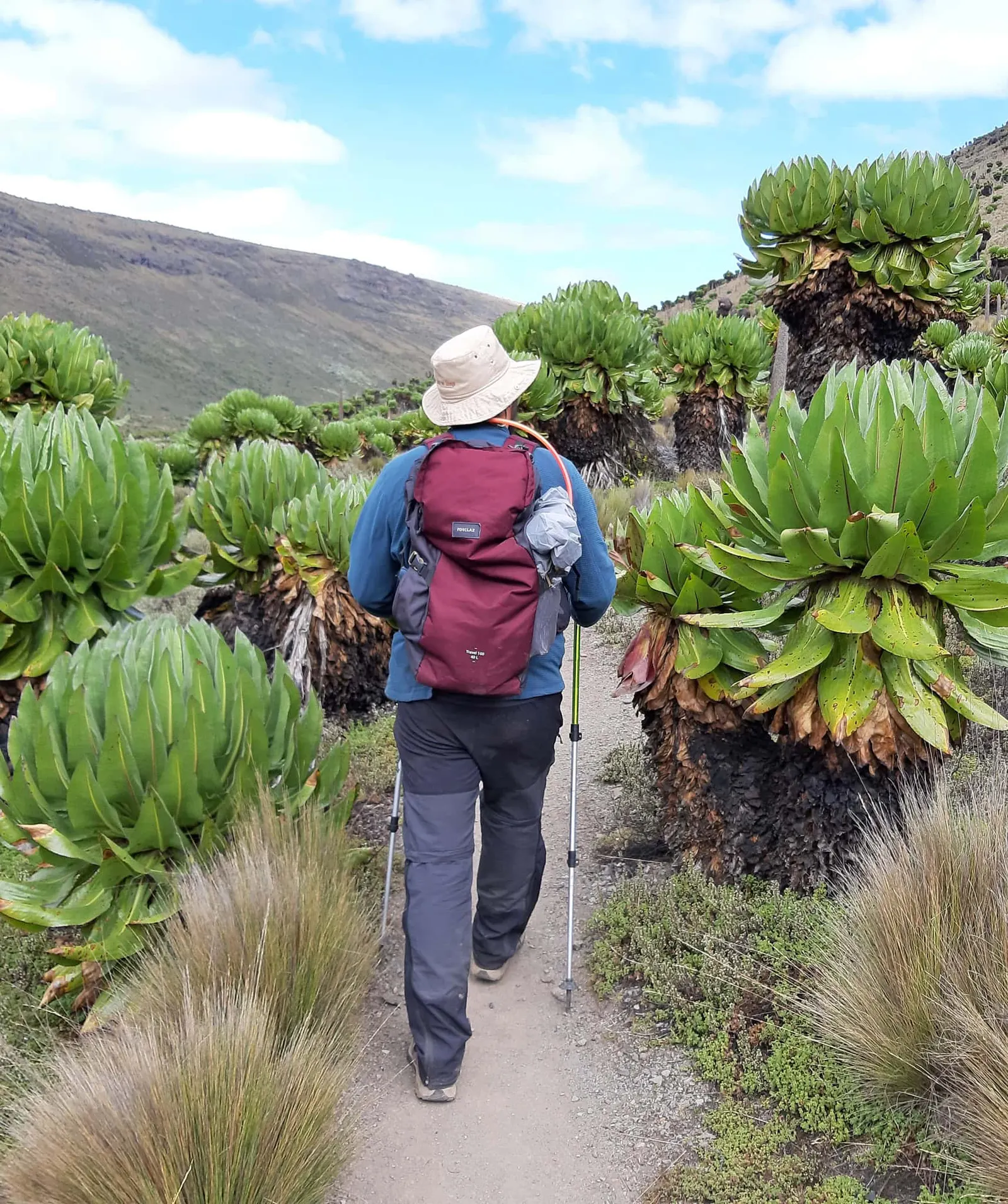
— Herbert
When is the best time for a Mount Kenya trekking tour?
The best time for a trekking tour on Mount Kenya is the dry months from January to March and from July to September, in places until early October. In these periods hikers can usually expect stable weather, good visibility and trails that are easy to walk.
The months July to September in particular are considered ideal for summit ascents such as Point Lenana, as the long-distance views are often excellent.
During the rainy seasons from April to early June and from November to December trekking is possible in principle, but conditions are much more demanding. Heavy rainfall can make the trails muddy and slippery, while mist and cloud limit visibility. Trekking tours are therefore less recommended, especially in April and May.
Regardless of the season, the weather on the mountain remains changeable: clear mornings are often followed by cloud or rain in the afternoon, and at higher altitudes above 3,500 metres it can be cool to very cold all year round.
You can find detailed information on the best time to travel to Kenya here.
How high is the risk of altitude sickness?
The risk of altitude sickness on Mount Kenya exists in principle from an altitude of around 2,500 metres and should not be underestimated, especially when climbing Point Lenana at 4,985 metres.
How strongly someone reacts to altitude depends on individual factors and on the speed of ascent. First symptoms can appear between 2,500 and 3,000 metres, while the risk increases significantly above 4,000 metres.
Thanks to the usual 4- to 5-day trekking routes on Mount Kenya, acclimatisation usually takes place slowly enough, which reduces the risk compared with faster ascents.
The most common symptoms include headaches, nausea, loss of appetite, dizziness, sleep disturbance and exhaustion. Severe forms of altitude sickness are rare, but require immediate attention.
Warning signs such as coordination problems, confusion or shortness of breath at rest should always be taken seriously. With good preparation and a suitable ascent pace, the risk can be well controlled in most cases.
The experienced mountain team is specially trained to recognise and correctly assess the symptoms of altitude sickness at an early stage. In an emergency, all necessary safety measures are initiated immediately.
How do you prepare for a Mount Kenya climb and how difficult is it?
Climbing Mount Kenya is an unforgettable trekking experience that combines impressive landscapes with a sporting challenge. If you want to reach the summit of Point Lenana (4,985 m), you need no technical climbing experience, but you should have good physical fitness.
The higher peaks Batian and Nelion, on the other hand, are only accessible with suitable climbing equipment and experience. Overall, trekking tours on Mount Kenya are considered moderate to demanding.
Targeted preparation increases not only your chances of success but also your enjoyment of the tour. Regular endurance training is recommended, ideally in the form of longer hikes with a daypack.
If you have the opportunity, you should also train in mountainous terrain to get used to differences in altitude and longer ascents and descents. Additional strength training for legs and core can be an advantage, especially on steeper stages.
Acclimatisation is equally important. Since altitude is one of the biggest challenges on Mount Kenya, sufficient time should be allowed for adjustment. Ascending slowly, drinking enough fluids and eating consciously help your body along.
The right equipment also plays a decisive role. The layering principle with several breathable layers of clothing and a waterproof outer layer has proved its worth.
Because night-time temperatures can fall below freezing, warm clothing, gloves and a hat are indispensable. Sturdy hiking boots, trekking poles and a well-fitting rucksack add comfort and safety.
Besides physical preparation, patience, flexibility and a positive attitude are important prerequisites for successful trekking on Mount Kenya.
How long do the ascent and descent take?
The length of the Mount Kenya ascent and descent depends on the chosen route and the target summit and usually takes between 4 – 7 days. Here are the typical timeframes for our two most common routes up to Point Lenana:
Chogoria route
Point Lenana is the most popular summit for trekkers, as it is relatively easy to reach and requires no climbing skills.
The ascent via the Chogoria route with its breathtaking landscapes takes 4 days and is also one of the least used routes on Mt Kenya. The descent takes 1 day.
Sirimon route
The ascent via the Sirimon route to Point Lenana takes you through the beautiful and expansive Mackinder's Valley and takes 3 days. The summit stage is shorter and steeper than via the Chogoria route. For the descent you need 1 day.
Combined routes
All our Mt. Kenya tours are run as private trips and can therefore be adapted flexibly to your wishes. If you want to allow more time for optimal acclimatisation or enjoy the impressive mountain landscape for longer, we recommend an individually combined route.
Our experienced travel experts will be happy to advise you and put together your personal dream route with you.
How large are the groups that climb the mountain?
The trekking tours on Mount Kenya organised by Elefant-Tours and its subsidiary are deliberately designed as private trips. This means you travel only with your own group, whether family, friends or trusted companions, and can experience the mountain in a personal and undisturbed atmosphere.
This concept allows not only a more intense nature experience but also maximum flexibility. Pace, daily stages and breaks are adapted individually to your needs and your fitness.
The result is a trip that is entirely tailored to you and leaves room for special moments in Kenya's impressive high-mountain landscape.
You are accompanied by an experienced local team that knows Mount Kenya extremely well. Your guides are specially trained to correctly assess the challenges of altitude and to react early to possible symptoms of altitude sickness.
They are supported by dedicated porters and cooks who take care of equipment and meals, so that you can concentrate fully on the ascent and the unique surroundings.
What meals are provided on a Mount Kenya trekking tour?
During your trekking tour on Mount Kenya you are provided throughout with freshly prepared, balanced meals that are optimally matched to the demands of high altitude.
The meals are designed to give you enough energy for the daily stages while supporting your body's recovery.
We place importance on varied cooking that is easy to digest and gives you strength even in demanding conditions.
Of course we take individual dietary wishes and special requirements into account. Whether vegetarian, vegan or in the case of intolerances and allergies, the meals are adapted accordingly, so that you are always well provided for and can feel completely at ease.
All dishes are freshly prepared by our team and carefully planned to suit both the conditions on the mountain and your personal wellbeing.
In addition, we recommend taking some personal snacks in your daypack. Energy bars, nuts or small sweets can be a quick source of energy in between and offer additional support, especially on longer stages or on summit day.
Do you have to carry your own things up the mountain?
No, on a trekking tour up Mount Kenya you do not have to carry your main luggage yourself. Our tours include experienced porters who transport most of your equipment, including clothing, sleeping bag and other personal items.
This lets you concentrate fully on the trek and the impressive mountain scenery.
During the day you carry only a light daypack with the things you need along the way. These usually include water, snacks, a camera, sun protection and a warm or waterproof jacket.
Since you carry little weight, the ascent becomes much more pleasant and less strenuous.
The permitted luggage allowance for the porters is limited and will be agreed with you before the tour. This ensures that enough equipment can be taken along while guaranteeing fair working conditions for the porters. With this support you can experience Mount Kenya comfortably and safely.
How much should you tip the local team on a Mount Kenya trekking tour?
After the descent, it is customary on a Mt Kenya trekking tour to tip all crew members. Here are some general guidelines for tipping:
Recommended tips:
- Head guide: 12 USD per group per day
- Assistant guide: 10 USD per group per day
- Cook: 10 USD per group per day
- Porters: 8 USD per group per day
If you were particularly pleased with the performance of your support team on Mount Kenya, you can of course also recognise this with a correspondingly generous tip.
Can you combine a Mount Kenya tour with a safari?
Yes, absolutely – Mount Kenya trekking can be combined superbly with a safari. Many travellers climb the mountain first and then recover for a few days on a safari in Kenya's unique wildlife.
Popular safari destinations are nearby. These include Ol Pejeta Conservancy, which is only about 1-2 hours from the mountain and known for its “Big Five” (including its unique rhino programme) as well as chimpanzees.
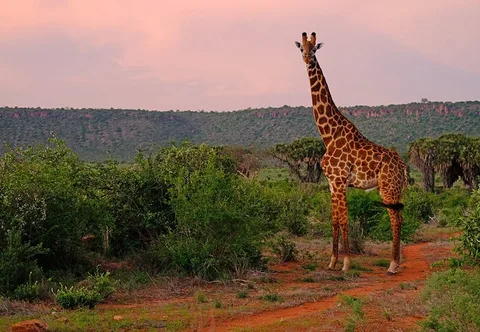
To the north of Mount Kenya lies Samburu National Reserve – a dry savannah landscape with special species such as Grevy's zebras and reticulated giraffes.
If you would like to explore the north of the country as part of a Mt Kenya climb, we recommend our “Northern Kenya” trip. On this 5-day safari you experience this remote region and its extraordinary wildlife entirely privately.
And Masai Mara National Reserve is not too far away either. It is world-famous above all for the Great Migration of millions of wildebeest and zebras between July and October, but is also known all year round for its fascinating wildlife and predator sightings.
Elefant-Tours can offer you a whole range of exciting safaris of between 4-8 days – or even more.
Our Best of Kenya safari, for example, even allows you a relaxed combination of safari and a final beach holiday on Kenya's idyllic coast.
How much does a Mount Kenya climb cost?
The cost of climbing Mount Kenya depends on the chosen route, the length of the trek and the size of the travel group. Our 4-day tours can be booked from 980 euros per person, while 5-day climbs are offered from 1,275 euros per person.
Included in the price are the transfers between Nairobi and Mount Kenya, support from experienced guides, porters and a cook, and all park and permit fees. The price also covers full board during the trek, nights in huts or tents and water supply along the way.
Not included in the trip price are international flights to Kenya, tips for the mountain team, travel and altitude medical insurance, and the rental of trekking equipment if you do not bring your own.
We will be happy to advise you on the different routes and prepare an individual offer to suit your wishes.
You might also be interested in: