Masai Mara – Everything you need to know for planning your trip
 by Juan Proll· June 1, 2026· 17 min read· Updated July 13, 2026
The Masai Mara is one of Africa's best-known safari destinations – and rightly so. As part of the vast Serengeti-Mara ecosystem, it delights with spectacular predator sightings and the famous Great Migration, in which millions of wildebeest, zebras and gazelles cross the plains.
In addition to the national reserve, exclusive conservancies provide particularly authentic nature experiences. Whether a game drive at sunrise, a bush dinner under the stars or encounters with Maasai culture – unique safari adventures await you here.
Everything you need to know for planning your trip, you will find out here today.

Where is the Masai Mara?
The Masai Mara is located in south-west Kenya, right on the border with Tanzania – next door to the famous Serengeti. Together they form the huge Serengeti-Mara ecosystem, in which animals move across national borders with no regard for visa requirements.
Endless savannahs, gentle hills and rivers full of hippos and crocodiles shape the landscape. Particularly exciting: the mix of public National Reserve and private conservancies – for a combination of classic safari experiences and exclusive wildlife viewing with far fewer jeep jams in front of the lions.

What makes the Masai Mara so special?
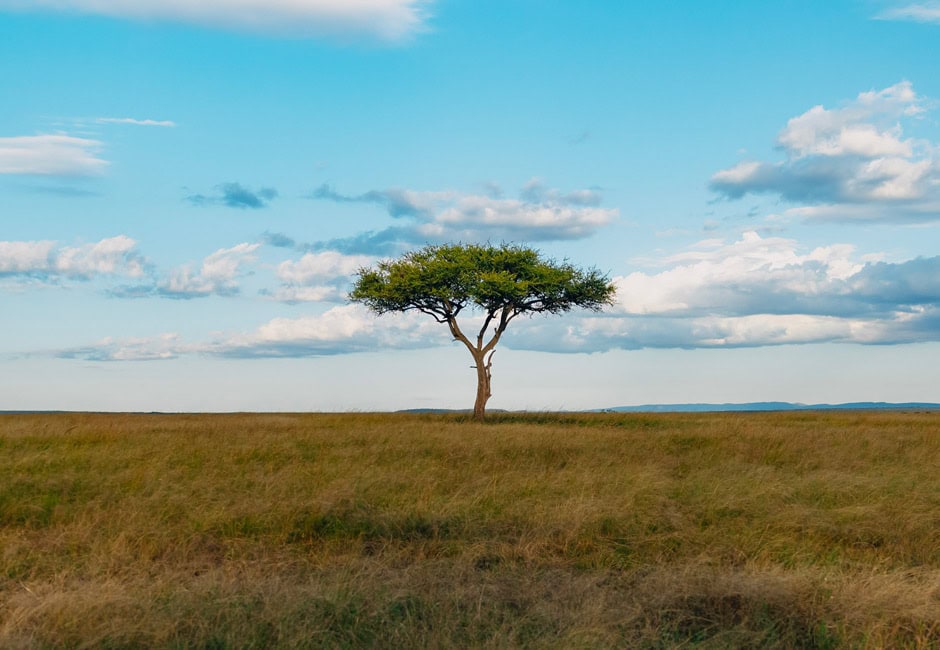
The Masai Mara is the place where even safari professionals suddenly reach nervously for their cameras. The exceptionally high density of wildlife means that behind almost every acacia tree, a new highlight is waiting – from majestic lions to elegantly lounging leopards and lightning-fast cheetahs.
The region is also world-famous for the Great Migration between July and October, when huge herds of wildebeest, accompanied by endless numbers of gazelles and zebras, make their dramatic way across the savannah.
Open plains, rivers and typical acacia landscapes provide the perfect backdrop for “pinch-me” moments. Thanks to private conservancies, exclusive safari experiences are also possible – with far fewer vehicles and intense wildlife viewing in a comparatively small area.
The Masai Mara National Reserve and the conservancies
Each region of the Masai Mara has its own character – from wide savannahs to wooded riverbanks. The private conservancies complement the national reserve perfectly and provide varied safari experiences with very different ambiences.

Masai Mara National Reserve
The Masai Mara National Reserve is the best-known part of the region. Here, an impressively high density of wildlife awaits all year round, with prides of lions, herds of elephants and antelopes in seemingly unlimited numbers.
The Mara River is particularly famous, where hippos splash about and crocodiles patiently lie in wait for their next victim. During the Great Migration, the reserve becomes the setting for spectacular wildlife dramas, including legendary river crossings.
However, where the most famous scenes take place, you will also find the most safari vehicles. In high season, central areas can therefore get very lively – safari traffic jams included.
Mara North Conservancy
The Mara North Conservancy is aimed at anyone who would prefer to experience a Masai Mara safari exclusively. Thanks to a limited number of vehicles, the experience remains much more intimate. Perhaps that is also why the rather shy leopards are particularly willing to show themselves here – much to the delight of photographers and big-cat fans.
The landscape combines open plains with wooded areas, making for varied game drives. Particularly exciting: night drives and walking safaris are permitted and therefore offer you an additional nature adventure.
Compared with the National Reserve, things are much more relaxed here, often with only a few vehicles at a sighting. High-quality camps, personal service and experienced guides also make the conservancy ideal for discerning safari travellers with an eye for detail.

Naboisho Conservancy
The Naboisho Conservancy is one of the most exclusive protected areas in the Masai Mara and places a strong emphasis on sustainable tourism. Peace, nature and the pleasant feeling of having the savannah almost to yourself await you here.
At the same time, the region impresses with a high density of predators – cheetahs and hyenas in particular can be observed here regularly. Lions are also often on the move, reminding you who is really in charge on the savannah.
Walking safaris and night drives additionally provide intense nature experiences away from classic game drives. Fewer vehicles also mean calm wildlife sightings, more time and far less engine noise in the perfect afternoon safari light.
Mara Triangle
The Mara Triangle forms the western part of the Masai Mara and is regarded by many safari fans as a true insider tip. The landscape is particularly varied: rivers wind through wide plains, while gentle hills offer fantastic views.
Although the area allows for excellent wildlife viewing, it is often less visited than the central regions of the reserve. During the Great Migration in particular, spectacular scenes unfold at the Mara River as wildebeest and zebras plunge boldly – or slightly panicked – into the crocodile-infested water.
Lions, leopards and other predators are also present all year round. Thanks to good infrastructure and high-quality lodges, the Mara Triangle combines impressive wilderness with a comfortable safari experience without unnecessary luxury kitsch.
Which animals can you see in the Masai Mara?
The Masai Mara is one of the most wildlife-rich regions in Africa and home to the famous “Big Five”. Particularly impressive is the high density of predators, with lions, leopards and cheetahs in the wild.
Add to that numerous antelope species, over 500 bird species and spectacular predator-prey scenes like something out of a nature documentary without the ad breaks. A diverse ecosystem of open plains and river landscapes creates the perfect stage.
Experiencing the “Big Five” in the Masai Mara
If you want to see the “Big Five”, you have good chances in the Masai Mara. Lions in particular are present in large populations and are often surprisingly relaxed. Leopards like to hide along rivers or doze gracefully in trees, while herds of elephants stroll past them with proud bearing.
Buffalo often stand around lazily in large groups. Rhinos are rarer, but with a little luck can be spotted, especially in the Mara Triangle.
Our experienced guides also provide you with wildlife viewing of exceptional quality – their well-trained eagle eyes find even perfectly camouflaged animals.

The Great Migration in the Masai Mara
Between July and October, the Great Migration reaches the Masai Mara – and transforms the savannah into one of the most spectacular natural events in the world. Millions of wildebeest, zebras and gazelles move north from the Serengeti, creating impressive animal migrations that still thrill even experienced safari guides.
Particularly dramatic are the famous Mara River crossings: steep banks, sometimes strong currents, waiting crocodiles and very nervous wildebeest included. During this time, predator activity also rises markedly, because lions, leopards and hyenas know exactly when the buffet opens.
The exact migration movements depend on rainfall and the seasons, however – nature rarely sticks to travel plans. That is precisely why combined trips with the Serengeti are particularly popular at this time.
More fascinating animal species of the Masai Mara
Besides the “Big Five”, the Masai Mara delights with an enormous variety of other animal species. Cheetahs can be observed particularly well on the open plains. With a bit of luck, they sit on a termite mound, from where they survey the savannah with astonishingly professional-looking composure.
Hyenas also play an important role as skilful hunters and scavengers – despite their bad reputation as ruthless eating machines. Giraffes stride elegantly through the landscape, while hippos and crocodiles dominate the rivers.
Add to that numerous antelope species such as topi, impala and Thomson's gazelle. Bird fans can look forward to over 500 bird species. With a lot of luck, you may even spot African wild dogs on a Masai Mara safari – that would be the safari jackpot.

Best time to travel to the Masai Mara
The Masai Mara is a year-round safari destination – so there is really no bad time to travel, just different kinds of great experiences.
The dry season from June to October is particularly popular, as animals are easier to observe and the famous Great Migration usually takes place between July and October. The savannah then becomes the stage for spectacular river crossings, dramatic hunting scenes and very busy lions.
The green season, on the other hand, brings lush landscapes, beautiful light and far fewer visitors. Many safari fans love precisely this quieter atmosphere, in which the Mara feels almost exclusive. Photographers also get their money's worth now – including dramatic cloud formations instead of dusty savannahs.
Important to know: the long rains usually fall in April and May. Roads can then become muddy and some camps close temporarily – if you prefer to keep safari adventures and involuntary mud packs separate, it is better to plan outside this period.
Predator sightings are, however, excellent all year round, especially in the conservancies. Which time to travel is ideal therefore depends above all on your own interests, your desired safari style and, of course, your budget.
Safari experiences in the Masai Mara
A Masai Mara safari offers far more than classic game drives. It is precisely the combination of different safari activities that makes the trip so exciting. With experienced guides, intense nature experiences unfold – sometimes spectacular, sometimes surprisingly quiet and sometimes simply absolutely unforgettable.
Game drives
Game drives are the classic safari experience and usually the moment when the camera suddenly becomes your most important travel companion. Particularly early in the morning and late in the afternoon, many animals are active, which is exactly when the chances of exciting sightings are best.
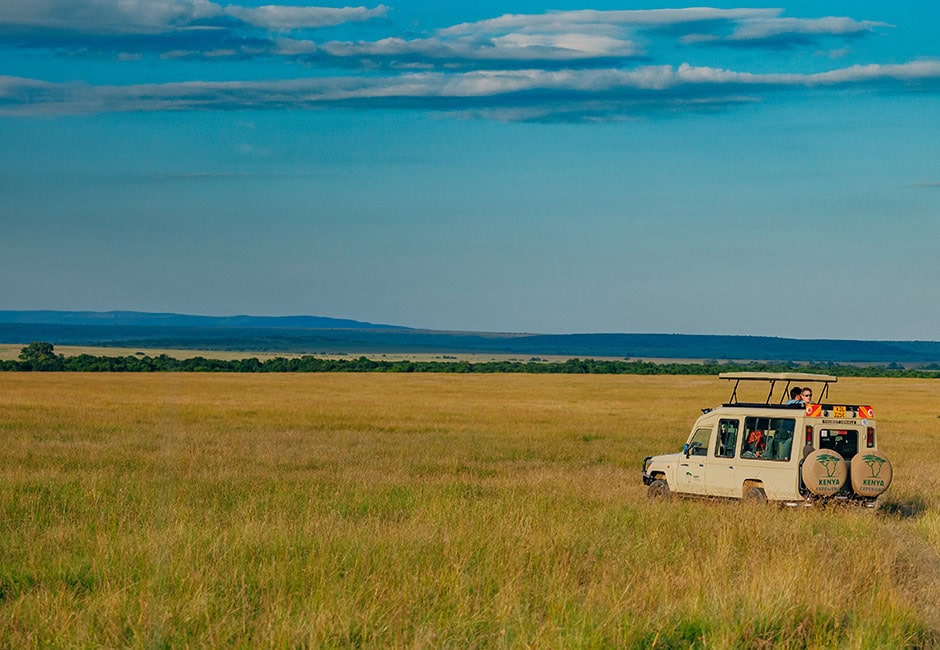
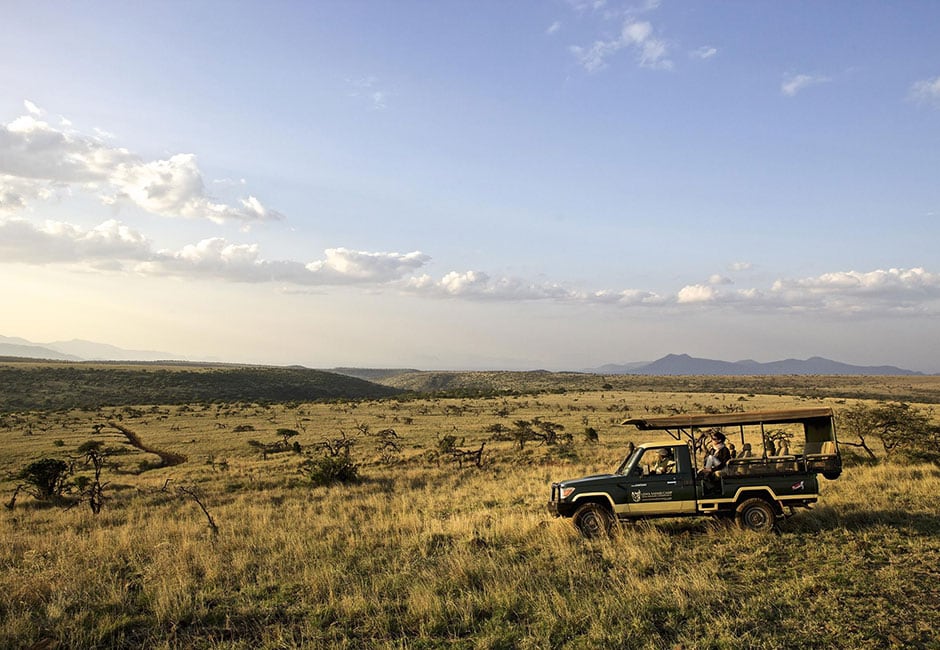
In many conservancies, open safari vehicles are used, which brings you even closer to nature – with the perfect wind-in-your-hair savannah feeling.
Experienced guides often make the decisive difference: they spot well-camouflaged leopards, read animal tracks like an open book and know remarkably well where the stars of the savannah might currently be.
Balloon safari
A balloon safari is one of the most impressive experiences in the Masai Mara. At sunrise, the hot-air balloon rises above the savannah and opens up spectacular views of animals, rivers and endless plains.
Especially during the Great Migration, unforgettable pictures are created from the air. For photographers, romantics and special occasions, this experience is hard to beat – breakfast in the wilderness included.

Walking safaris
Walking safaris show the Masai Mara from a completely different perspective – slowly, intensely and with surprising attention to detail. Instead of looking for lions in the distance, it is about tracks in the sand, interesting plants, insects and the many small stories of the savannah.
The tours are accompanied by specialist guides who share an incredible amount of knowledge about the ecosystem and seem able to interpret every sound. Walking safaris are only permitted in the conservancies and provide a particularly direct nature experience.
Important to know: not every accommodation offers this activity, and it is not available all year round. It is best to ask your Africa travel expert beforehand.
Night drives
After sunset, the Masai Mara suddenly shows a completely different personality. Night drives are only permitted in the conservancies and offer the rare opportunity to observe nocturnal animals.
With a bit of luck, servals, genets or even porcupines appear in the spotlight – animals that mostly remain invisible during the day. Hyenas, lions and leopards are also often particularly active at night.
The atmosphere feels much more intense than on classic game drives: fewer vehicles, more sounds from the darkness and that expectant feeling that anything could really happen behind the next bush. Experienced safari guests in particular love this special mood.
Masai Mara safaris – how to experience the region
The Masai Mara offers comfortable to adventurous safari experiences for every travel style: including exciting Land Cruiser tours on group tours or private safaris with a guide, fly-in safaris or combined trips with neighbouring countries.
Which safari suits you depends on your budget, the time available and your personal interests.
Fly-in safaris to the Masai Mara
If you have little time but still want to experience big safari cinema, opt for a fly-in safari to the Masai Mara. By light aircraft, you head quickly and directly into the heart of the adventure – including spectacular views of savannahs, rivers and herds of animals.
Particularly practical: many remote conservancies are easy to reach, entirely without long drives on bumpy roads. Fly-in safaris are regarded as particularly comfortable and exclusive, as transfers, accommodation and game drives are often perfectly coordinated.
Ideal for travellers who want to combine safari feeling with maximum comfort on limited travel time, such as on our Kenya fly-in safari with Masai Mara.

Guided group tours to the Masai Mara
Guided group tours to the Masai Mara are perfect for anyone who likes to share safari experiences and meet new people. Small groups travel together with experienced guides who tell exciting stories about lions, elephants and the life of the Maasai.
At the same time, these trips offer excellent value for money. Solo travellers or couples in particular benefit from the sociable atmosphere, such as on our mini-group tour “Best of Kenya” safari.
The structured schedule with fixed accommodation means you can sit back and relax – except, of course, when a leopard suddenly appears right next to the Land Cruiser. Pure safari goosebumps!
Private safaris with a guide in the Masai Mara
A private Masai Mara safari means: your adventure, your rules. The itinerary is planned individually, so spontaneous stops for wildlife viewing are possible at any time.
With a private vehicle and personal guide, you enjoy maximum flexibility and intense safari moments entirely without group constraints. Families, photographers and travellers with special interests in particular appreciate this freedom.
Whether watching a lion family for hours or searching for rare bird species – everything here is based on your wishes and your own safari rhythm. Let yourself be inspired, for example, by our privately guided Fascinating Masai Mara safari.
Kenya & Tanzania combination trips
Combination trips through Kenya and Tanzania are among the great classics for safari fans. Particularly popular is the combination of the Masai Mara with the Serengeti – two world-famous safari areas with spectacular wildlife viewing.
Travellers experience varied landscapes, can enjoy different safari styles, sometimes in exclusive lodges, sometimes in luxurious tents, and will certainly see plenty of wildlife. This is the case, for example, on our mini-group tour Kenya & Tanzania – Fascinating East Africa.
For longer trips, this combination is ideal, especially during the Great Migration, when huge herds of wildebeest and zebras cross national borders on their way through the savannah. You can hardly get more Africa feeling – and your camera is guaranteed to run hot.

Accommodation in the Masai Mara
The Masai Mara offers an impressive variety of accommodation – from luxurious safari camps with butler service and classic lodges with panoramic views of the savannah to the many small, exclusive camps in the conservancies, which allow a very personal and often almost private safari experience.
Here you don't wake up to traffic noise, but to birdsong and sometimes the cackling of a nearby hyena or the distant roar of a lion.
The location of the accommodation plays a decisive role in the safari experience: if you stay close to rivers or wildlife corridors, you will often enjoy spectacular sightings right from your “tent terrace”.
Authentic tented camps are particularly popular, as they combine closeness to nature with surprisingly high comfort – including a real “Out of Africa” atmosphere, but usually with hot water and good coffee.
Many camps also rely on very experienced guides and personal service, which makes every game drive individual and intense. In this way, the accommodation itself becomes part of the safari adventure and not just a place to sleep between two elephant encounters.
How do I plan a Masai Mara safari?
Planning a Masai Mara safari ideally begins with a personal consultation, because the possibilities are as diverse as the wildlife itself.
Together, the best time to travel and length of trip are first determined, which depend greatly on your individually defined interests: the Great Migration, quiet nature experiences, intensive photography, adventure with the family or similar.
An important step is the decision of whether you want to combine the National Reserve with the private conservancies and their more exclusive offerings, or prefer to stick with one option. The choice of safari type also plays a role – from comfortable to adventurous, always tailored to budget and expectations.
Many travellers also combine the Masai Mara with other regions in Kenya or even Tanzania to create an even more varied experience.
The support of our experienced travel experts, with first-hand knowledge of the country and lodges, allows complete organisation from a single source. This way, a smooth, perfectly coordinated trip is not left to chance. The focus is entirely on the experience in the wilderness – not on the logistics behind it.
Tips for your Masai Mara trip
A trip to the Masai Mara needs to be well planned – even a few simple tips make the difference between “nice” and “unforgettable”. Especially at the time of the Great Migration, it is worth booking early, as accommodation sells out quickly.
The right safari clothing, comfortable and in neutral colours, and a good camera with a strong zoom lens are also real game changers for successful wildlife viewing.
Respect for nature and Maasai culture goes without saying and contributes to an authentic experience. If you like it particularly exclusive, you should consider the conservancies, as they often allow quieter and more intense safaris.
Domestic flights also save valuable time and considerably reduce long driving distances. Also highly recommended is combining different regions to make the most of Kenya's diversity. This turns a safari into a real voyage of discovery with a maximum experience factor.

Masai Mara FAQ
When is the best time to travel to the Masai Mara?
The best time to travel to the Masai Mara depends on what you want to experience. Particularly popular are the dry months of July to October: the weather is pleasant, the vegetation less dense and the wildlife excellent to see. The Great Migration also graces the Masai Mara at this time – pure safari drama.
The green season from November to May also has its charms, though – fewer visitors, lush green landscapes and lots of young animals make the savannah almost even more photogenic then.
When does the Great Migration take place?
The famous Great Migration usually reaches the Masai Mara between July and October. Huge herds of wildebeest, zebras and gazelles then move from the Serengeti to Kenya – always in search of fresh grass.
Particularly spectacular are the river crossings at the Mara River, where the crocodiles' year-long wait for tasty fresh meat finally ends. Sounds dramatic? It is! The exact timing varies slightly from year to year, however, because the animals follow not calendars but the rain.
What is the difference between the reserve and the conservancies?
The Masai Mara National Reserve is the well-known protected area with classic safari routes and a high density of wildlife. The surrounding conservancies, on the other hand, are privately or community-managed protected areas belonging to the local communities. Things there are often quieter and more exclusive.
In the conservancies, visitor numbers are limited, making wildlife viewing more relaxed. In addition, activities are possible that are prohibited in the National Reserve – such as night drives or guided walking safaris. In short: the reserve means big safari cinema, the conservancies more of a VIP lounge in the middle of the wilderness.
How many days should you plan for the Masai Mara?
For the Masai Mara, we recommend at least three full days. That leaves enough time for several game drives, relaxed lodge moments and the chance to spot the “Big Five”. If you want to experience the Great Migration or visit different conservancies, it is better to plan four to six days.
Which animals do you see most often?
In the Masai Mara you encounter animals almost constantly – often even before breakfast. Zebras, wildebeest, gazelles, giraffes and elephants are seen particularly often. Lions are also spotted surprisingly often. With a bit of luck, cheetahs, leopards and hyenas show themselves. Hippos and crocodiles dominate the rivers.
African wild dogs are rather rare, and seeing them is the safari jackpot. But it is not for nothing that the region is one of the best places in Africa for safari beginners: the density of wildlife is enormous. In short: always keep your camera within reach, even on the way to dinner.
Is the Masai Mara suitable for families?
Yes, the Masai Mara is excellent for families. Many lodges offer family-friendly accommodation and exciting nature experiences.
Children don't learn about animals from books here, but see elephants, giraffes and zebras right outside the window of the Land Cruiser. A safari quickly becomes the coolest biology lesson of their lives – entirely without classroom and homework.
The conservancies in particular are suitable for family trips. Some camps there even organise small bush adventures or encounters with the Maasai.
What matters: plan trip length and safari times to suit the children's ages and take into account age restrictions for lodges and safaris in Big Five regions.
Can you combine the Masai Mara with the Serengeti?
Absolutely – the combination of Masai Mara and Serengeti is one of the most spectacular safari trips in Africa. Together they form the famous Great Migration ecosystem and complement each other perfectly. While the Mara feels more compact and often richer in wildlife, the Serengeti delights with endless plains and magnificent landscapes.
Many travellers combine both areas on a round trip or fly-in safari. The result: double the safari adventures, even more wildlife viewing and guaranteed too little storage space on your camera.

Conclusion – Is a Masai Mara safari worth it?
A Masai Mara safari is undoubtedly among the best safari experiences in Africa and, for many travellers, a real highlight. Hardly any other area offers such exceptional wildlife viewing in a comparatively small area – whether large prides of lions, leopards in the trees or the spectacular Great Migration.
The combination of the classic National Reserve and exclusive conservancies provides an impressive variety of safari experiences, from lively and iconic to quiet and very exclusive.
Whether first-time visitors or experienced Africa travellers – the Masai Mara delights with its intensity, closeness to wildlife and an authentic safari atmosphere that is rarely found elsewhere. Once you have been here, you quickly understand why this area is regarded worldwide as the epitome of safari and keeps drawing you back.
We are ready to answer questions and provide additional support in planning your Kenya trip. Get in touch with us! Your dream, our expertise – your very own individual Kenya experience.
Juan Proll has lived in southern Africa since 2011 and works as a certified nature and cultural guide in South Africa, Botswana and Namibia for Elefant-Tours and its subsidiaries. After an earlier career as an adult-education teacher in Germany, he swapped the classroom for the wilderness. Alongside his work as a guide, he writes for the Elefant-Tours blogs about nature, culture and sustainable travel. Juan is a member of the Field Guides Association of Southern Africa (FGASA) and the author of the books “Ich werd’ dann mal Ranger” and “Das Safari-Lesebuch”. The magazine DER SPIEGEL reported on his training.