When is the best time to travel to the Namib Desert? Our detailed guide
 by Juan Proll· January 6, 2025· 10 min read· Updated January 5, 2025
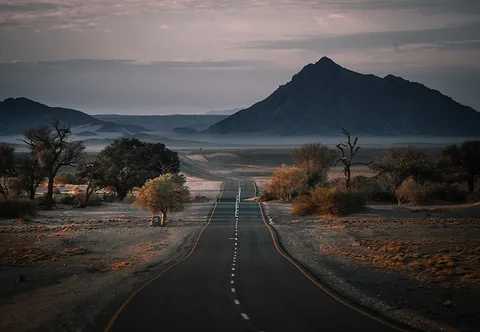
The Namib Desert is one of Namibia's most fascinating attractions. Its dunes, among the highest in the world, its beaches on the Atlantic Ocean, but also mountain formations reminiscent of lunar landscapes and a breathtaking array of wildlife and plants make the region so alluring. But when is the best time to travel to the Namib Desert?
The best time to travel to the Namib Desert at a glance
For many travellers, the best time to travel in Namibia is generally the cooler dry season from May to October. Within this period, the best time to travel to the Namib Desert is June to September, when temperatures are bearable and rain is unlikely. In return, you will meet more people and be travelling in the dustiest months.

That is why the months from November to April are not to be dismissed either: apart from the holiday period from mid-December to mid-January, fewer travellers are about and the country is in its rainy season.
But what does rain even mean in the desert? If there were plenty of it, it would not be a desert. So these months are very dry as well. Above all, though, the coastal side of the Namib, for example near Swakopmund with its refreshing breezes, is the only bearable place in a country that seems to burn under the hot temperatures away from the sea.

The different regions of the Namib Desert
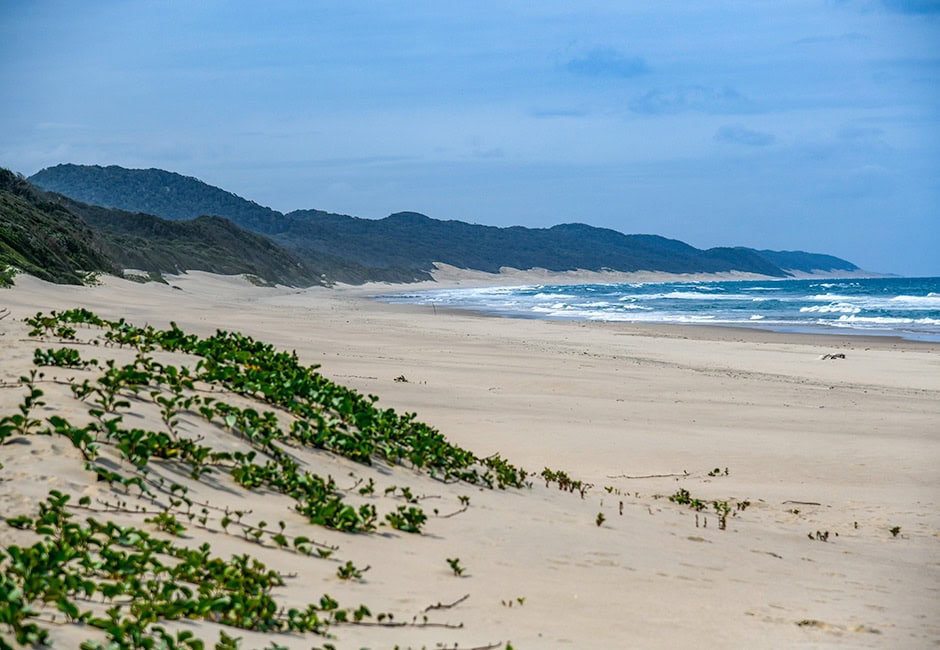
The Namib Desert stretches for around 2,000 km along the Atlantic Ocean from southern Angola to northern South Africa. About 1,750 km of it runs through the western side of Namibia. At its widest point, the Namib reaches inland barely 170 km.
In its northern part, the so-called Skeleton Coast dominates, where numerous ship wrecks jut out of the sand, many people lost their lives and animal skeletons still line the beaches to this day. In the middle section lie the colonial town of Swakopmund, well worth seeing, and the country's most important port town, Walvis Bay.

The sea of sand at Sossusvlei, protected as a UNESCO World Natural Heritage Site, forms the transition to the southern Namib, where it is mainly the colonial town of Lüderitz, the ruins of the ghost town of Kolmanskop and the old diamond restricted area that attract travellers.
What is the climate of the Namib Desert like?
As one of the oldest deserts in the world, the Namib has been through many climate changes. Today its climate is shaped above all by its location near the coast. Here the Benguela Current, coming from the Antarctic, brings cold Atlantic waters that now meet warm air off the coast of Namibia, so that the moisture it contains condenses.
The air that still reaches the land is therefore, put simply, largely just dry air.

The residual moisture here produces less rain than fog, which spreads for kilometres across the coastal region, on some days reaches up to 100 km inland and supplies vital moisture for the survival of animals and plants. In places, the fog can be found on more than 125 days a year.
With fog instead of rain, the annual rainfall in the coastal area is just 5 mm. Only further inland, towards the eastern edge of the Namib, do the influences change and rainfall rises to an average of up to 85 mm.
The cool conditions of the Atlantic ensure relatively stable temperatures along the coast all year round, generally between 9°-20°C. By contrast, they fluctuate much more in the interior of the Namib. Here daytime temperatures in the dry season can exceed 45°C and nights can be icy.
Want to find out more about Namibia trips?
We are happy to advise you. Get in touch with us!
The best time to travel to the Namib Desert – season overview
After the pandemic, Namibia recovered from the comatose state of tourism faster than almost any other country in sub-Saharan Africa. In terms of visitor numbers, 2024 already showed barely discernible seasonal transitions between May and November.
This trend is also clearly visible in the accommodation in the Namib, for example in the Sossusvlei region, where increasingly only a high season and a low season are distinguished and a shoulder season hardly exists any more. Some providers no longer even change their seasonal prices.
In terms of price, however, you can still make out an overall low season from November/December to June and a high season from July to October/November. This applies in particular to international tourism.
Local tourism also ensures high occupancy of accommodation in the coastal towns, especially during the main holiday period between mid-December and mid-January. Campsites and self-catering accommodation in particular are in very high demand.
Two of our favourite trips with a visit to the Namib Desert:
When is the best time to travel to the Namib Desert? Month-by-month overview
What to expect between January and March
These months are among the hottest months of the year and it is the rainy season in the country. The rain can also reach the Namib Desert, but often it does not, or only in some areas. Because of the scarcely existent rainfall and the conditions, which feel more pleasant climatically, the coast of the Namib is a popular place to visit in these months.
Walvis Bay lagoon is also full of water birds, and on the shores of Cape Cross hundreds of thousands of seals can be seen at close quarters.

On the other hand, the hot season climate intensifies the desert feeling in the areas of the Namib away from the coast. A visit to Sossusvlei with a walk to Deadvlei is only possible with plenty of sun cream and even more water.
If the rain does reach the region, driving on some of the gravel and sand tracks in the area can become very unpleasant. Four-wheel-drive vehicles are indispensable. In tourism terms, it is the quietest time in Namibia.
What to expect between April and June
The rainy season comes to an end in the country and temperatures in the Namib cool to below 30°C. Fog formation is also at its lowest in these months. Slowly, the flow of tourists picks up again.
For the whole of the Namib, this already means very good travel conditions. It may initially still be very hot in the Namib interior, but especially from May onwards you can enjoy the sights in Sossusvlei and elsewhere in Namib-Naukluft National Park without the heat getting in the way.
However, many birds in Walvis Bay lagoon continue on their journey and more and more seals disappear into the waters of the Atlantic.
The most popular time to travel to the Namib Desert: what to expect between July and September
Especially in European countries, the main holiday period is between July and August. Many travel enthusiasts land in Namibia. It is high season in the country. This is felt particularly strongly in Sossusvlei, which is getting increasingly busy.
Temperatures in the Namib interior are often still a very pleasant 20°C and more during the day. At night, however, it can get decidedly cold. In September the tide turns again. In this month the weather can be very unpredictable in terms of temperature. Even the first heatwave is possible.
The same applies to the coastal areas of the Namib. The foggy mornings in particular can now feel extremely unpleasant and cold, before September brings the change in temperature again.
In any case, these months are in great demand, so booking early is not only advisable but necessary.

What to expect between October and December
It now gets increasingly hot and unbearable in the interior of the Namib. Many people, by contrast, find the coastal regions pleasant, at least when the sun is already out in the morning.
The migratory birds return and Cape Cross fills with courting male seals and pregnant female seals. Whale sightings off the coast are possible, especially in October and November (possibly from September).
By mid-December the number of travellers also drops noticeably. This increases the choice of accommodation and offers more booking flexibility.
The best time to travel to the Namib Desert by activity
Activities between January and March: beach days on the coast
Even though the Atlantic, with its icy-feeling waters, does not really invite swimming, it still offers pleasant cooling in these hot months.
Beach days are recommended at this time. Best of all in Swakopmund, with its beautiful promenade stretching for kilometres, along which you can enjoy a lovely stroll, especially in the afternoon and evening hours.
It is also the time when you can see thousands of flamingos in Walvis Bay lagoon, often accompanied by other water birds such as pelicans. Cape Cross is now teeming with baby seals.
Activities between April and June
As soon as it cools down noticeably, activities inland in the Namib are also recommended. At the very least, the danger of getting heatstroke on hikes in Namib-Naukluft National Park or while climbing the dunes at Sossusvlei, which are among the highest in the world, recedes.
Even so, caution and plenty of water are advisable.
Activities between July and September: dune walks
It is full speed ahead for all conceivable activities that should not take place in excessive heat. These include above all hikes, for example along the dunes at Sossusvlei or on the Brandberg.

The same goes for visits to largely open-air places such as the ghost town of Kolmanskop or the wild horses of Garub.
Activities between October and December: coastal towns
The returning heat invites visits to the coast with its more moderate temperatures.
Towns such as Swakopmund or Lüderitz, plus the fascinating Lüderitz Bay or the bay of Walvis Bay with its boat tour offers and the flamingos flying in, are particularly recommended at this time.

A visit to Cape Cross is also especially worthwhile. It is the time when bull seals ready to mate and heavily pregnant females come ashore to give birth to the current offspring and prepare for the next.
What can you do in the Namib Desert? Year-round activities
Basically, the Namib Desert is a year-round attraction. Unless the rainy season does strike and make roads impassable, you can drive into Sossusvlei, visit the coastal towns, drive to the moonscape around Swakopmund or take desert and boat tours at any time.
Even a visit to the Little Five in the dune area around Swakopmund is conceivable at any time. The Palmato gecko, the "dancing white lady" (a species of spider), the Namaqua chameleon, the dwarf puff adder and the sand lizard live here all year round. However, on morning tours in the hot months they emerge from their holes and get moving more quickly, before it gets too hot and they urgently need to protect themselves in their shady hideaways.

A hot-air balloon tour over the sea of sand at Sossusvlei is also recommended all year round. As it is an early-morning offering, it will certainly not fail because of the heat, but at most because of the rare rain.

But whatever you do – in the hot season you should avoid longer hikes. There is no shade here and the risk of dehydration, a weakened circulation or even heatstroke should not be underestimated.
When is the best time for wildlife viewing in the Namib Desert?
Year-round opportunities for wildlife viewing
Visits to the Little Five in the desert behind Swakopmund are possible all year round. Boat tours from Walvis Bay keep an eye out for marine animals such as seals, dolphins or whales. Along the roads past Namib-Naukluft National Park or into Sossusvlei, there is a chance at any time to see zebras, oryx, springbok, ostriches or jackals.

Wildlife viewing between October and March
During the official rainy season in the country and the hotter temperatures, these months are a good time to see thousands of flamingos in Walvis Bay lagoon, accompanied by other water birds such as pelicans.
At the same time, Cape Cross is teeming with baby seals, which lie on land with their parents in their hundreds of thousands. A boardwalk leads visitors right through them. With so much potentially helpless young prey, it is not unusual to see jackals, hyenas and, with a great deal of luck, even desert lions here in these months.
Around October, the chances of encountering whales off the coast of the Namib Desert also grow.
Wildlife viewing between April and September
If it has actually rained in all regions of the Namib Desert during the rainy season, many animals can count themselves very lucky. Rain means additional water sources and freshly growing vegetation.
The drier it becomes again, however, the more challenging survival is for these animals. They mostly have to cover long distances between feeding grounds and watering holes.
That is why the months from April to September offer safari fans increasingly good opportunities to encounter desert elephants roaming north of the Brandberg, or in the south to observe the wild horses of Garub more often drinking water.

The best time to travel to the Namib Desert – photographers
The Namib Desert is fundamentally a fantastic opportunity for landscape photographers all year round. As there are over 300 days of sunshine a year here, high-contrast clouds in the picture may be a bit of a matter of luck. They are most likely to mix into the blue sky during the official rainy season from January to April.
But of course it depends on what exactly you want to photograph. If you want to throw yourself into photographing sunsets behind a breathtaking backdrop of dunes, then you are most welcome. The Namib Desert lies in the west. That is, where the sun sets.
Starry nights, on the other hand, are less predictable in the coastal region of the Namib, since in many places the sky very often clouds over with the typical fog as early as the evening. Inland, the chances are significantly better. Here, one of the remarkable quiver trees in the foreground can also emphasise the special atmosphere.

Wildlife photographers do best between October and March for the many different water birds in Walvis Bay lagoon or the incredible sight of the seemingly endless numbers of seals at Cape Cross.
For any further questions and support in planning your Namibia trip, we are of course happy to help, whether you are travelling on a guided tour or a self-drive tour.
Thanks to our close contact with our subsidiary in Namibia, we always know exactly what the current situation is.
So get in touch with us! Your dream, our expertise – your very own individual Namib experience.
Juan Proll has lived in southern Africa since 2011 and works as a certified nature and cultural guide in South Africa, Botswana and Namibia for Elefant-Tours and its subsidiaries. After an earlier career as an adult education teacher in Germany, he swapped the classroom for the wilderness. Alongside his work as a guide, he writes for the Elefant-Tours blogs about nature, culture and sustainable travel. Juan is a member of the Field Guides Association of Southern Africa (FGASA) and the author of the books "Ich werd' dann mal Ranger" and "Das Safari-Lesebuch". The magazine DER SPIEGEL reported on his training.