Namibia: tips for self-drivers
 by Juan Proll· October 28, 2024· 12 min read· Updated December 27, 2025
Namibia is a great destination for Africa travellers who want to travel in their own rental car. Travelling independently increases flexibility and fuels the spirit of adventure. You will find our Namibia tips for self-drivers in today's blog.
What is meant by a self-drive trip in a rental car?
The name says it all: on a self-drive tour you are travelling under your own steam, without a guide. Usually you rent a car in the destination country for this. This type of trip is especially popular with adventure seekers, as it gives you the freedom to shape your route, stops and schedule flexibly.
You can visit well-known sights, but also discover remote places that are hard to reach by public transport. In Namibia self-driving is especially popular, as the country, with its impressive landscape and wide-open roads, offers a perfect backdrop for road trips.
So you drive yourself, but you are not alone. You don't have to put the tour together yourself, nor do you have to feel completely abandoned in unexpected situations.
Experience the nature and culture of the country. We are happy to help, plan the route with you together, book your accommodation, and give tips for self-drivers and for exciting activities. In an emergency, we are also just a phone call away.

On the road through the country you have the chance to see wildlife everywhere. It is up to you how long you want to stop for it.
Namibia, a country for self-drivers
In the blog 'Namibia for beginners' we already described Namibia as a relaxed, self-drive-friendly country. Here the focus is above all on safaris into African wildlife and through breathtaking landscapes.
With a size of over 825,000 km2 (more than twice the size of Germany) and over 3 million inhabitants, Namibia offers a fantastic amount of space for nature.
Namibia is therefore a self-drive country with low traffic density – ideal for reaching remote places and enjoying nature in peace. There are also numerous well-signposted routes where you can do without GPS or map-reading skills.
The car rental sector is very professional. That is a big plus, because important aspects of a self-drive tour are well-maintained, good-quality vehicles, sensible vehicle equipment and the highest safety standards.
You should choose a vehicle that suits your planned routes and activities, carry enough water and fuel, and know the road conditions. You should also have vehicle insurance and emergency contacts on your radar.
Along the way you meet very friendly people who not only turn to look as you pass, but are also extremely helpful should it be necessary. They give this wonderful country its very special character and thus contribute to the special experience for you as a self-driver.

Travelling Namibia in your own rental car – sights
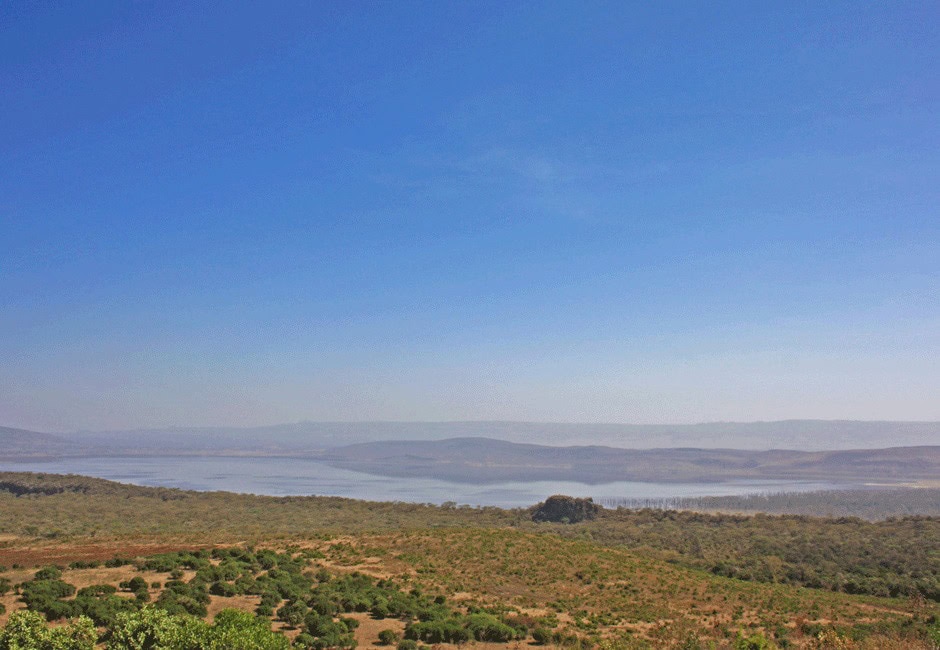
A self-drive tour takes you through the semi-desert of the Kalahari in the east, across the highlands into the Namib Desert and to the Atlantic Ocean in the west.
Breathtaking panoramas of rugged rock and landscape formations with little greenery in seemingly endless expanses contrast with the flourishing Zambezi Strip in the far north-east, with more rain, dense vegetation and swamp areas.
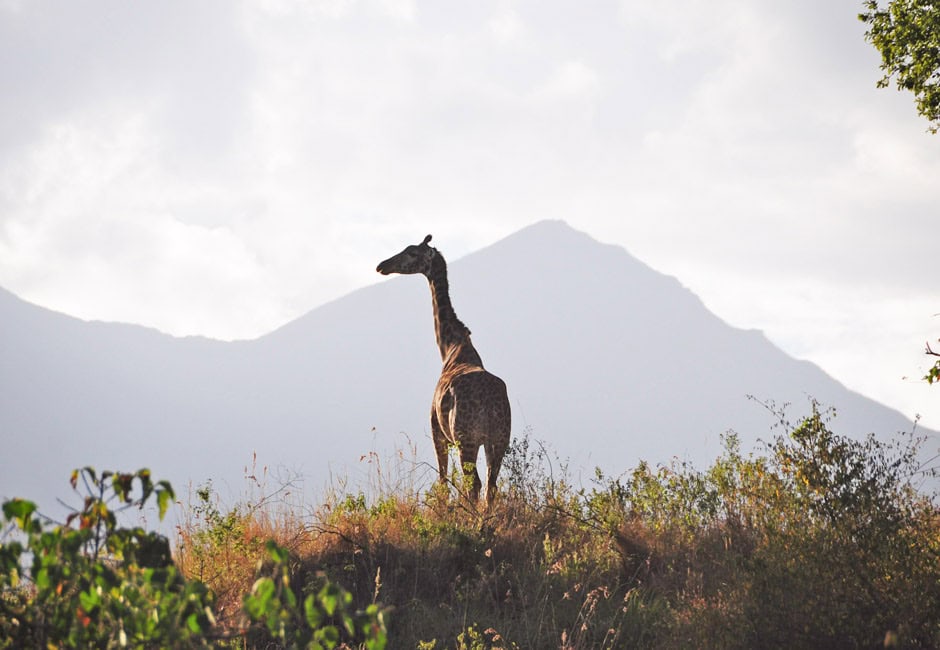
On the road through the country you have the chance to see wildlife everywhere. You decide how long you want to stop for it. Oryx, springbok, kudus, zebras or ostriches in the south. In the west of the northern half of the country, with luck also desert elephants, desert lions, rhinos and leopards.
The trend in the country: taking down fences and creating free space for wildlife. And if you don't see them along the way, you still have the adventure of Etosha National Park ahead of you. Here too you may drive in and through with your own vehicle.
Beyond nature and at the same time part of it are the extraordinarily exciting cultural encounters with the Himba, Herero, Ovambo or San peoples. The latter have immortalised their San art on rock at Spitzkoppe, at the Brandberg and in Twyfelfontein.
You discover colonial culture in the towns of Swakopmund, Lüderitz and the ghost town of Kolmanskop.
Then it is back to nature's wondrous creations at the Quiver Tree Forest and the Giant's Playground; at Africa's largest canyon, the Fish River Canyon; at the sea of sand of Sossusvlei and the Dalí-esque Deadvlei with dunes among the highest in the world; as well as the Cape Cross seal paradise and the Waterberg.

What are the road conditions like in Namibia?
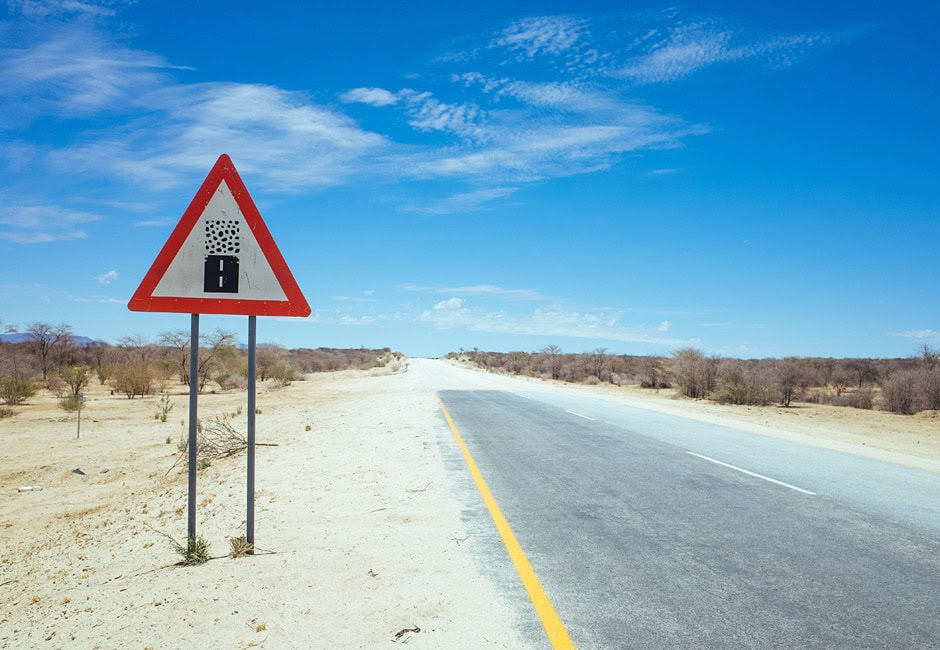
Basically, self-driving in sparsely populated Namibia is relatively relaxed, at least outside the towns, although usually very dusty.
Being a bit of a gravel-road junkie can't hurt, because of the roughly 49,206 kilometres of road, according to the 2023 National Infrastructure Atlas, around 39,807 kilometres are dusty, stony, sandy, sometimes rough or corrugated tracks. You can usually drive on them well, but not fast.
The roads become challenging when a vehicle ahead engulfs you in the dust it kicks up, or when in a good rainy season these roads soften too much and stand deep under water.
A look at the best time to travel and the planned route in Namibia can therefore do no harm, also to think about the right vehicle. Should it be an SUV or a 4×4?
There are a few more things to bear in mind:
- In Namibia, traffic drives on the left.
- There are many uninhabited areas.
- Passing cars can be very rare here.
- Repair workshops or petrol stations are rare to non-existent.
- Mobile phone reception is not a given on the road either.
None of this is a reason to worry, but reason enough to prepare accordingly for a self-drive tour in Namibia.
Discover Namibia and the wilderness with us.
Get in touch with us!
Our gifts to our guests
We don't need Christmas to give gifts. We have two for you right away.
Free briefing on site with tips & current updates
A special advantage when you book your self-drive (rental car) tour with Elefant-Tours: we offer you a free, individual briefing with a colleague from our subsidiary on site in Namibia.
Right after your arrival in Windhoek, our colleagues share current updates and valuable tips for your individual self-drive tour with you in a personal conversation. Many of our guests say that this made them feel particularly well prepared.
Guided game drive in an open Land Cruiser
It gets even better if you spend at least 2 nights in Etosha National Park, Namibia's top safari highlight. Then we give you a full-day game drive in an open Land Cruiser.
That brings you not only a ride in an extraordinary vehicle with the greatest visibility in all directions.
It also brings you a full day with a professional guide and Etosha expert who knows where the animals are, how they behave and why, and who can also tell you something about the ecosystem the animals live in here.
Two of our most popular self-drive tours in Namibia:
5 tips from the guide
Here is my little corner, where I, as a guide, get to give you a few important tips:
Behaviour in the National Parks on game drives
Driving into the animal world in the National Parks can quickly become frightening for many people when elephants, lions or rhinos are right in front of them. So:
- Stay calm
- Keep a safe distance of at least 15 to 20 metres.
- Don't get out of the car and don't lean out either.
I also recommend a leisurely safari pace of no more than 30 km/h so that you spot animals well. In clearly visible stretches you can go faster, but be sure to stick to the maximum speed limit.

Cash & exchange
Don't exchange money in central Europe – too expensive. Cheaper, but still very commission-heavy, is exchanging cash in Namibia. On arrival, don't exchange in the baggage reclaim area of the airport, but only in the arrivals hall – because it's "cheaper". Comparing providers is worthwhile.
Check with your own bank what it costs to use your credit and debit card at ATMs abroad. Some banks offer significantly cheaper options here than you get with cash exchange. And it is safer too.
The Namibian dollar (NAD) is pegged to the South African rand (ZAR). In Namibia you can pay with ZAR, but not with NAD in South Africa.
Credit card payments are very common in the country. Cash is still important, though, should the card machine not work or if you shop at a market. It is also good for tips, which are very customary in the country. Here 10 NAD at the petrol station, there 20 NAD for a short tour by a local guide, or 50 NAD in the tip box of an accommodation.

When you book your self-drive (rental car) tour with Elefant-Tours, you receive a detailed list of what is included in the trip price. For every service booked and paid for you receive a "voucher" that you can show on site. That way you keep track of everything.
Computer-controlled devices
By this I mean all technical devices with a complex computer-based interior. Laptops and cameras in particular. Please always watch out for dust protection. Namibia is simply a very dusty country and you will wonder how quickly and where this fine dirt gets in.
Your skin
Protecting your skin in Namibia should not be underestimated. On the one hand with sun protection, because the intensity of the sun there is very strong. On the other hand with a good body lotion and lip balm, because the air in large parts of the country is extremely dry and your skin dries out accordingly quickly.

Mobile phone reception
Namibia is huge and unpopulated, so for stretches there is no mobile reception at all. If you want to be on the safe side with mobile reception and are not travelling alone, I recommend fitting at least one of the phones with a local SIM card.
If you want to equip both phones with a local SIM card, take two different providers. That increases the chances that at least one phone picks up a signal in an emergency.
Anyone who wants to be completely safe, perhaps due to specific pre-existing health conditions, should rent a satellite phone.

Frequently asked questions
How does the rental car pick-up work?
You find out exactly how it works for you with your rental car documents. Usually your car rental company has a reception desk right at the airport. As soon as you have your suitcase, you head towards the exit, which leads you into the arrivals hall.
The car rental company desks are here. Find your provider, present your voucher, ID, driving licence and credit card, and complete a few formalities with the service staff. After the key handover, they show you the way to the rental car parking bays, where you take delivery of your car.
What should I look out for when taking over the rental car?
Make sure that all emergency equipment is in the car:
- Yellow vest
- Warning triangle
- Spare tyre and the corresponding tools for changing a tyre
- Seat belts for all seats
- First-aid kit
If you also plan off-road tours, I definitely recommend a second spare wheel and a navigation device.
What driving licence do I need for a self-drive (rental car) tour in Namibia?
To be safe, you need an International Driving Permit. However, it is only valid in conjunction with your national driving licence.
Although the national driving licences of the German-speaking countries of central Europe are largely accepted in southern Africa, this is not a guarantee. What is decisive is that, in case of difficulties on the road with the traffic police, the details on the driving licence should have an understandable text in English.

Can I drive at night in Namibia without concern?
No. At night in Namibia you should always have concerns, including the dark early-morning hours. This applies less to the towns, where you can drive well and safely with the usual caution.
It is different across country, where street lighting is lacking. Too many wild animals, but also donkeys and cattle, cross the roads at night, suddenly stand in front of you and look in astonishment into the headlights. If you do drive at night, always expect this and drive accordingly carefully.
What do I need to enter Namibia?
Holidaymakers from Germany, Switzerland and Austria have needed a tourist visa since April 2024, which costs N$1,600 (around EUR 80) and can be applied for in two ways:
- By applying in advance for an online visa.
Advantage: possible time saving at the immigration desk.
Disadvantage: laborious – more information is requested and it is 3% more expensive due to processing fees. - Directly on arrival by filling in a form.
Advantage: uncomplicated – payment by credit card right at the desk.
Disadvantage: may take somewhat longer at the immigration desk.
What do I do if I fall ill in Namibia?
Illness is not the same as illness. Certain complaints, such as colds or diarrhoea, you should treat with the help of your own travel first-aid kit.
If it is more serious, an accident or similar, then in larger towns such as Windhoek, Swakopmund and other tourist areas it is a matter of contacting hospitals, clinics or doctors or going directly to an emergency department. They generally speak English. Remember your vaccination record.
If you have travel insurance, call the insurer before you seek medical help and get their OK. Most insurers offer emergency numbers and a list of partner clinics that you can visit.

Can I drive myself in Etosha National Park?
Yes, you can. It is a National Park that you may drive through in your own vehicle. This even works very well, because the road network is very easy to follow and orientation is relatively simple.
However, since we know how special a guided tour is, we are currently (2025/2026) giving all our self-drive guests who spend at least 2 nights in Etosha a full-day game drive in an open Land Cruiser. Experience and learn everything worth knowing about Etosha and its wildlife from your professional guide.
Is Namibia safe for self-drivers?
Yes, Namibia is basically safe for self-drivers, especially on well-developed main roads. Bear the following in mind: if possible choose a 4×4 vehicle (especially in the rainy season), particularly for gravel roads, stick to speed limits and avoid driving at night (animals on the road).
Distances are large, so pack enough water and supplies and keep an eye on fuel stops. Offline maps are helpful, as mobile network is not available everywhere. Plan your route in advance and drive carefully.
For the towns, the rule is: don't leave anything obviously valuable in the car.
Are there speed limits in Namibia?
Yes, there are speed limits in Namibia:
- Within built-up areas: 60 km/h
- Outside built-up areas on country roads and motorways: 120 km/h
Watch for road signs and the permitted speed indications. However, it happens fairly often that, because of local conditions, speeds are reduced but later not lifted again. Use common sense here so that you don't spend hours driving around at 30 km/h.
Note that on gravel roads (especially outside the towns) a lower speed is recommended, even if no explicit limit is given.

What insurance do you need for a Namibia self-drive tour?
For the rental car you should have fully comprehensive cover with no excess included in the rental contract. If you book it through a third-party provider, then check the car at pick-up before you drive off.
Have existing damage confirmed by the car park attendant if it is not already on the defect list that you normally get at the desk. This way you avoid inconvenience from formalities, damage reports to the insurer and waiting for your money to be refunded after the trip.
Otherwise, be sure to also take out travel health insurance with a repatriation option.
Namibia tips for self-drivers: conclusion
Namibia is especially popular with self-drivers for its impressive landscapes and wide-open roads. The country offers a perfect backdrop for road trips.
Namibia is both fascinating and challenging for self-drivers. It offers a lot of nature, few people, a relaxed atmosphere and is, on top of that, a comparatively safe country for travel.
At the same time, the country's many dust tracks, the sometimes great remoteness of the roads and the sparse supply infrastructure along the way are a real challenge that requires good preparation.
Our closing Namibia tip for self-drivers is therefore: plan your self-drive (rental car) tour with genuine experts who have driven the routes themselves and can share their first-hand experience with you.
For questions and further support in planning your self-drive tour, we are happy to help.
Thanks to our close contact with our subsidiary in Namibia, we always know exactly what the current situation is.
So get in touch with us! Your dream, our expertise – your very own individual Namibia experience.
Juan Proll has lived in southern Africa since 2011 and works as a certified nature and cultural guide in South Africa, Botswana and Namibia for Elefant-Tours and its subsidiaries. After an earlier career as an adult education teacher in Germany, he swapped the classroom for the wilderness. Alongside his work as a guide, he writes for the Elefant-Tours blogs about nature, culture and sustainable travel. Juan is a member of the Field Guides Association of Southern Africa (FGASA) and the author of the books "Ich werd' dann mal Ranger" and "Das Safari-Lesebuch". The magazine DER SPIEGEL reported on his training.