Try “Etosha”, “Kilimanjaro” or “self-drive Namibia”.
Kruger National Park: everything you need to know for your trip planning
by Juan Proll· July 13, 2026· 15 min read· Updated September 10, 2026
Kruger National Park is one of those places that has you staring out of the window non-stop after just a few minutes – wild animals, endless landscapes and unforgettable adventures. To make sure your holiday lives up to all your expectations, here are all the key tips for perfect trip planning.
Where is Kruger National Park?
Location in South Africa
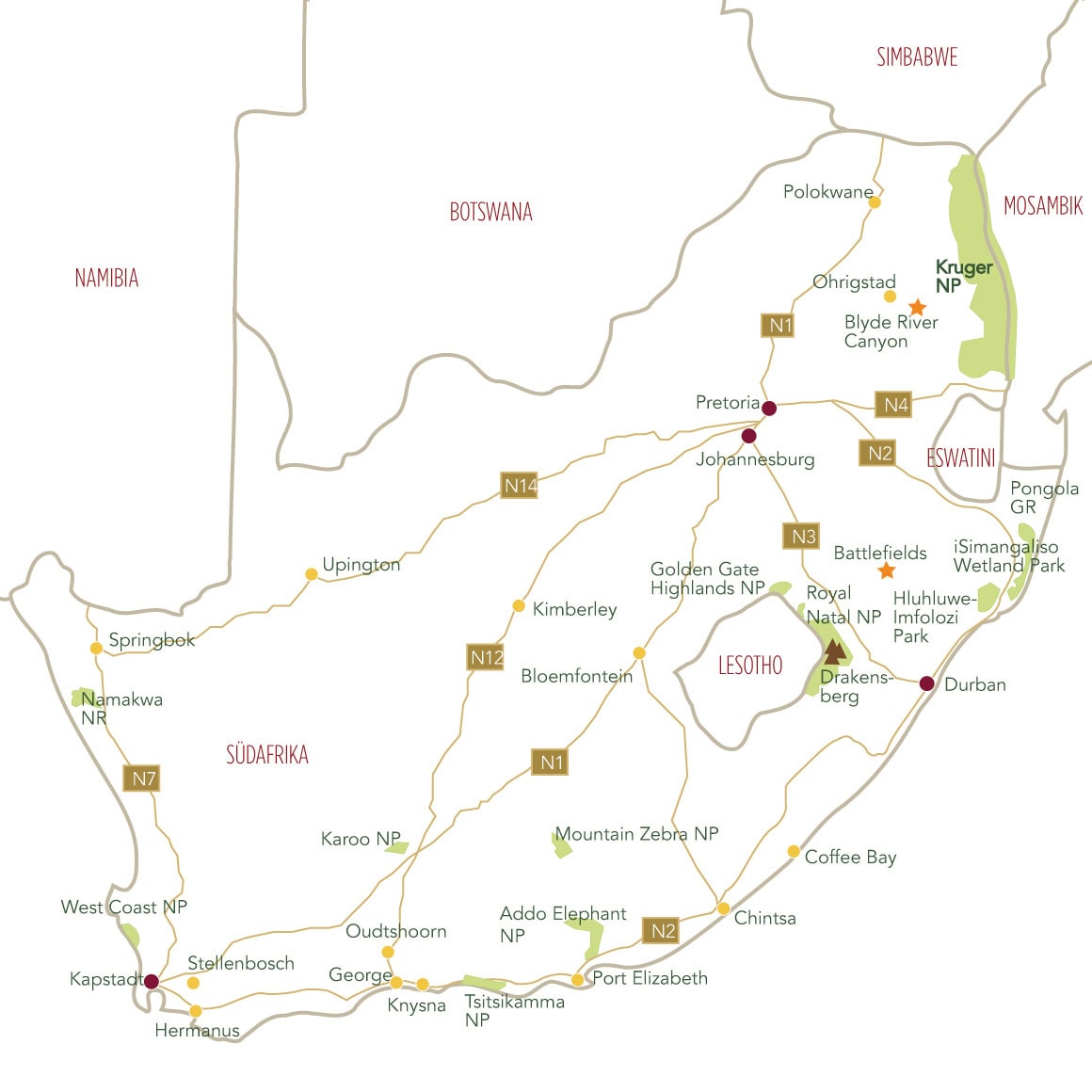
Kruger National Park lies in the north-east of South Africa and stretches along the border with Mozambique. With a length of around 360 kilometres and an area of almost 20,000 km2, it is about the size of Slovenia – big enough to get thoroughly lost in, if you were an elephant that had just moved in.
The national park belongs to the provinces of Limpopo and Mpumalanga and is part of the transboundary Great Limpopo Transfrontier Park. Thanks to its impressive wildlife and well-developed infrastructure, Kruger is one of Africa's most popular safari destinations – and quite rightly so.
Getting to Kruger National Park
Most travellers reach Kruger National Park via Johannesburg. From there the drive by rental car takes – depending on the entrance gate – around four to six hours. The roads are well maintained and the route is perfect for a multi-day road trip with stopovers along the Panorama Route.
If you would rather save time, you can book a domestic flight to Skukuza, Hoedspruit or Nelspruit (Mbombela) and continue from there by rental car or shuttle. Overall, the park has several entrance gates, so you can plan your route flexibly.
Kruger National Park is one of the most accessible national parks in Africa. Thanks to well-built tarred roads, it can also be explored in a thoroughly relaxed way as a self-driver.
Why is Kruger National Park so special?
One of Africa's most famous national parks
There are national parks – and then there is Kruger National Park. Since its beginnings as a game reserve in 1898 and its final designation as a national park in 1926, it has delighted nature lovers from all over the world and is among the oldest of its kind in Africa. As a national park it celebrates its 100th birthday this year – congratulations!
What makes it so special? The perfect mix of spectacular wildlife, varied landscapes and excellent infrastructure.
Here you don't have to trudge through the wilderness for days to spot animals – often a glance out of the car window is enough. No wonder, then, that for many people Kruger is the very definition of a safari and sits right at the top of countless travel bucket lists.
Big Five and exceptional biodiversity
Of course most visitors come for the famous Big Five: lion, leopard, elephant, rhino and buffalo. But Kruger National Park has far more to offer than its animal superstars. 148 mammal species (SANParks checklist), over 600 bird species and numerous reptiles, amphibians and insects live here.
From the tiny chameleon to the majestic giraffe, there is something new to discover around every next stretch of road. And that is exactly what makes every game drive so exciting: even if the leopard is making itself scarce today, perhaps an elephant family will provide the goosebump moment of the day.
Safari for self-drivers and guided tours
One of Kruger National Park's greatest strengths is its versatility. You can explore the park at your leisure on your own by rental car. The well-developed road network and good signposting make self-drive safaris straightforward even for beginners – a map, a camera and a little patience are all you need.
If you would rather dive even deeper into the wildlife, on a guided tour you benefit from the trained eye of experienced rangers. They often spot animals that others would simply drive past. Whichever option you choose: exciting encounters are almost guaranteed – and so is the adrenaline kick.
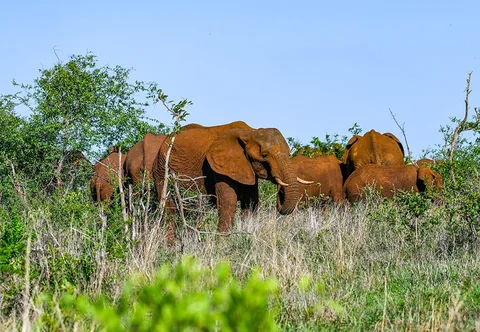
In Kruger National Park the chances of actually meeting the Big Five are excellent. Lions like to doze in the shade, elephants roam the savannah in impressive family groups and buffalo are so numerous that you can hardly fail to see them.
Buffalo may look placid, but they are among the most dangerous animals in Africa. Rhinos have unfortunately become rarer, as poaching severely threatens their numbers. And then there is the leopard: elegant, shy and a true master of hiding. Anyone who spots one can count themselves lucky – and be a tiny bit proud.
Wild dogs, cheetahs and hyenas
Besides the Big Five, numerous other fascinating predators live in Kruger National Park. African wild dogs are among the rarest and most successful hunters on the continent. Cheetahs impress with their incredible speed and prefer the open plains of the park.
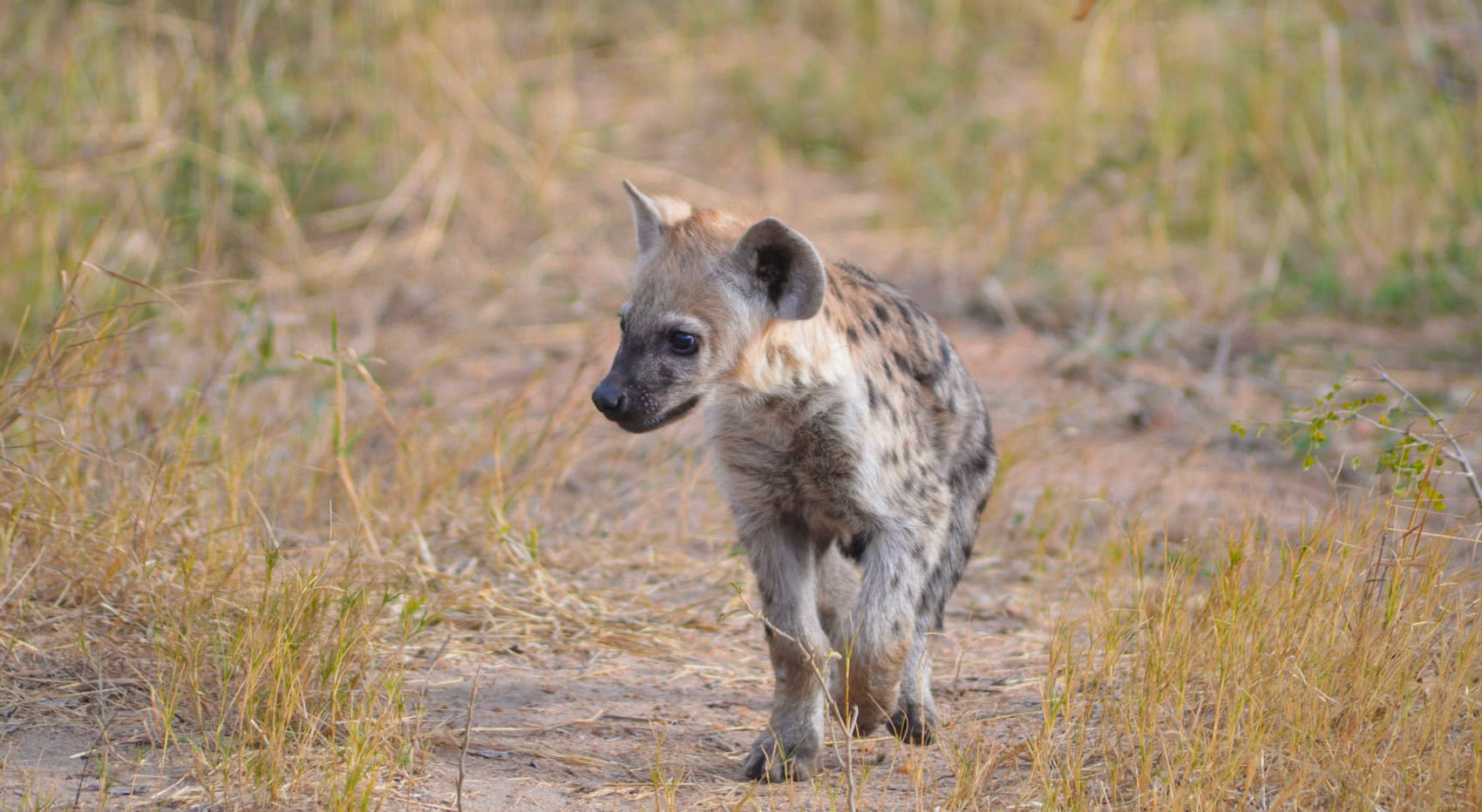
Hyenas are often underestimated, yet they are skilful hunters and by no means just scavengers. With a bit of luck you can observe their fascinating social behaviour or hear their distinctive laugh at night – a sound that is guaranteed to deliver a real safari feeling.
Giraffes, zebras, antelope, hippos and crocodiles
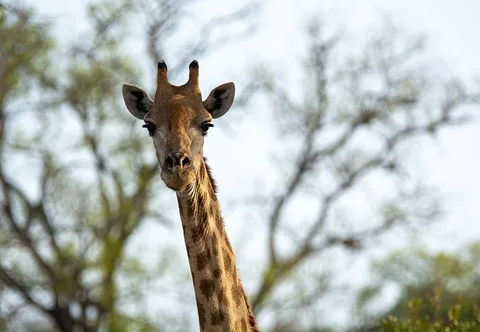
In Kruger National Park, it's not only the predators that are real eye-catchers. Giraffes stride through the picture as elegantly as if they had been hired for the cover of a travel magazine. Zebras provide perfect photo subjects worthy of fashion magazines with their unmistakable stripe pattern.
Antelope such as impala, kudu or waterbuck are among the park's most common residents and you will meet them around almost every corner. At rivers and waterholes, hippos and Nile crocodiles take the leading roles. While hippos often drift contentedly in the water, crocodiles lie motionless in wait on the bank – best not to disturb them during their sunbath.
Birdlife in Kruger National Park
Bird lovers get their money's worth in Kruger National Park too. With 627 currently recorded bird species (according to the world bird database “Avibase”), Kruger National Park is a true paradise for bird lovers – from the colourful lilac-breasted roller to the imposing martial eagle.
Herons, kingfishers and storks can be watched along rivers and waterholes, while vultures circle high above the savannah. Even those who aren't really interested in birds will find their jaw dropping at the sight of a giant ostrich or a majestic African fish eagle.
Nile crocodiles are among the most fascinating residents of Kruger National Park – perfectly camouflaged, they often lie in wait right at the water's edge.
The most beautiful regions in Kruger National Park
The south: high wildlife density and good chances of big cats
The south of Kruger National Park is the absolute classic among safari fans – and for good reason. Around Skukuza, Lower Sabie and Crocodile Bridge, numerous rivers and water points ensure that particularly many animals gather here.
Accordingly, the chances of spotting lions, leopards or even all of the Big Five in a single day are good. However, you are not alone in that hope: the south is also the most visited part of the park. If you set off early in the morning, you will still enjoy magical wildlife viewing and dreamy sunrises.
In the centre: open savannahs and large herds
At first glance, the centre of Kruger National Park feels wider and more open. Endless savannahs shape the landscape and offer ideal conditions for large herds of zebra, wildebeest, buffalo and antelope. Where many herbivores roam, predators are rarely far behind.
Lions in particular are regularly seen in this region. The more open savannah is also a favourite hunting ground for cheetahs, which can make better use of their speed here.
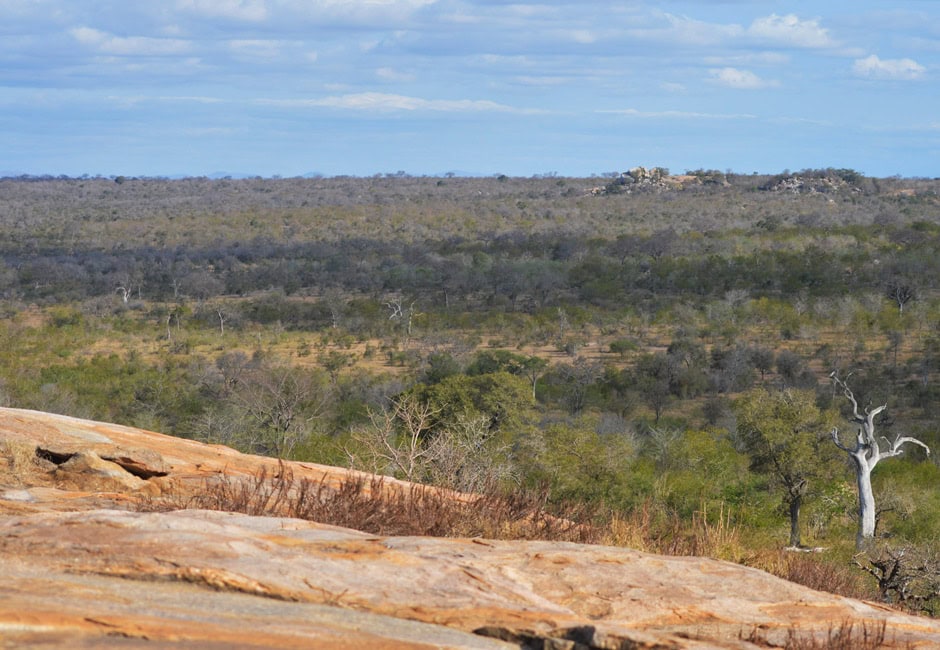
At the same time, the wide plains invite you to consciously enjoy the landscape and let your gaze wander to the horizon. Here Africa often looks exactly as you know it from impressive nature documentaries.
The north: wilder, quieter and scenically special
The further north you drive, the quieter it gets. Fewer visitors, less traffic and a much wilder atmosphere make this part of the park particularly appealing.
Although wildlife densities are somewhat lower than in the south, in return you can expect unique landscapes with ancient baobab trees, dense forests and the mighty Limpopo River.
Bird lovers will also get their money's worth here. If you visit Kruger not just for the Big Five but want to experience the tranquillity of the African wilderness, you will quickly take the north to your heart.
Greater Kruger and private game reserves
Directly west of the national park lies Greater Kruger – a collection of private game reserves such as Sabi Sand, Timbavati and Klaserie. Because there are no fences between the reserves and Kruger National Park, animals move freely throughout the entire area.
The big difference lies in the safari experience: guided game drives are allowed to leave the roads here and follow animals cross-country. This makes particularly intense wildlife viewing possible, for example of leopards or lions. If you appreciate a little more comfort, exclusive lodges and smaller visitor numbers, you will find a real safari highlight here.
Big cats are among the absolute highlights of a safari in Kruger National Park. This hungry lion is already looking out for its next prey.
Which types of safari are there in Kruger National Park
Self-drive safari in Kruger
A safari in your own rental car is one of the very special ways to get to know Kruger National Park. Instead of listening to a guide, you decide when the day starts, which route you take and how long you keep watch over a lion family.
The well-developed road network and good directions also make the park easily accessible for safari newcomers. With a little patience, a pair of binoculars and a good dose of attentiveness, you will soon notice: the sense of achievement of tracking down a rhino or a leopard yourself is simply priceless.
Guided game drives
If you would rather sit back and relax, or prefer to have your hands on the camera instead of the steering wheel, a guided game drive in Kruger National Park is the best choice. Experienced rangers know the animals' habits, spot even the tiniest tracks and, on the side, manage to keep to the left-hand traffic with ease.
This significantly increases the chances of exceptional wildlife sightings. At the same time you learn plenty of fascinating facts about the wildlife, plants and the park's delicate ecosystem. Drives in the early morning or late afternoon are particularly popular, when many animals are especially active.
Private game reserves and exclusive lodges
If you are looking for a particularly exclusive safari experience, consider a stay in a private game reserve around Kruger National Park. High-quality lodges, small safari groups and experienced rangers create a personal atmosphere.
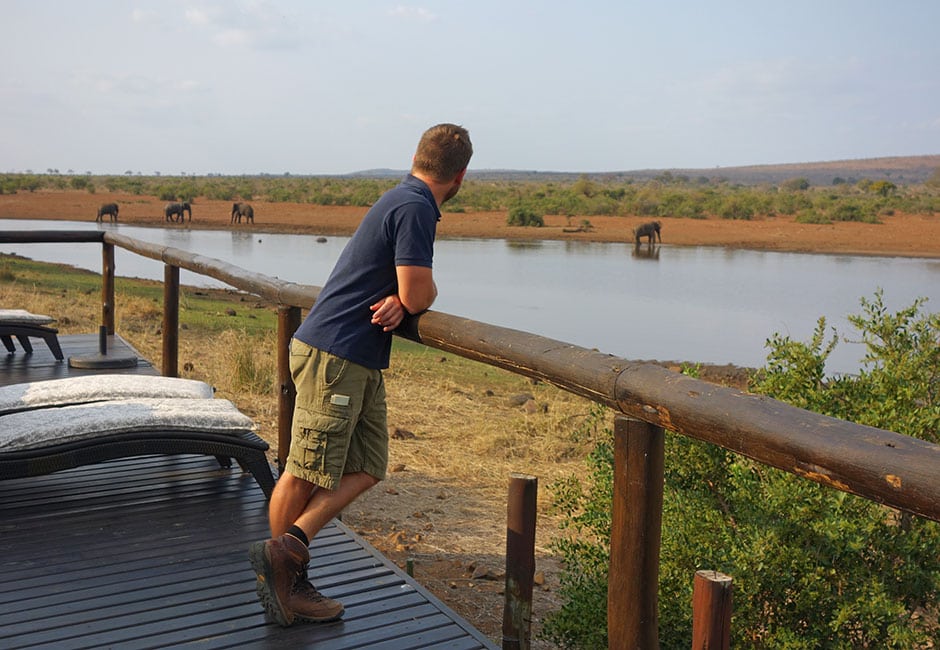
Because the vehicles – unlike in the national park itself – are allowed to leave the roads, intense wildlife viewing from very close range is often possible. After the game drive, stylish accommodation, first-class food and often a waterhole right in front of the terrace await – here you will find luxury and wilderness in harmonious coexistence.
A self-drive safari in Kruger National Park gives you the freedom to set your own pace and linger at exciting wildlife sightings for as long as you like.
When is the best time to travel to Kruger National Park?
Kruger National Park is worth a trip all year round – the best time to travel, however, depends on what you want to experience. While the dry season offers optimal conditions for wildlife viewing, the rainy season delights with lush greenery, lots of young animals and impressive birdlife. It is never boring at any time of year.
Dry season from May to October
The dry season is considered the best time for a safari in Kruger National Park. As water sources become scarcer, many animals gather at rivers and waterholes – ideal conditions for exciting wildlife viewing. At the same time the vegetation is much sparser, making it easier to spot lions, elephants or even leopards.
The temperatures are pleasant during the day, while mornings and evenings can turn surprisingly cool, especially in July and August. A warm jacket for the early game drives therefore definitely belongs in your luggage.
Rainy season from November to April
With the first rainfalls, Kruger turns into a green oasis. The landscape blossoms, many animals give birth to their young and migratory birds spending their summer holiday here enrich the already exceptionally species-rich birdlife.
Although the dense vegetation sometimes makes it harder to see the animals, the park feels alive and colourful as at no other time of year. There are also considerably fewer visitors around – perfect conditions for anyone who would like to enjoy their safari a little more quietly.
It can be challenging during the rainy season, though. Although the tarred main roads through the park offer secure connections, some dust or gravel tracks in particular can be blocked and only passable by swimming. The “Kruger Status” website can spare you many a surprise with up-to-the-day information.
How many days should you plan for Kruger National Park?
Short stay: 2 to 3 nights
Even a short visit to Kruger National Park can be worthwhile. Two to three nights are enough to gather first safari experiences, go on a few game drives and, with a little luck, already spot lots of animals.
A stay in the south of the park is ideal, especially for travellers short on time, as the wildlife density here is particularly high. Even so, the longer you stay, the greater the chance of special encounters – after all, the wilderness doesn't keep to a fixed timetable.
Ideal length of stay: 4 to 5 nights
Four to five nights are the perfect balance for many travellers. You have enough time to explore different regions of the park, get to know different landscapes and go on several safaris.
That also leaves room for relaxed moments: a coffee at a viewpoint, a sunset over the savannah or simply waiting at a waterhole. After all, Kruger isn't only about ticking off as many animals as possible – it is also about soaking up the atmosphere of the African wilderness.
Combining with the Panorama Route and a South Africa round trip
The Kruger National Park combines wonderfully with other South African highlights. Particularly popular is the combination with the spectacular Panorama Route, which delights with waterfalls, canyons and impressive viewpoints.
Many travellers start or end their safari in Johannesburg and plan several days for the Mpumalanga region. If you are doing a longer South Africa round trip, you can also combine Kruger with hikes in the Drakensberg, beach days and boat safaris in St Lucia, big-city sightseeing in Cape Town or scenic drives along the Garden Route.
That turns a safari adventure into a varied journey through one of Africa's most fascinating countries.
The Panorama Route is among South Africa's most beautiful road trips and can be combined perfectly with a visit to Kruger National Park.
Practical information for your trip to Kruger National Park
Getting there and getting around Kruger National Park
Kruger National Park is easily reached by rental car from Johannesburg or via regional airports. In the park, well-built roads lead to the most important camps and viewpoints. Good conditions, then, for self-drivers. If you would rather sit back and relax, book a guided safari and leave the steering wheel to the safari professionals.
Entrance fees and opening times
A daily entrance fee applies for your visit. International overseas tourists pay R602 per day (approx. €32) until the end of October 2026 and R692 (approx. €37) after that. The gates open and close depending on the time of year, in the morning between 5.30 am and 6.00 am and in the evening between 5.30 pm and 6.30 pm – around sunrise and sunset.
What accommodation is there in and around Kruger National Park?
Whether under the starry sky or under a ceiling, whether a rustic safari camp, cosy chalet, family-friendly bungalow or luxury lodge with a pool and sundowner views – inside and outside Kruger National Park everyone will find their own personal safari home.
Inside the park there are not only various exclusive lodges, but also state-run rest camps with good infrastructure, restaurants and shops. Outside, private lodges await with guided game drives and often considerably more comfort. If you are travelling in peak season, you should book early – especially inside the park, the best locations are in high demand.
Packing list for Kruger National Park
Lightweight, breathable clothing in muted colours is ideal, plus a warm jacket for cool morning drives. A sun hat, sunscreen and sunglasses protect against the African sun. Binoculars and a camera belong in your luggage anyway – after all, leopards rarely pose twice. Don't forget: malaria prophylaxis and insect protection, comfortable shoes, a water bottle, charger and power bank as well as important travel documents. A small daypack makes outings even more pleasant. You can find more information on the packing list here.
Popular tours
Frequently asked questions about Kruger National Park
Is Kruger National Park suitable for self-drivers?
Yes, Kruger National Park is excellently suited to self-drivers and is even one of the best safari destinations in the world for a do-it-yourself trip. The road network is well developed, the routes are well signposted and you can set your own pace.
Especially nice: you are not tied to fixed times and can decide for yourself how long you stop for an elephant splash party at a waterhole or a warthog at the roadside. A rental car, a little patience and a good pair of binoculars are important – because the animals don't simply line up along your route.
When is the best time to travel to Kruger National Park?
The best time to travel depends on what you want to experience. The dry months from May to October are considered particularly popular, as the vegetation is less dense and many animals gather at water points. This increases the chances of exciting sightings.
The rainy season from November to April, however, also has its charm: the park turns into a green landscape, many young animals are born and the birdlife is particularly active. In short: dry season for wildlife viewing, rainy season for nature fans and photographers.
How many days should you stay in Kruger National Park?
Ideally you should plan at least three to five nights for Kruger National Park. In that time you have enough opportunity to exploredifferent areas and go onseveral safaris.
A short stay of two nights is possible, but the time often feels like it passes faster than an impala darting by. Staying longer not only increases the chances of special wildlife sightings, but also lets you experience the quiet moments in between – sunrises, landscapes and the unique atmosphere of the wilderness.
Which animals can you see in Kruger National Park?
Kruger National Park is above all known for its Big Five: lions, leopards, elephants, rhinos and buffalo. But the wildlife goes much further. Meet the Big Others – including cheetahs, wild dogs, hyenas, giraffes, zebras, hippos, crocodiles and numerous antelope species.
Fans of wings and feathers also get their money's worth with more than 600 bird species. There is of course no guarantee of particular sightings – but it is exactly these surprises that make a safari so exciting. Every drive through the park is like a new episode of a nature documentary.
Is Kruger National Park a malaria area?
Yes, Kruger National Park lies in a malaria area, although the risk varies depending on the season and region. Especially during the warmer and wetter months, the likelihood of a malaria infection rises. The culprits: female Anopheles mosquitoes.
Travellers should seek medical advice before the trip and take suitable protective measures – from prophylactic medication to classic mosquito protection and long clothing in the evening. Many visitors experience their safari without problems if they are well prepared.
Kruger National Park or private game reserve – which is better?
Whether Kruger National Park or a private game reserve is better depends on your personal preferences.
Kruger scores with its size, the possibilities for self-drivers and the freedom to shape your safari yourself. Private reserves, on the other hand, offer often more luxurious accommodation, smaller groups and exclusive game drives off the beaten track.
If you want to travel as flexibly as possible, you are in good hands in the national park. If you are looking for a particularly comfortable safari experience with plenty of service, private lodges are a great alternative. Both options offer unforgettable encounters with Africa's wildlife.
Conclusion: is a visit to Kruger National Park worth it?
In short: yes! Kruger National Park is one of the best-known safari destinations in the world for good reason. Whether you are going on safari for the first time, travelling as a self-driver or want to fulfil the dream of a luxury lodge: the park offers the right adventure for every travel style.
The combination of impressive wildlife – including the Big Five –, varied landscapes and genuine wilderness makes every visit unique. You may not see every wildlife icon of the savannah – but it is precisely these little unpredictabilities that make every encounter so special and the trip so unforgettable.
Thanks to our close contact with our subsidiary in South Africa we are always well informed about the current situation. So get in touch with us! Your dream, our expertise – your very own South Africa experience.
#Krüger Nationalpark
Juan Proll
Juan Proll has lived in southern Africa since 2011 and works as a certified nature and cultural guide in South Africa, Botswana and Namibia for Elefant-Tours and its subsidiaries. After an earlier career as an adult education teacher in Germany, he swapped the classroom for the wilderness. Alongside his work as a guide, he writes for the Elefant-Tours blogs about nature, culture and sustainable travel. Juan is a member of the Field Guides Association of Southern Africa (FGASA) and author of the books “Ich werd’ dann mal Ranger” and “Das Safari-Lesebuch”. The magazine DER SPIEGEL reported on his training.
 by Juan Proll· July 13, 2026· 15 min read· Updated September 10, 2026