Panorama Route South Africa: All the Info, Tips & Sights
 by Juan Proll· May 26, 2025· 13 min read
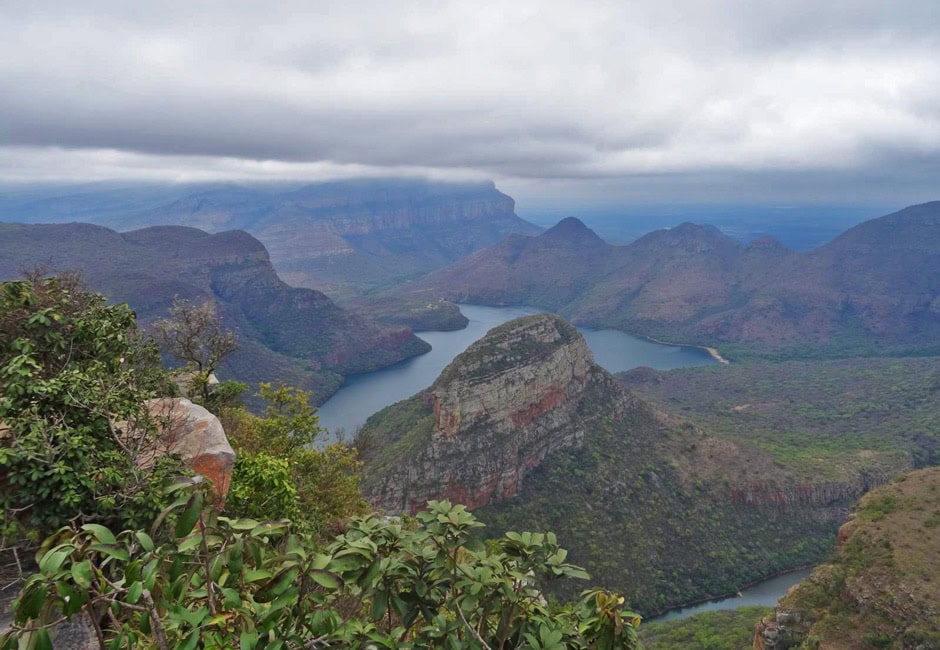
Close to the world-famous Kruger National Park, the Panorama Route in South Africa is a highlight for travellers. In today's blog, you'll find out why you simply have to visit this breathtaking region, with all the info, tips and sights.
What is the Panorama Route in South Africa?
The name says it all: the Panorama Route. It leads across the rugged ridges of the north-eastern Drakensberg and offers visitors fantastic views.
You'll see extraordinary landscapes of broad plains and green, mountainous backdrops, where deep gorges, wild rivers and mighty waterfalls add unique touches.
Alongside them, pretty villages such as Sabie, Graskop and Pilgrim’s Rest invite you to enjoy culinary breaks and historical journeys back in time to their gold-rush past.
The heart of the Panorama Route is the Blyde River Canyon, just under 26 km long. After the Fish River Canyon in Namibia, it is considered the second-largest canyon in Africa. But because it is so richly covered in greenery, South Africans proudly crowned it the “greatest green canyon” in the world.
The Panorama Route in South Africa is the perfect complement to a visit to African wildlife in Kruger National Park, which lies not too far away.

Where is the Panorama Route in South Africa?
The Panorama Route in South Africa lies in Mpumalanga Province in the far north-east of the country, west of Kruger National Park. The sights at and around the Blyde River Canyon are easiest to reach via the R532 road from Graskop.
The first turn-off, just a few kilometres to the north, takes you onto the access road R534 to “Pinnacle Rock” and “God’s Window”. This route later rejoins the R532, which you then continue to follow northwards.
Further along this road, you turn right to the “Bourke’s Luck Potholes”, where the actual Blyde River Canyon begins, and to the “Three Rondavels”, at whose feet the reservoir also lies.
From Graskop you can also head west along the R533 to visit the old gold-mining town of Pilgrim‘s Rest. Heading south along the R532/R533, you reach Mac Mac Pools & Falls on the way to Sabie.
When is the best time to travel the Panorama Route?
The Panorama Route in South Africa is an attraction accessible all year round. However, the weather conditions can vary greatly, not only by season but also over the course of a day. Being out in the mountains means being prepared for rapid changes.
The best time to travel the Panorama Route in South Africa is during the cooler but drier months between May and October. The chances of good, clear views are best at this time.
By contrast, the months from November to April, and especially December to February, bring warmer and wetter conditions. Fog can severely hamper both driving and the views. But it is also the time when the beautiful white and pink wildflowers follow.
Between mid-December and mid-January is the main holiday season in the country and the area is particularly busy. So, not a good time to travel.
On most other days of the year, however, you can avoid the tourist crowds by setting out either early in the morning or late in the afternoon. A look at the weather forecast can help you decide on the time of day.
Would you like to find out more about South Africa trips?
We'll be happy to advise you. Get in touch!
What can you do on the Panorama Route? Sights & highlights along the route
On the Panorama Route you can above all enjoy the views and combine them with relaxed strolls or longer hikes.

You can also visit smaller towns, which are ideal for souvenir shopping, culinary breaks or journeys back to the gold-rush era.
The most important sights on the Panorama Route include the following highlights:
The Pinnacle Rock
Already on the access road to God’s Window, you can also visit Pinnacle Rock if you have enough time. It is a massive quartzite rock about 30 m high in the shape of a finger of stone. Free-standing and like a natural skyscraper, it rises above a deep gorge landscape whose dense primary forest provides a dramatic backdrop.
God’s Window
Just a few kilometres further on comes God’s Window. When you stand on the first viewing platform, at around 1,600 m above sea level, you may well find yourself staring into a thick cloud of mist. But this mist can open up like a window.
Suddenly your gaze plunges along steep cliffs more than 700 m down into the depths and lands in the forests of the Lowveld. Enjoy the moment and breathe in the view, because the window can be brief before it closes again.
Be sure to walk all the way to the top. Just before you reach the highest viewpoint, you'll find yourself completely unexpectedly in a fairy-tale rainforest. For me, it is always one of the most beautiful experiences. It smells damp, mossy and woody: pure jungle. Simply worth seeing.
Blyde River Canyon
Over its good 26 km in length, the Blyde River Canyon consists predominantly of red sandstone formations. Erosion by wind and water sculpted them into one of the great natural wonders of Africa. Dense vegetation clothes them in a green mantle.
The Blyde River (also called the Motlatse River) winds its way through the protected canyon. It eventually flows into the Blyderivierpoort Dam. Here you also have the option of boat trips.

Bourke’s Luck Potholes
Named after an entrepreneur and passionate gold prospector called Tom Bourke, this is where you have your first close encounter with the canyon.
Bourke was the manager of a mining company who hoped to find gold and bought a farm here. He named it Bourke’s Luck. But he had no luck with gold.
At least he owned a geologically unusual and historically interesting site here, where the two rivers Blyde and Treur meet. These flowing, whirlpool-forming forces of nature eroded the sandstone and shaped breathtaking landscapes.
What you see is a dramatic gorge setting with cauldron-like hollows that look like giant potholes (Potholes).
The roughly 45-minute circular trail is absolutely recommended.

Three Rondavels
The Three Rondavels View Point offers you an outstanding view of the canyon with its reservoir at your feet and the mountains rising up to 1,944 m high in the background.
The panorama is stunning. To the right of centre you can see the Three Rondavels. They are huge, rounded rocks that are reminiscent of the round huts (Rondavels) of the local people.
Local communities give the Three Rondavels a cultural and historical dimension. They see in them a “chief and his wives”. According to this, the largest peak symbolises Chief Maripi Mahile, a 19th-century leader, and the smaller ones his three wives.
Below this formation, the Blyde River winds its way through the gorge and heads straight for the dam.
Three Rondavels is without question one of the most beautiful viewpoints in South Africa.
Waterfalls
In the Blyde River Nature Reserve and its surroundings, there are also a number of waterfalls well worth seeing, such as the Lisboa Falls, Berlin Falls or Kadishi Tufa Falls.
They are especially worth seeing during and shortly after the rainy season. You can easily reach Lisboa Falls and Berlin Falls by car.
The Kadishi Tufa Falls, on the other hand, are only accessible via a beautiful hiking trail. You can reach it only via the “Blyde Canyon, A Forever Resort”. There you have to register at reception and pay a small fee if you are not a overnight guest.
The Mac Mac Pools & Falls between Graskop and Sabie are also often recommended. They are beautiful when you can see them in their full glory. But you can't, because they are fenced off with a very dense wire mesh. My last visit there was therefore very disappointing.

Pilgrim‘s Rest
Pilgrim’s Rest is an old gold-mining town and today a small museum village west of Graskop. It came into being from 1873, when gold discoveries attracted a rush of prospectors.
Declared a cultural heritage site of the province and protected as a national monument, the town's original architecture has been able to remain largely unchanged since the heyday of mining. Here you'll find a wide range of village museums, guided tours, accommodation, restaurants and shops.
Interesting and mystical at the same time: the cemetery. Here there is a robber's grave around which stories abound. It was laid out at a right angle to the other graves and not aligned towards the rising sun. It is marked with a cross on which the word “Robber's Grave” can be read in large letters.
Popular tours along the Panorama Route:
Tips for planning your Panorama Route
I hope you've already got a taste for it and now want to explore the breathtaking Panorama Route in South Africa. Then the following tips will certainly help you with your planning:
What should you bear in mind in general when planning the Panorama Route?
Working with a tour operator
If you want to save time and resources on your planning, seek out an experienced specialist for Africa trips. Elefant-Tours and its team would be one option.
Self-drive or being driven
Whether you drive yourself or take a guided tour is an exciting experience either way.
Many people consider South Africa dangerous. Others simply want everything taken care of so they don't have to get bogged down in logistics. They therefore like to opt for a guided trip.
Here your guide drives you safely through the country in a comfortable vehicle. He is thus responsible for the itinerary, including time management. And along the way he shares his experience, his expertise and his local knowledge with you.
If “dangerous” is only relative for you and you like to organise things yourself, you can also choose a self-drive tour. The infrastructure for self-drivers in South Africa is well developed.
You don't have to do without the help and support of a travel provider because of this. After all, your tour operator can still help you with the question of the route, questions of feasibility, hiring a rental car, booking accommodation and back-up during the trip.
Planning the perfect route
The Panorama Route is packed with highlights. And Kruger National Park is practically next door. When planning your route, you should consider whether you want to see both.
If so, you could do it as a small round trip with different accommodation. So first a few days in Kruger National Park, then a few days travelling the Panorama Route, or the other way round.
Alternatively, you could choose a place like Hazyview as a springboard in both directions. In this case, you organise your day trips to all the highlights from the same accommodation.
Rental car – your faithful companion
If you are not on a guided tour, a rental car is your best friend. The roads are well maintained, you can cruise comfortably at your own pace and choose the route individually.
If you decide to travel in the rainy season and visit Kruger National Park at the same time, I have another tip for you:
Choose a vehicle with four-wheel drive if you are travelling off the main roads – nature is sometimes rougher than you think, especially in Kruger National Park.
In any case, I recommend fully comprehensive insurance with no excess.

Navigation – keeping your bearings
If you are travelling as a self-driver in a foreign country, navigation aids help. GPS is great, but an offline map or an app such as Tracks4Africa is worth its weight in gold if the network ever fails.
More tips for the perfect trip
- Pack sunscreen, a hat and water – the sun can be quite fierce here!
- Getting up early or setting out in the late afternoon is worthwhile to catch the best light conditions for photos. But bear in mind: the Blyde River Canyon is a gorge. Perfect lighting is difficult.
- So pack your camera, a pair of binoculars and a good mood and off you go!
You'll find more detailed tips on the planning and preparation of your Africa trip in the blog “Africa for Beginners”.
How much time do you need for the Panorama Route in South Africa?
Plan at least one full day (2 nights) for the Panorama Route so that you can see all the highlights along the route described above.
If you want to take it easy with more calm and more time for walks at the sights, you'll need at least 2 full days (3 nights). Then you can also let nature work its magic on you.
Feel free to add another 1–2 days if you also want to go hiking more or get to know more of the area's attractions. For example, a visit to the lovely little town of Sabie with its further waterfalls in the surrounding area. Or take the Graskop Gorge Lift down into a gorge to the forest nature trail.
After all, a holiday is basically also about simply letting your soul unwind and slowing down time!

Where can you stay overnight on the Panorama Route?
You are closest to the main attractions of the Panorama Route in Graskop. The cosy town is a very good starting point for your tours in the region. For that reason, though, with its colourful mix of restaurants, bars, accommodation and souvenir shops, it is also somewhat touristy.
At the northern end of the Panorama Route and very close to Three Rondavels, you'll find the large complex “Blyde Canyon, A Forever Resort” with camping, hotel and cottage accommodation. A village in itself. It also offers an excellent network of hiking options in the surrounding area.
Hazyview is above all a supply town in the region and very busy. But it is a good option for those who prefer to stay longer in the same accommodation and take day trips on the Panorama Route and into Kruger National Park from there. It is only about 38 km from here to Graskop and just over 12 km to Kruger National Park.

Connection to Kruger National Park
The Panorama Route in South Africa and Kruger National Park are so close together that combining them is almost a given. The Kruger conservation area means immersing yourself in over 19,600 km2 of wilderness and encountering Africa's unique wildlife.
On one side, the mountains with their breathtaking panoramas. On the other, the Big Five of lions, elephants, rhinos, buffalo and leopards. But also the “Big Others” such as giraffes, zebras, ostriches, hyenas, jackals, cheetahs, crocodiles, hippos and countless antelope species.
Once again you can drive yourself or – if that seems too dangerous or too uncomfortable – choose a guided tour. The guides have a good eye for the animals and tell you fascinating stories that you won't find in any book. Plus: you have more time to admire nature without having to watch the traffic.

Health & safety: malaria & precautions
From Graskop and along the Blyde River Canyon, the Panorama Route lies at over 1,400 m. This altitude reduces the already low malaria risk in the region even further, but does not rule it out.
There is also a malaria risk in Kruger National Park. In both places, the risk increases with the start of the rainy season and only decreases again in the dry season. I therefore strongly recommend a consultation with a tropical medicine specialist who knows the current conditions shortly before you start your trip.
There you can also clarify whether you should take malaria tablets as a preventive measure or only carry them as stand-by medication.
Otherwise, bite prevention is the most important precaution. So: clothing that covers the skin from the neck all the way down to the feet, mosquito repellent spray, mosquito nets or similar. All of this especially during the active times of the malaria mosquito, between the onset of dusk in the early evening and sunrise in the morning.
I have collected tips on how to protect yourself from mosquitoes on African safaris for you in my blog “Malaria protection on Africa trips” .
Verdict: Is the Panorama Route in South Africa worth it?
Is the Panorama Route worth it? – Absolutely, yes! The Panorama Route in South Africa is more than just a collection of impressive landscapes – it is a real experience for all the senses.
Here you can leave everyday life behind, breathe deeply and let yourself be enchanted by the art of nature. It offers majestic gorges, waterfalls, breathtaking views and quiet moments in the presence of unique natural scenery. All this leaves traces of memory that resonate long after you return.
It is a place that touches you deeply with its beauty and tranquillity and shows you how small we are in this vast, wonderful universe.
So if you are looking for an adventure that grips you not only visually but also emotionally, then the Panorama Route is definitely worth it – ideally combined with Kruger National Park.
We are happy to answer any questions about the Panorama Route in South Africa and to provide support in planning your trip – whether on a guided round trip or a self-drive tour.
Thanks to our close contact with our subsidiary in South Africa, we always know the current situation well. So get in touch! Your dream, our expertise – your very own individual South Africa experience.
Juan Proll has lived in southern Africa since 2011 and works as a certified nature and cultural guide in South Africa, Botswana and Namibia for Elefant-Tours and its subsidiaries. After an earlier career as an adult education teacher in Germany, he swapped the classroom for the wilderness. Alongside his work as a guide, he writes for the Elefant-Tours blogs about nature, culture and sustainable travel. Juan is a member of the Field Guides Association of Southern Africa (FGASA) and the author of the books “Ich werd’ dann mal Ranger” and “Das Safari-Lesebuch”. The magazine DER SPIEGEL reported on his training.