Which animals are there in Amboseli National Park?
 by Juan Proll· November 12, 2024· 10 min read
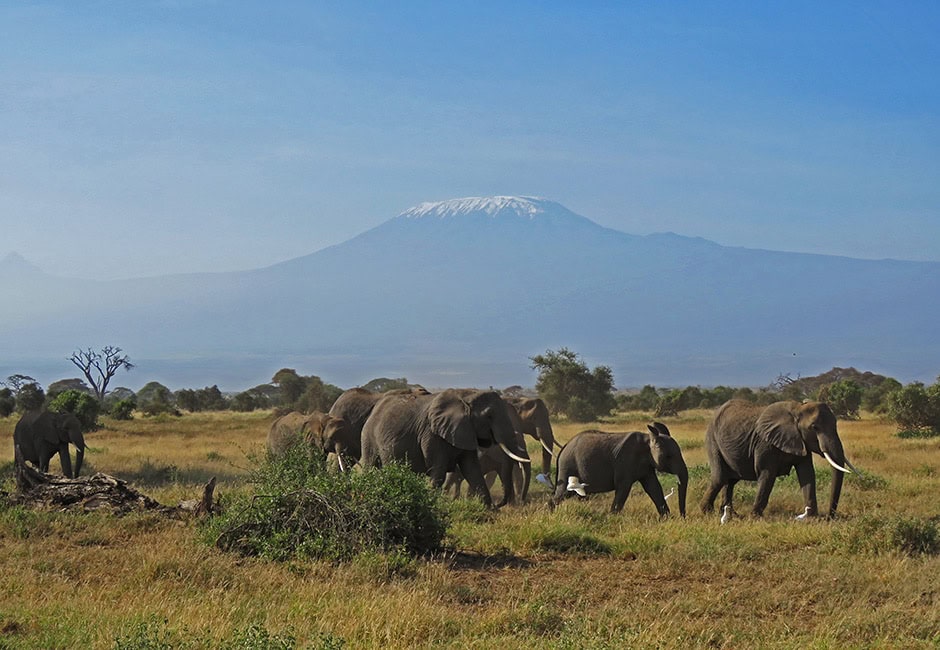
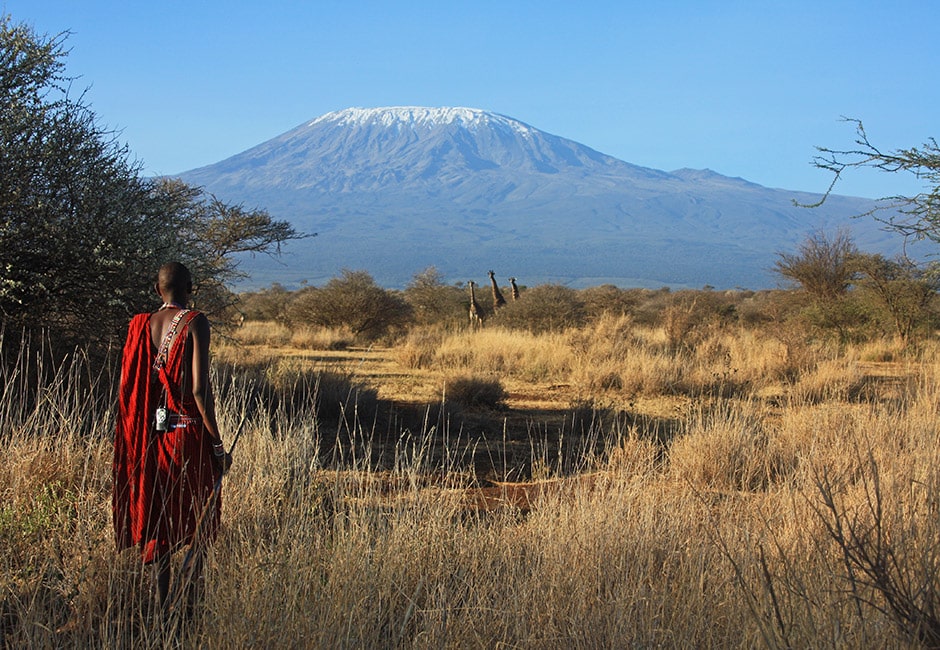
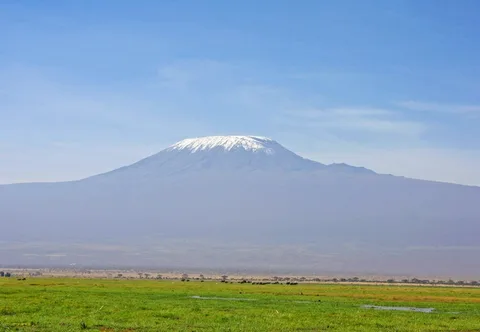
Amboseli National Park is very popular simply for its majestic backdrop, with Africa's highest mountain, Kilimanjaro, in the background. But it is also "the home of the elephants" and of so many other icons of African wildlife that make the wildlife area a unique experience. Today's blog answers which animals there are in Amboseli National Park.
Amboseli – the ecosystem and the National Park
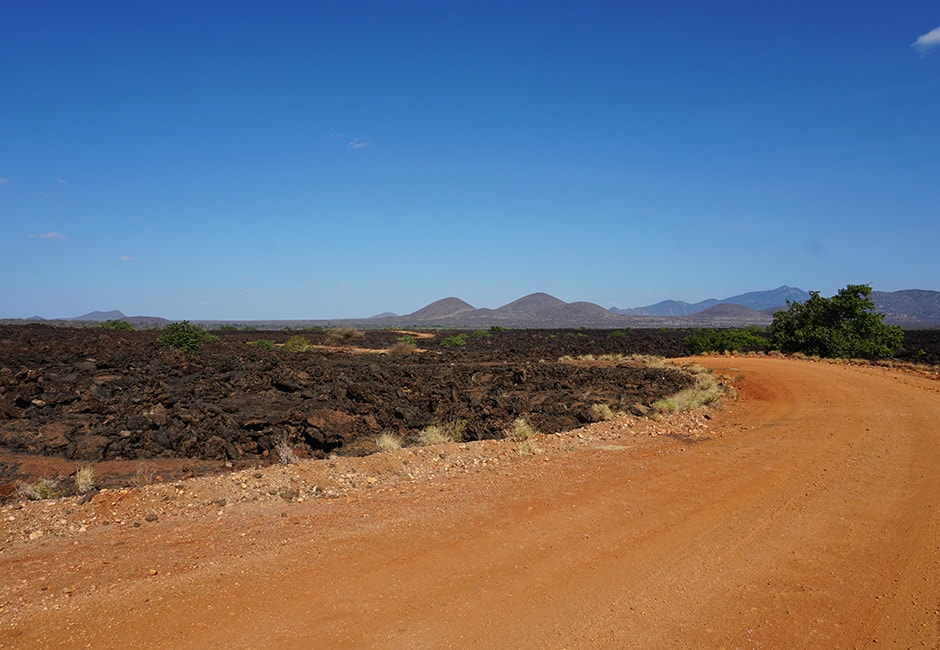
The park is blessed with five important habitats for wildlife, including acacia woodland, rocky thornbush, savannah grassland, swamps and marshland. It covers part of a lake basin millions of years old, in which Lake Amboseli forms after heavy rainfall. The lake is characterised by very alkaline water and thus attracts flamingos. As a rule, however, it is extremely dry and dusty during the hot, dry season.
These conditions shape the Amboseli ecosystem almost all year round. Hence also the name Amboseli, which derives from the word "empusel" in the Maasai language and means something like "a salty and dusty place". The lake lies in the Nyiri Desert, which spreads along the southern border between Kenya and Tanzania and covers Amboseli National Park.
Part of the lake water supplies the swamp areas in the southern part of Amboseli via an underground connection. Papyrus, rushes, sedges, salt-tolerant bushes and fever trees grow here.
But water sources connected to Kilimanjaro also create several swamps in the park, including the Enkong Narok Swamp and other permanent swamps, which are of crucial importance for wildlife in the Amboseli ecosystem. On the one hand they provide moisture all year round and are often the last waterhole bastion in an otherwise parched park. On the other hand, they can become a deadly swamp trap for certain animals.

Location and size
Amboseli National Park in southern Kenya is rather small compared with many other African National Parks, at around 392 km2. But above all it is part of a much larger ecosystem, whose delicate balance is maintained by ecological corridors and dispersal areas.
They connect the park with the adjoining group ranches and neighbouring protected areas such as the Chyulu Hills, Tsavo West and Kilimanjaro West in Tanzania. They still enable migration movements and a healthy exchange of different animals today.
Amboseli's ecosystem also has rich birdlife with over 400 species, of which more than 40 are birds of prey. It is therefore one of the important bird conservation areas in Kenya and thus of global importance for bird conservation.

Which animals are there in Amboseli? An overview
The more than 400 bird species alone speak for the diversity of habitats in Amboseli National Park. Among the larger birds, the Kenyan ostrich, flamingos, pelicans, kori bustards, grey crowned cranes, marabou storks and saddle-billed storks as well as fish eagles and lappet-faced vultures stand out in particular.
But a few spectacularly colourful smaller birds are also at home in Amboseli all year round or spend their holidays here. Among them are bee-eaters, lilac-breasted rollers, red-fronted tinkerbirds, red bishops, variable sunbirds and African pygmy kingfishers.

The park also teems with mammals. Their elixir of life is above all the drinking sources fed by Kilimanjaro. Not only four of the Big Five – lions, leopards, buffalo and elephants – drink from them, but also cheetahs, hyenas, jackals, warthogs, giraffes and zebras.
Not to be forgotten are the numerous antelope species in the reserve, including wildebeest, Thomson's and Grant's gazelles, elands, impalas and oryx. Rare are the lesser kudus and the gerenuks, which, like the bohor reedbuck, do not occur in southern Africa. Hippos and crocodiles are also at home in the wetlands.
Amboseli has the advantage that the relatively large amount of game in this smaller park allows excellent wildlife sightings.
Two of our favourite safaris with a visit to Amboseli National Park:
Can you see the Big Five in Amboseli National Park?
Amboseli National Park is one of Africa's top safari destinations and is home to four of the Big Five celebrities: buffalo, leopards, lions and elephants. Only rhinos are absent from Amboseli.
Cape buffalo
Herds of Cape buffalo are impossible to miss in Amboseli National Park, especially in the dry season, when they lie on the banks of the remaining waterholes or cool off in the refreshing water.
As grazers, however, they also need the hunger-satisfying pastures, which cannot always be found in the swamp areas or have already been grazed bare. So you sometimes see them roaming the area in search of food.

At some point in old age, the old males separate from the herd and live either alone or in the bush version of a senior citizens' club. They are then considered more irritable and aggressive than their fellows in the herd community.
Leopards
As a shy loner, the leopard is not always easy to spot in Amboseli National Park. Only in the mating season, and when the females are raising young, do you sometimes see more than one of these feline beauties.
Of the big cats, the leopard is the only one that also lives in trees, even dragging its prey up there to protect it from other predators. But dense undergrowth or well-protected rock crevices can also be its home.
Its prey is mainly the smaller antelopes, weighing up to 80 kg. Where they are, a leopard may well be nearby.
Which animals are there in Amboseli National Park? Lions
Over 100 lions are thought to live in Amboseli National Park, in prides, and they like to greet one another with cuddles and affection. That is quite a large number for the relatively small area and increases the chances of spotting these social big cats on a safari.

This applies in particular during their active time, which begins in the late afternoon, unfolds through the night and can extend into the first hours of the day. In addition, Amboseli offers a great deal of open savannah, or at least savannah with sparse vegetation.
Elephants
The Amboseli region is famous for its elephants. It is one of the animals you see most often in Amboseli National Park. Traditionally protected by the Maasai and monitored by researchers, poaching within this park may not have been prevented, but at least it has been kept in check.

Moreover, there is no other National Park in Africa where elephants are studied as thoroughly as here. One name that comes up again and again in this context is Cynthia Moss and the Amboseli Elephant Research Project.
With so much care, the result is impressive: little-disturbed elephant herds and, above all, well-preserved tusks. Here there are still real so-called "tuskers", that is, elephants with particularly large and powerful tusks.
Amboseli is the "land of giants". Simply worth seeing, and reason enough in itself for why a visit to Amboseli National Park is worthwhile.
Where do you see which animals in Amboseli National Park?
Which animals you see in Amboseli National Park, and above all where, can vary greatly with the season. But the park is relatively small compared with others, so the animals that do not wander through the corridors of the surrounding area are usually easy to spot.

The buffalo near water and green areas. The leopards in trees, in shady undergrowth or in sheltered rock crevices. The lions during their active (daytime) hours, early in the morning and late in the afternoon, out on the savannah or heading to the waterhole. They also love to walk along roads and tracks then. Otherwise they lie during the day under shady trees and bushes.
And the elephants are best seen against the backdrop of Kilimanjaro. At least, that is where you most want them. If not there, then in the swamp area or in open or dense woodland rich in vegetation.
And the other animals? Here are a few examples:
Cheetahs
Cheetahs are particularly shy and timid big cats. This applies above all in areas where lions, leopards and hyenas are also active, as they rank above cheetahs in the hierarchy of the strong. It is one of the reasons why they prefer to move about in open terrain with little scrub. There is plenty of that in Amboseli. Here they can see their enemies better.

The other reason is their speed. They do not have to creep up on their prey to the extent that lions do. So keep your eyes peeled in open savannahs rather than in dense woodland or bushland.
Antelopes, zebras and giraffes
The open savannahs are also a favourite place for many grass-eating antelopes such as oryx, Thomson's gazelles and wildebeest. Above all, though, zebras are animals you see in Amboseli National Park. They are usually not far from the antelopes, because both zebras and antelopes love lush greenery.
Mixed-feeding or predominantly leaf-eating antelopes such as kudus, gerenuks or impalas prefer to stay in the more vegetation-rich parts of the park. A special sight is seeing gerenuks standing on their hind legs, which at a distance you might take for kangaroos, while they eat the leaves from higher branches.
Giraffes, too, like to eat the leaves of taller acacia trees, which otherwise perhaps only the elephants can reach. But there are so many giraffes in the park that on longer game drives the chances of seeing them are very high.

Hyenas
Hyenas tend to be nocturnal animals. But it is surprising how many of them can also be spotted during the day. This applies in particular when competition among these carcass specialists is enormously high. A very well-known den of a spotted hyena clan with good opportunities for encounters lies north-east of the airstrip in Amboseli National Park.

Which animals do you see in Amboseli National Park? Hippos
Hippos generally live in swamps, rivers and areas close to the water's edge and spend most of the day in the water. They usually only come out of the water at night to forage. But daytime excursions on land are not unusual, although usually only brief, so as not to burn their sensitive skin in the sun. There are plenty of wetlands here for the hippos. In the south-east of the park lies the "Hippo Pool at Zizigium" for good hippo sightings.

Crocodiles inhabit very similar habitats here. They often share a body of water with the hippos. This mostly happens in peaceful coexistence – much to the delight of safari lovers, who in this way get to see two very special icons of African wildlife at once.
When is the best time to travel for wildlife viewing in Amboseli National Park?
Amboseli National Park lies in a low-rainfall climate zone in southern Kenya. It is mostly dry here, and warm to very hot temperatures prevail. For most people the best time to travel is outside the long and short rainy seasons, which hit the park mainly from April to the end of May and once more in more modest amounts in November and December.
The best time to travel to Amboseli National Park is therefore considered to be the dry season between July and October and from January to mid-March. But you can basically visit the park all year round, because the low season during the rainy season also has its advantages. It is the time of lower prices and fewer visitors. In addition, with good rain the dry pans fill with water, the landscapes become greener, the air clearer and the views of Kilimanjaro more contrasty.
Want to find out more about Kenya trips?
We are happy to advise you. Get in touch with us!
What types of safari are there?
Compared with South Africa or Namibia, Kenya is still a long way from being a relaxed self-drive safari country. A guided safari with a guide is therefore recommended. It allows you to sit back, place yourself confidently in the hands of a guide and enjoy the tour to the full.
On safari, it is the guide who knows the best spots in Amboseli National Park, too, for the best wildlife viewing and photo opportunities. On top of that, he can answer every question mark in your eyes when you see an unfamiliar animal or a strange plant.

What should I take on an Amboseli safari?
Our packing checklist here will give you a quick overview of what you should have with you for an Amboseli safari. Or let a few more general thoughts and ideas on packing for a safari inspire you. For the purposes of this blog, I would just like to highlight a few points:
- The park is hot, dry and dusty. So bring plenty of water.
- If you opt for a group tour, leave the hard-shell suitcase at home and take a soft bag. Storage space in the Land Cruiser is limited.
- There is a malaria risk in Kenya. So discuss with your doctor how best to protect yourself against malaria.
- Be sure to bring your binoculars.
- And if you want to take photos, bring a good telephoto lens (at least the equivalent of a 400mm telephoto lens for SLR cameras).
In any case, we warmly welcome you to this wonderful country of Kenya and the unique Amboseli National Park, and we are ready to answer further questions and support you in planning your Kenya expedition.
Thanks to our close contact with our subsidiary in Kenya, we always know exactly what the current situation is. So get in touch with us! Your dream, our expertise – your very own individual Kenya experience.
Juan Proll has lived in southern Africa since 2011 and works as a certified nature and cultural guide in South Africa, Botswana and Namibia for Elefant-Tours and its subsidiaries. After an earlier career as an adult education teacher in Germany, he swapped the classroom for the wilderness. Alongside his work as a guide, he writes for the Elefant-Tours blogs about nature, culture and sustainable travel. Juan is a member of the Field Guides Association of Southern Africa (FGASA) and the author of the books "Ich werd' dann mal Ranger" and "Das Safari-Lesebuch". The magazine DER SPIEGEL reported on his training.