Safaris on Foot: Our 12 Best Places for Walking Safaris in Africa
 by Juan Proll· April 1, 2025· 15 min read· Updated April 4, 2025
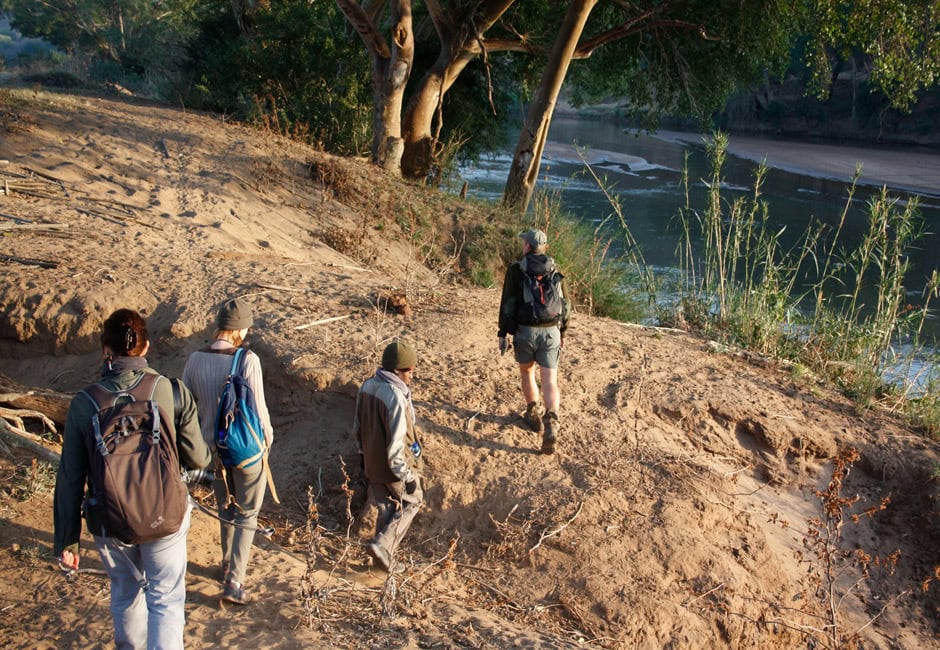
Exciting adventures in Africa's spectacular wildlife areas, usually in off-road vehicles, make for unforgettable experiences. But my tip is: experience this spectacular wildlife on a safari on foot.
On a walking safari you feel nature up close and consciously take in its sounds, scents and fine details.
Today I'm introducing you to 12 extraordinary places for walking safaris in Africa.
Why a safari on foot? – A unique adventure
A walking safari in the natural habitat of wildlife offers you a very special adventure. You move on foot through the wilderness, always alert to what is happening around you. A lion could leap out of the bush, an elephant could suddenly stand in front of you or a herd of buffalo could paw the ground.
Inevitably you perceive the sounds, smells and atmosphere of nature much more intensely. A deep sense of connection and respect arises. And even though experienced rangers and guides always ensure your safety, the awe of wild nature remains ever-present.
With the guides, your experience becomes not only exciting but also enriching, because they have deep knowledge of the fascinating flora and fauna and love sharing it with you. You discover details that you quickly overlook from a vehicle – an interesting plant or telltale animal tracks.
On top of that, you are physically active, move beyond the beaten track and can enjoy the silence and beauty of the wilderness away from civilisation. If that doesn't sound tempting.

What can you expect on a walking safari?
There are different kinds of safaris on foot. The multi-day tours in which you walk from camp to camp, and the shorter bush walks that start and end right at your accommodation.
In this blog I focus on the second kind. Guided safaris on foot, lasting about 1 to 4 hours, in which you experience nature from a completely new perspective.
An early start at daybreak awaits you here. With your small group, led by your experienced and well-trained guide, you set off into the wilderness.
Your guide is not only well trained in flora and fauna but also in handling a firearm. As a rule, the group is accompanied by two armed guides or rangers. The aim is to explore the wilderness and experience encounters with free-roaming animals safely.
The guides brief you accordingly. Rules of conduct aimed at safety are explained and communication signals agreed to avoid loud talking.
Then you set off, all in single file, not too far apart, on paths that have mostly been created by the animals themselves.
Experience the magic of the bush up close – your safari on foot
Along the way you immerse yourself deeply in the fascinating world of safari. You observe animals in their natural habitat and learn to interpret their behaviour and read their tracks.
At the same time you discover the secrets of the plant world, its special features, its importance in the ecosystem, and you experience the landscape with all its characteristic sounds and scents.
So you go into the wilderness to experience the magic of the bush up close. And you come back out again, if possible without the animals noticing you.

The best countries for safaris on foot
Africa offers a wide range of breathtaking destinations for walking safaris. Here you'll find a small selection of the best countries in eastern and southern Africa for walking safaris, together with the special qualities they have to offer:
Eastern Africa – let acacias and ancient baobab trees enchant you
Tanzania
Tanzania's unspoilt nature and rich wildlife offer large herds of animals and impressive landscapes on safaris on foot.
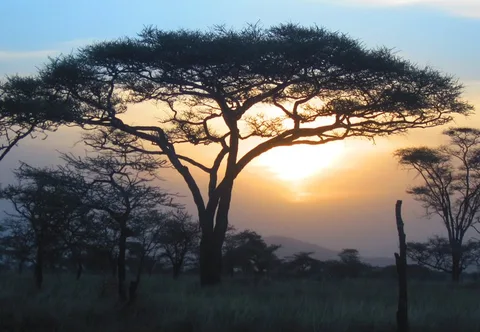
Gentle hills with streams and springs in the valleys, dry riverbeds or wetlands with vast grassy plains, enchanting acacia woodlands and ancient baobab trees or isolated granite rock islands lend the varied landscapes a picturesque flair.
In between, large herds such as those of elephants, zebras or wildebeest often roam.

Kenya
Kenya also offers a varied landscape and a fascinating wildlife. The “conservancies” are a special concept here. They give wildlife and local people such as the Maasai a space to live together and offer tourists more flexible options for extraordinary safari experiences.
These include walking safaris in the conservation areas with their Big Five of lions, elephants, rhinos, leopards and buffalo.

Southern Africa – hike among marula trees and the vastness of the desert
Zambia
Zambia is said to be the country of origin of tourist safaris on foot. South Luangwa National Park in particular is of breathtaking beauty.
Besides its species-rich wildlife, ebony groves and fairytale riverine forests, giant tamarinds, mopane and umbrella acacias shape the unique natural landscape.
Botswana
Unspoilt wilderness and intensive conservation efforts are the hallmarks of Botswana. Walking safaris are therefore also seen here as a very environmentally friendly alternative to motorised options.
Outstanding among walking safari destinations are Chobe National Park and the Okavango Delta. River landscapes combined with dense forests and open savannahs attract a wide variety of animals. By contrast, walking safaris in the Kalahari offer desert-like impressions.
Would you like to find out more about Africa trips? We'll be happy to advise you.
Get in touch!
Namibia
Namibia's scenic diversity stretches from the Namib Desert to the lush river landscapes of the Zambezi. But above all, the combination of desert landscapes and wildlife makes Namibia a fascinating destination for hiking enthusiasts. Here you can even encounter desert elephants and desert lions.
South Africa
In South Africa, walking safaris are an extraordinarily popular way to observe the animals in their habitat. Options can be found in the large national parks such as Kruger National Park as well as in smaller private game reserves such as Timbavati Game Reserve. Hiking among marula trees included.

The top walking safari areas
Each of the walking safari areas described below opens up its own perspective and a unique experience.
From intense wildlife encounters and an understanding of the delicate balance of ecosystems to historical insights and sustainable conservation measures carried by local communities.
Our top 12 areas for safaris on foot:
1. Greater Kruger – Timbavati Game Reserve, South Africa
Timbavati is a private game reserve with no fences to popular Kruger National Park in South Africa.
On walking safaris here you have the chance to see the rare white lions in addition to the Big 5. The Timbavati floodplain is also an excellent safari destination thanks to its abundance of birds.
2. Okavango Delta, Botswana
The UNESCO World Natural Heritage Site Okavango Delta in Botswana offers unique walking safaris thanks to its water-based ecosystem with many smaller and larger islands.
The landscape changes with the seasons and, thanks to its great distance from the source of the Okavango, only becomes a flood plain in the dry season. It is then especially a paradise of scenery and wildlife.
3. Etosha region, Namibia
Etosha National Park in Namibia is known for its huge salt pans and dramatic, dry and open landscapes. And although no walking safaris are offered inside the park, they are offered adjacent to it in an equally exciting way.
The private conservation areas here are in turn home to many of the animals you can see in the national park.
4. Kalahari, Botswana
The Kalahari Desert in Botswana is a vast arid region with fascinating sand dune landscapes and unique wildlife adapted to the harsh environment.
Here on your walking safari you can encounter lions and elephants, springbok and other antelope, as well as meerkats. At the same time you come to understand the animals' difficult living conditions.
5. Laikipia, Kenya
The semi-arid Laikipia region in Kenya is characterised by a scenic mix of savannah and forest. Here on your walking safari you will also find endangered species such as Grevy's zebra and the African wild dog.
The reticulated giraffe is also easy to find. Ol Pejeta Conservancy is exciting too, where you can see the last two northern white rhinos.
6. Damaraland, Namibia
Damaraland in Namibia lies partly right in the Namib Desert. It is famous for its desert-adapted animals, including elephants, black rhinos and lions.
The special wildlife and a dramatic landscape with rocky outcrops and dry riverbeds make Damaraland ideal for walking safaris. However, the area is sparsely populated not only by people but also by animals.
7. Naboisho Conservancy (Masai Mara), Kenya
Naboisho lies in the heart of the Mara ecosystem. It is a conservation area where people and wildlife live together and offer their guests a more intimate yet wildlife-rich safari experience with fewer vehicles and tourists.
While you cannot go on walking safaris in the Masai Mara Game Reserve proper, the private conservation areas offer the opportunity.
8. Nyerere National Park (Selous Game Reserve), Tanzania
Nyerere National Park and the Selous Game Reserve in southern Tanzania impress not only with their spectacular wildlife but also with a fascinating history.
During the First World War, British troops under Frederick Selous and German units under Paul von Lettow-Vorbeck fought bitter battles here.
With a little luck, you can still discover relics such as old ammunition, horseshoes or belt buckles today, while in the distance elephants, wild dogs or crocodiles roam the landscape.
9. Kafue National Park, Zambia
Kafue is the largest national park in Zambia and one of the least visited parks in Africa. Pure unspoilt wilderness for your safari on foot.
You walk along river landscapes and miombo woodlands, past magnificent wildlife. Among them hippos, antelope, elephants and predators such as wild dogs, lions and cheetahs.
10. Serengeti National Park and Tarangire (Northern Circuit), Tanzania
The Serengeti in Tanzania is world-famous for the Great Migration of animals, in which millions of wildebeest and zebras travel in search of fresh grass. Tarangire is home to huge elephant populations.
A walking safari here takes you through typically African savannah landscapes or past ancient baobab trees. Learn how the Maasai clean their teeth with twigs from the “toothbrush tree”, or why the “whistling thorn” gets its name from its defence system.
11. Ruaha National Park, Tanzania
Ruaha National Park in Tanzania is a vast, remote and unspoilt jewel known for its large elephant and lion populations, as well as its wild dogs. Rivers, savannahs and woodlands meet here.
12. Amboseli region, Kenya
The Amboseli region in Kenya is known for its breathtaking Kilimanjaro backdrop. In Amboseli National Park you can therefore often enough see elephants with Kilimanjaro in the background. That alone is worth a visit.
As so often, safaris on foot are not allowed in the national park itself. But in the adjacent conservation areas, you can immerse yourself in nature on a bush walk and admire the wildlife and Kilimanjaro.
On these safaris you can optionally include a walking safari:
When is the best time for a walking safari?
The best time for a walking safari in Africa generally depends on various factors. These include the region you want to visit, the wildlife you want to see and the kind of experience you are looking for.
In general, the dry season is usually best for a number of reasons. You want to stay dry on your safari on foot, of course, but safety also plays a role.
That's because in the rainy season the vegetation is dense and the guides' visibility is limited. Tall grass and thick bush can restrict the view of potential dangers.
We have summarised when the best time to travel for a safari in general is in this blog.
Best time to travel: safaris on foot in eastern Africa
The best times for hiking in Tanzania and Kenya are the dry-season months from June to October. The increasing drought, which makes waterholes disappear and thins out the vegetation, offers fantastic views.
Suddenly the animals are right there, can no longer hide so easily behind bushes and gather at the remaining waterholes.
In addition, the weather is cooler in these months, especially in the morning and late afternoon.
Bear in mind, though, that especially in June some areas in the Serengeti still have very tall grass. This could be a reason why your safari on foot might be called off even without rain. The danger of suddenly coming across lions or other more dangerous animals sneaking through the grass is too great.
You can find info on the best time to travel to Kenya here.
And we have summarised info on the best time to travel to Tanzania for you here.

Best time to travel: walking safaris in southern Africa
For southern Africa, the best time to travel for walking safaris is likewise in the dry season. Here it lies between May and October. The cooler temperatures in these months are also generally more noticeable than in eastern Africa.
In the south it can get considerably hotter in the rainy-season months. This is especially noticeable in the Namib Desert and the Kalahari.
You can find info on the best time to travel to South Africa here.
For Namibia you'll find what you need in this blog.
And we have explained the best time to travel in Botswana here.
How do I plan safaris on foot?
If you would also like to go on a walking safari during your safari, you should take this into account in advance, while planning your trip.
It is true that there are generally more and more places and opportunities for safaris on foot. But in many national parks they are still not allowed.
Often they are offered instead in private conservation areas just outside the national parks. Within the national parks, only very specific lodgings have the permits to run safaris on foot.
That means the choice of region and accommodation is decisive when planning.
For planning, it is then also important to secure your place in the first place. Anyone who wants to join a walking safari at Skukuza Camp in Kruger National Park, for example, should know that there is room for around 1,000 guests there, but only 8 of them can join a walking safari each morning.
In smaller camps and depending on the region, this is quite a bit easier.
So if you already know when booking your trip that you want to take part in a walking safari, let us know and book it straight away. Our travel experts know the area well. Thanks to our close contact with our subsidiaries on the ground, we know exactly which accommodation offers walking safaris where.
On the ground, everything is very simple: at check-in at the accommodation you'll find out when the walking safari starts. Be there a few minutes early. Two guides will be waiting there to lead you through the programme.
Generally, walking safaris take place either in the morning or in the afternoon to avoid the midday heat.
Please note that a walking safari may in rare cases be cancelled at short notice for safety reasons. If, for example, predators are in the immediate vicinity of the accommodation or the grass is very tall and no clear view is possible, the walking safari may not be able to take place.

What should I bring for a walking safari?
What you should bring for a safari on foot is above all openness and attentiveness for the nature experience ahead.
Also remember that in the early morning hours, especially in the dry-season months, it can still be quite chilly. Warmer clothing therefore makes sense.
Your clothes should not be brightly coloured and should have long sleeves and legs. That way you avoid attracting unnecessary attention from the animals and possible scratches from bushes.
Your shoes should be sturdy and, if you have them, ankle-high. That gives you stability on uneven terrain and protection from any foot-biting creepy-crawlies.
Water, sunscreen and a sun hat should be just as non-negotiable as a camera and binoculars. And of course you should have eaten a little something beforehand or at least bring a snack. You don't want to frighten any animals with your rumbling stomach.

How fit should I be for safaris on foot?
When it comes to how fit you should be for a walking safari, the first answer is: a level of fitness that allows you to get through the length of the tour well and comfortably, to run a few metres if in doubt and, ideally, even to climb a tree.
The guides will in any case form an impression of the group and, if in doubt, adapt the safaris on foot, choosing less challenging routes and reducing risks.
South African national parks even require a medical certificate confirming fitness for those over 60.
Can children go on a safari on foot?
Yes, children can go on a walking safari too. However, many safari operators have age restrictions. In South Africa's national parks, kids must be at least 16 years old.
By contrast, the age requirements at private operators of walking safaris in southern and eastern Africa can vary and may also be below 16.
Some family-friendly lodges and guides also take younger children from the age of 6, depending on the specific safari conditions and the safety protocols in force. Here, for example, there are no lions in the conservation area.
Of course, parents have the responsibility here to assess the children's physical fitness and stamina as well as their social behaviour. Walking safaris usually cover varied terrain, can drag on when no animals are to be seen and require reliable behaviour in safety-relevant situations.
Are safaris on foot safe? – How to be well prepared
What would a walking safari be without adventure? It is precisely the unpredictable that makes it appealing. You move through a wilderness that is home to lions, elephants, rhinos, leopards, buffalo, snakes, scorpions and crocodiles. An authentic nature experience that offers thrills and fascination at once.
You don't know who you will encounter or how. That is why the guides not only carry a firearm but also have a great deal of knowledge and training in the bush to make it as safe as possible for you.
Listen to them and trust them. Then you too, like so many before you, will return from your safari on foot safe, enriched and happy.
As a general rule, however: encountering predators is the exception, not the rule. The focus of a walking safari is not on seeking out the proximity of dangerous animals. Instead, attention is paid above all to smaller and harmless animals.
You are far more likely to come across a herd of zebras, giraffes, impalas or the tracks of a leopard than a pride of lions.

Personal verdict – why safaris on foot are unforgettable
I love walking safaris. It is the appeal of the unknown, of exposing myself to nature, of meeting African wildlife without the protection of four walls or a metal body.
You feel your vulnerability and approach the wilderness with humility and respect. Above all, though, with the help of the guides you have the chance to immerse yourself in a habitat that is completely foreign to you, with its flora and fauna, creating aha moments and wow experiences that make you see more and understand more.
Moreover, it is a great change from the many drives in the off-road vehicle. Finally a bit of exercise, walking, travelling without an engine, listening to nature, smelling its scent, enjoying its beauty and uniqueness.
Amid all the excitement you feel the calm that settles in, and you feel the harmony flowing through your body. Moments and experiences you will never forget.
Just have courage, you won't regret it!
We are happy to answer questions and support you with planning your Africa trip, whether on a guided trip or a self-drive tour.
Because thanks to our close contact with our subsidiaries in Africa, we always know the current situation well.
So get in touch! Your dream, our expertise – your very own individual Africa experience.
Juan Proll has lived in southern Africa since 2011 and works as a certified Nature and Cultural Guide in South Africa, Botswana and Namibia for Elefant-Tours and its subsidiaries. After an earlier career as an adult-education teacher in Germany, he swapped the classroom for the wilderness. Alongside his work as a guide, he writes for the Elefant-Tours blogs about nature, culture and sustainable travel. Juan is a member of the Field Guides Association of Southern Africa (FGASA) and the author of the books “Ich werd’ dann mal Ranger” and “Das Safari-Lesebuch”. The magazine DER SPIEGEL reported on his training.